 StadiumDB
Spain: A Coruña withdraws from the 2030 World! Valencia and Vigo could both enter the host list
source: StadiumDB.com ; author: Miguel Ciołczyk Garcia
 The mayor of A Coruña and the president of Deportivo have reached a new agreement. The renovation of Riazor will be much more modest, meaning that the only Galician host city must withdraw from the bid to host the 2030 World Cup. This leaves two spots open on the list of host cities, which could mean the inclusion of both Vigo and Valencia.
Advertisement
The end of A Coruña’s World Cup dream
Faced with the impossibility of finalizing a budget, preparing a project, and reaching an agreement with RC Deportivo, the mayor of A Coruña, Inés Rey, has given up. She agreed with Juan Carlos Escotet, the club’s president, that the renovation of Riazor will be much more modest than originally planned.
As a result, the stadium will not meet the World Cup requirements, particularly regarding capacity. Today, Estadio Abanca-Riazor holds 32,490 seats, far short of the minimum 40,000 required by FIFA. This means that the City of Glass
is the second city to withdraw from hosting the 2030 World Cup, following Málaga, which withdrew from the tournament in July.
The chronicle of a death foretold
A Coruña submitted its bid for the 2030 World Cup in July 2022, when the idea of co-hosting the tournament with Morocco and Portugal had not yet been presented. In November of that same year, architect David Estany Garea presented preliminary renderings of a renovated Riazor.
The city passed the Spanish federation’s (RFEF) screening process, unlike Málaga and Vigo, and was included in the World Cup Bid Book
in July 2024. In December, FIFA, despite giving it the lowest score among the tournament’s 23 host cities, confirmed its selection. We couldn’t be happier,
said the mayor at the time, wearing a T-shirt featuring Naranjito, the mascot of the 1982 World Cup, to emphasize that A Coruña would be hosting the second World Cup in its history.
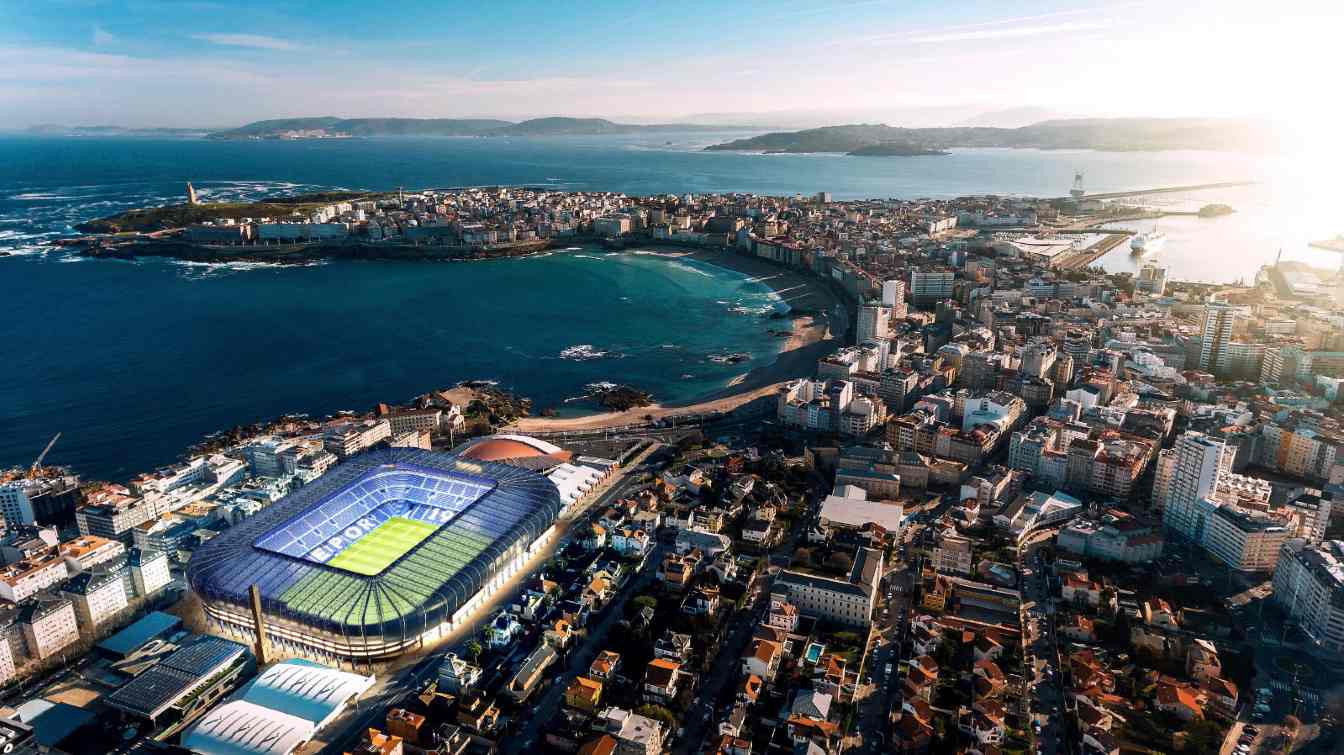 © David Estany Garea / Concello A Coruña | The renderings of the new Riazor never turned into a concrete project.
However, months went by and the project never progressed beyond the preliminary visualization phase. The private partner, who was supposed to contribute 30% of the funding, also failed to materialize despite statements from City Hall that the budget was secured.
Meanwhile, costs rose from the initial 90 million euros to over 100 million.
Although in January 2025, Councilman Gonzalo Castro assured that both the project and the financing would be ready by summer, by April the regional government had already declared the project dead.
And to top it all off, Deportivo kept making it clear every couple of weeks that it neither needs a 40,000-seater nor is it thrilled about having to play at a Riazor under construction or having to move.
Valencia and Vigo are ready to replace A Coruña
Already in October we noted that A Coruña’s bid was at the bridge of collapse, and this Monday it finally fell to pieces. Those celebrating A Coruña’s defeat are Valencia and Vigo, the two candidates that didn’t make the initial list and could now both make it, taking the spots of Málaga and A Coruña.
However, this is not certain, as FIFA has the final say. A few months ago, there was speculation that the organization would seek to reduce the number of host cities, 23 in total (11 in Spain, 6 in Morocco, 3 in Portugal, and 1 each in Argentina, Paraguay, and Uruguay).
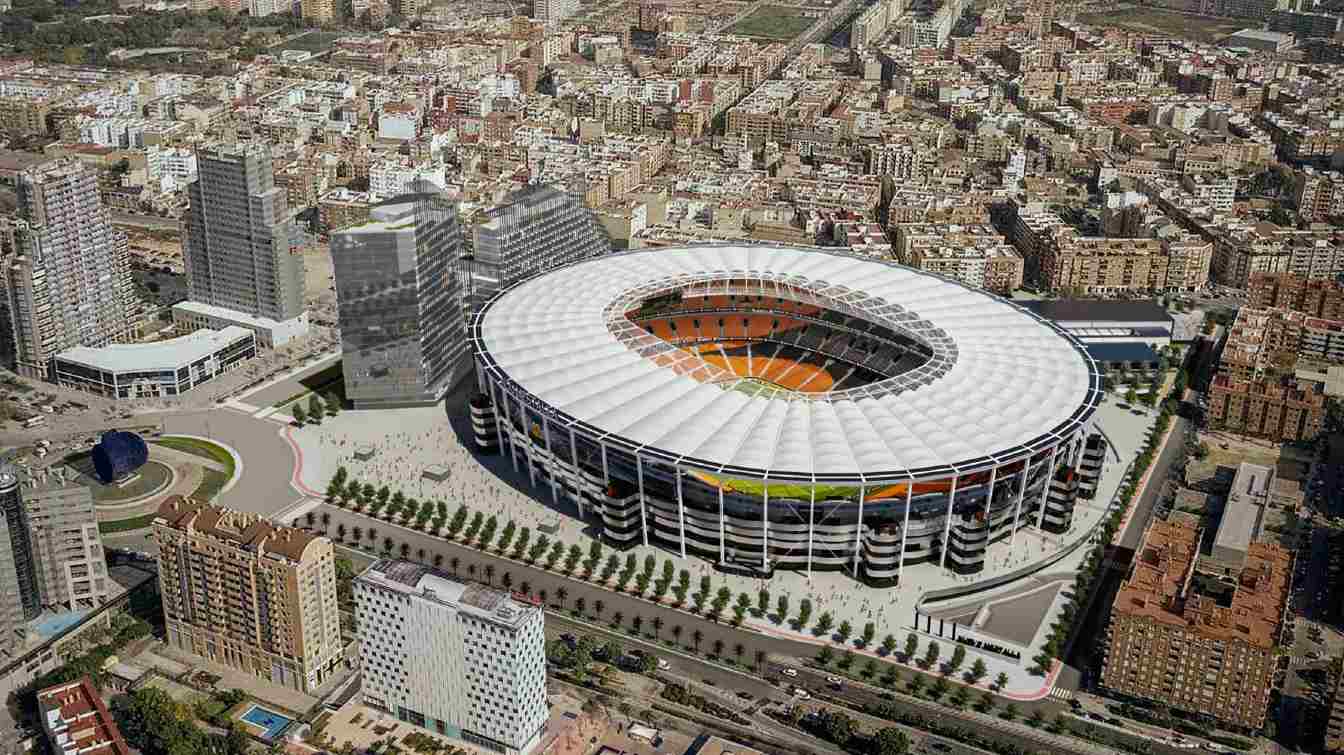 © FIA/ Valencia CF | The Nou Mestalla is set to be ready in the summer of 2027.
It is easier to be included for Valencia. Once completed, Nou Mestalla will be able to seat 70,000 fans, making it the 4th largest stadium in Spain, surpassed only by Camp Nou, the new Santiago Bernabéu, and the Metropolitano. Furthermore, the city is the 3rd largest in the country, and its bid has the firm and clear support of RFEF President Rafael Louzan.
The situation of Vigo, however, is different. The city is much smaller than Valencia, and Estadio Abanca Balaídos, with about 41,000 seats, will have a significantly lower capacity than Valencia’s future home. Furthermore, the project for the final phase of construction—which would allow the stadium to reach that capacity—has yet to be presented. But above all, Vigo’s mayor, Abel Caballero of the socialist party, has a deep-seated political feud with the RFEF president, who was formerly a member of the right-wing PP and later president of the Galician football federation.
Working in Vigo’s favor is the fact that with A Coruña’s withdrawal, the region Galicia is left without representation in the World Cup. Vigo’s entry would therefore be a natural fit. Hope in the city of Vigo remains alive, bolstered after this Monday, but it is clear that Vigo will still have to fight to host the tournament.
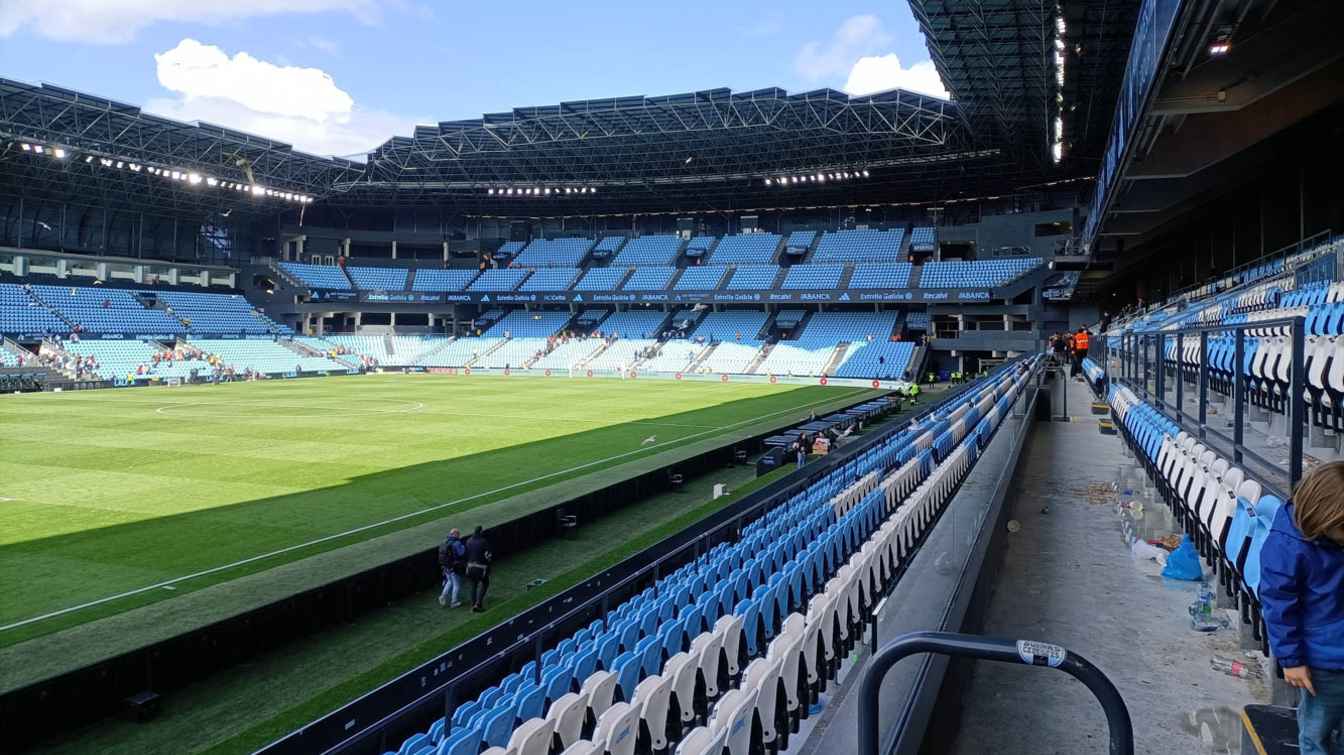 © Miguel Ciołczyk Garcia | Balaídos still needs to renovate the Tribuna stand and complete work on the Gol stand to reach 41,000 seats.
Advertisement