 StadiumDB
Netherlands: PSV Eindhoven unveil Philips Stadion redevelopment plans
source: StadiumDB.com ; author: Paulina Skóra
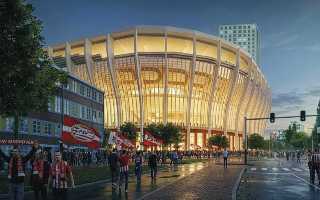 PSV Eindhoven has unveiled an ambitious vision for the redevelopment of Philips Stadion, one that could completely redefine the scale and role of the venue in the Netherlands. The concept goes beyond a simple expansion, focusing on modern design and functionality. Is this the beginning of a new era for PSV?
Advertisement
Third tier key to Philips Stadion expansion
The central element of the Philips Stadion redevelopment is a new outer structure that will incorporate a third seating tier. This concept allows for a significant increase in capacity without demolishing the existing stadium. PSV Eindhoven’s proposal envisions a rise from the current ~35,000 seats to between 52,000 and 58,500.
The new structure would surround Philips Stadion on all sides, creating a unified architectural form. As a result, differences in stand heights would be eliminated, giving the venue a more consistent and modern appearance. The project also includes plans for public space around the stadium — a colonnade with greenery, accessible not only to fans but also to local residents.
From a functional perspective, the new shell
is expected to improve acoustics. A more enclosed structure should help retain sound inside, which could have a noticeable impact on matchday atmosphere and home advantage.
Philips Stadion redevelopment to improve logistics and operations
The expansion is not just about increasing capacity. It also involves a broader reorganisation of technical facilities and operational infrastructure. Particular focus is placed on the northern section of Philips Stadion, where modern logistical solutions are planned. Technical elements — such as broadcast facilities, pitch lighting systems and team bus parking — are to be relocated in a way that minimises their impact on public space. This should make the stadium surroundings more organised and more accessible for residents.
An important part of the plan is also the introduction of additional year-round functions. These include commercial and service areas, as well as potential community spaces. This approach aligns with the wider trend of transforming stadiums into multi-purpose urban hubs.
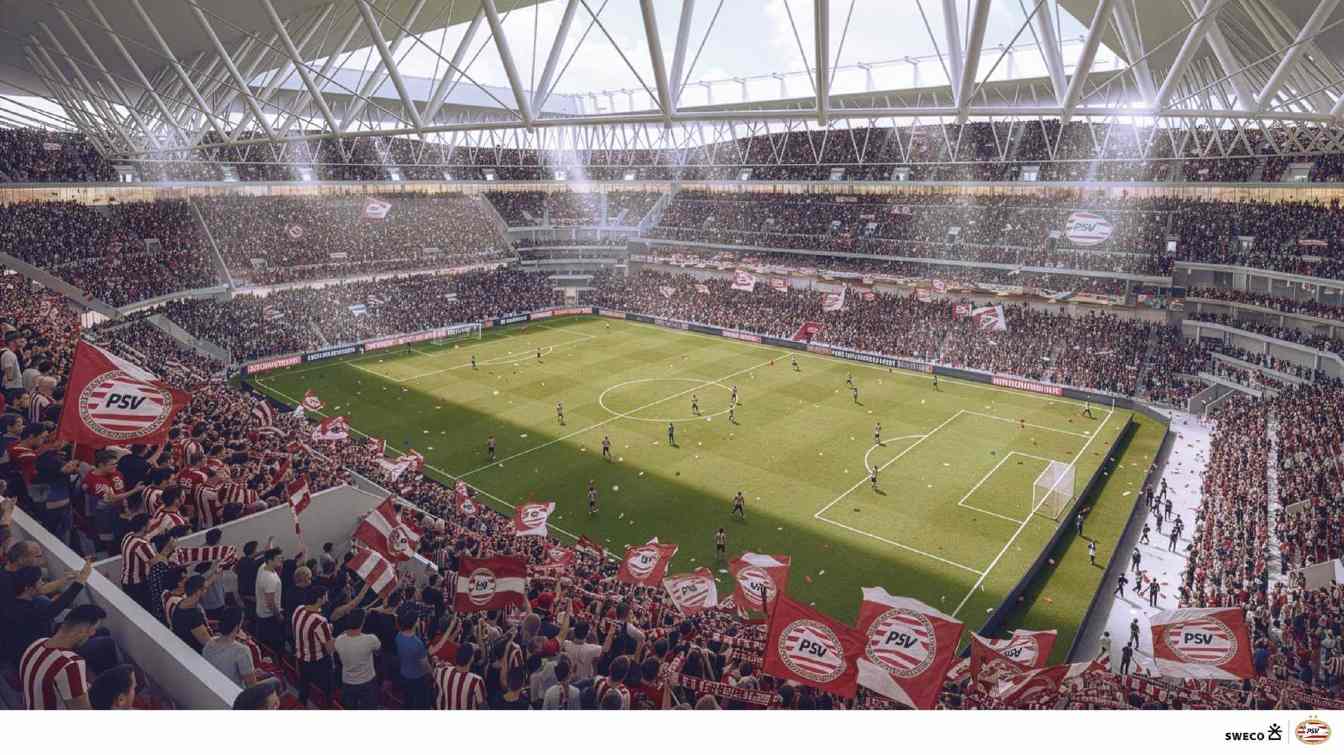 © Sweco | The Philips Stadion redevelopment project includes the construction of a third tier and an increase in capacity from around 35,000 to up to 58,500 seats.
Cost and financing challenges of Philips Stadion redevelopment
The scale of the investment is reflected in the estimated cost, ranging from €350 million to €450 million. This places the project among the largest planned stadium developments in the Netherlands in recent years. At this stage, PSV Eindhoven have not revealed a detailed financing model. Further feasibility studies and financial analyses are expected in the coming months. A key issue will be securing a funding structure that does not overly burden the club.
Cooperation with the city and potential private partners will be essential. The project is already being discussed with local authorities, who see it as an important part of Eindhoven’s urban development.
Spatial constraints are another major factor. Philips Stadion is located within a dense urban area, between a railway line and residential districts, which limits horizontal expansion. For this reason, a vertical solution — adding a third tier — has been chosen. This allows maximum use of the available space without interfering with surrounding infrastructure. Once completed, further expansion will no longer be possible, making this a final stage in the stadium’s development at this location.
Philips Stadion construction timeline and phasing
According to current plans, construction could begin in 2027, with completion targeted for 2030. One of the main challenges will be carrying out the works while the stadium remains operational.
The project is expected to be delivered in phases, allowing PSV Eindhoven to continue playing home matches at Philips Stadion. This avoids the need for temporary relocation, but requires careful planning and coordination. Administrative procedures, including permits, will also play a decisive role, and timelines may depend on local political conditions.
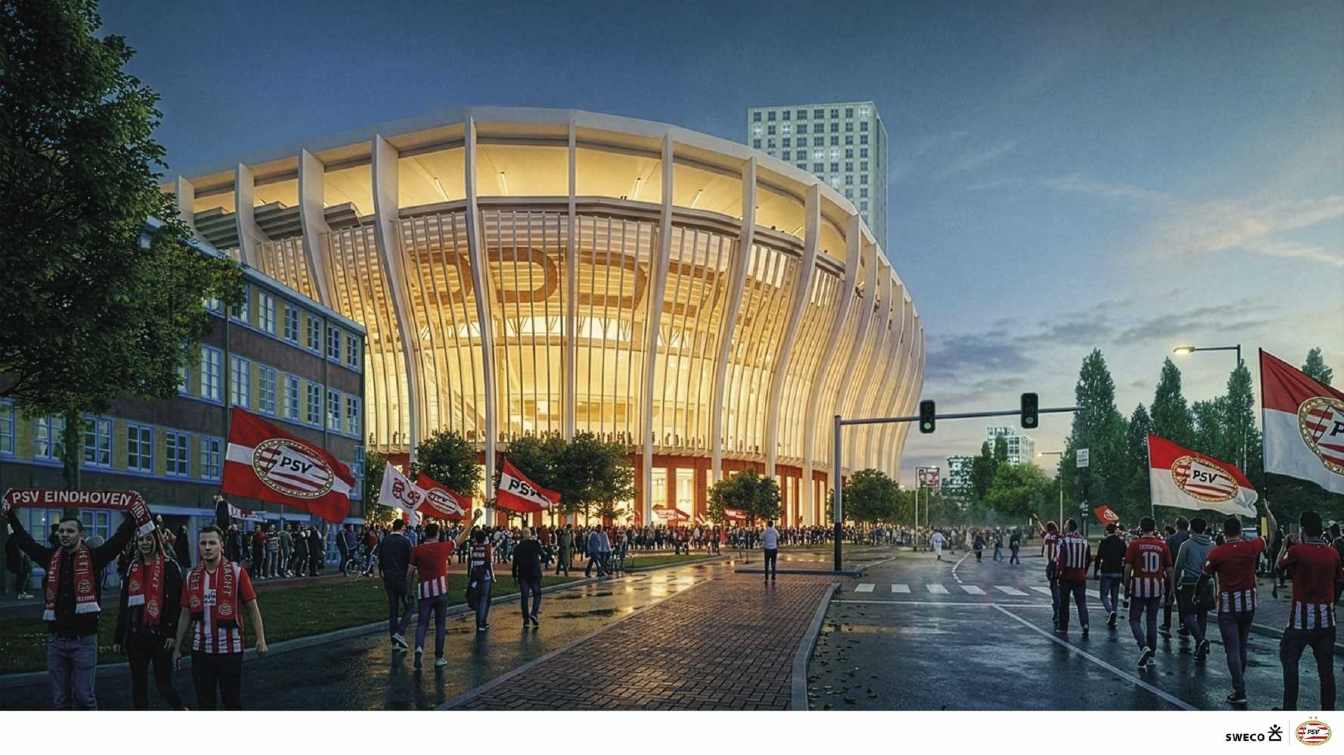 © Sweco | A new outer structure will surround the entire stadium, unifying stand heights and creating a cohesive architectural form.
Philips Stadion set to rank among largest in the Netherlands
Once the redevelopment is completed, Philips Stadion is expected to become one of the largest stadiums in the country, matching or potentially exceeding Johan Cruijff ArenA in capacity.
The final number of seats will depend on detailed design decisions, including roof structure, stand configuration and the number of VIP and corporate areas. Regardless of these variables, the stadium will reach its maximum possible size within the available space.
Philips Stadion project reflects PSV Eindhoven ambitions
The expansion is closely linked to the club’s growing sporting and commercial ambitions. PSV Eindhoven are aiming to strengthen their position both domestically and internationally, with modern infrastructure playing a key role. Demand already exceeds supply. The number of fans on the season ticket waiting list surpasses 20,000, and analyses suggest that attendance potential is well above current capacity. In practice, this means that many matches could attract significantly larger crowds.
A larger stadium would not only increase matchday revenue, but also expand opportunities for hosting commercial events. In the long term, this could improve financial stability and support the club’s development. As a result, the Philips Stadion redevelopment may prove to be a defining moment for PSV Eindhoven in the years ahead.
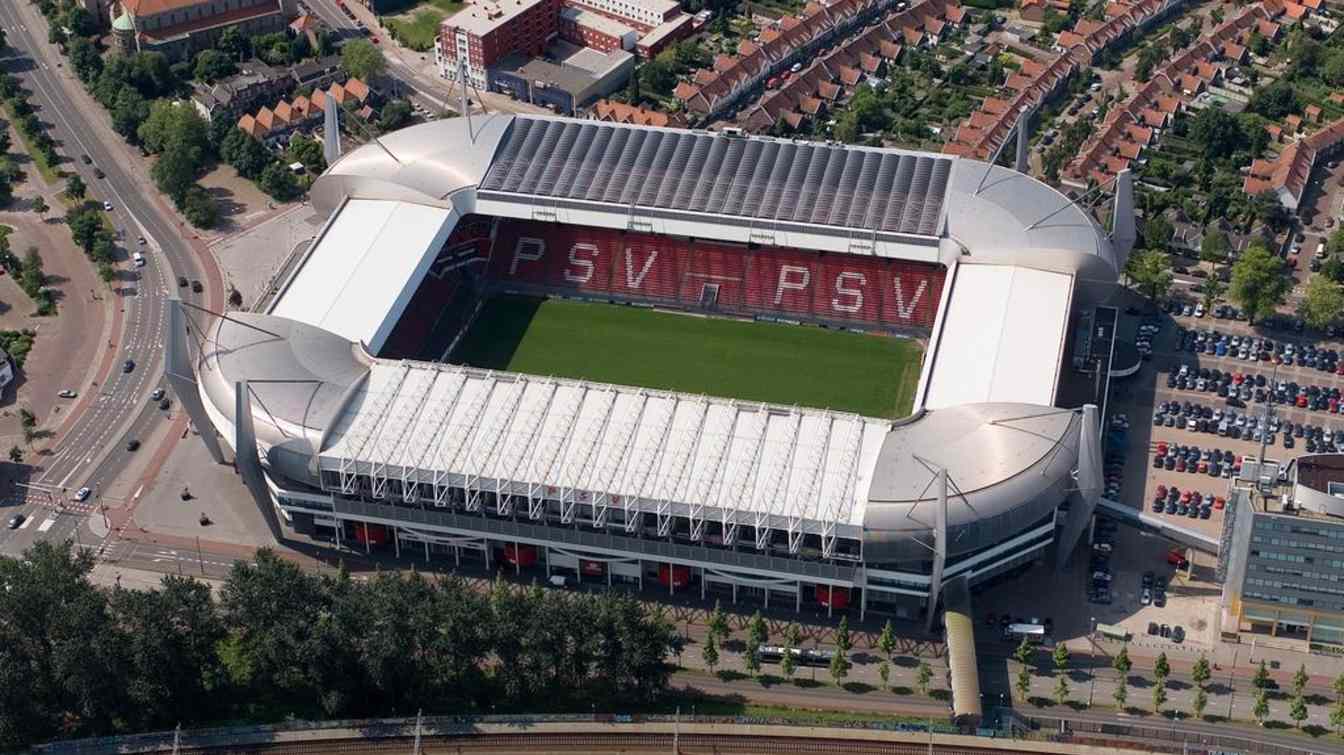 © FLX (cc: by-sa) | The expansion is planned to begin in 2027 and will be carried out in phases to allow the stadium to remain operational during construction.
Advertisement