 StadiumDB
USA: Kansas City Chiefs approved for new stadium. Wyandotte County authorizes incentive package
source: StadiumDB.com ; author: Jakub Ducki
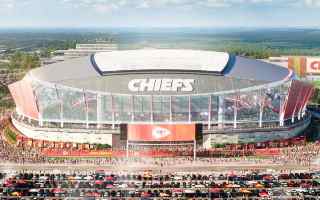 The Kansas City Chiefs have received formal approval to move forward with plans for a new stadium. A complex financing deal combining public incentives and private investment has cleared a key hurdle, even as the project continues to divide local officials and residents.
Advertisement
Funding mechanism for stadium construction
A key element of the agreement is the creation of a Sales Tax and Revenue (STAR) bond district, which will redirect future local tax revenues to repay the construction costs of the new Chiefs stadium. Wyandotte County has committed to reimbursing a portion of taxes generated exclusively within the future development area.
The financing mechanism involves diverting two key revenue streams to pay off the investment. The county waives full receipts from a 1-percent sales tax, as well as the dominant share—over 93%—of receipts from a second local tax of the same type. The local government will retain only a margin of funds (less than 7% of the second tax), which by law must be allocated to fund public safety and medical services within the new district. Additionally, up to 8% of the transient guest tax (hotel tax) will be allocated to repay the investment.
Tax rebates will be in effect for 30 years or until the bonds are fully repaid. The total value of local tax incentives may range from $350 million to $450 million. However, it is worth noting that key fees were excluded from the subsidy, including sales tax on emergency medical services, as well as taxes designated for public safety and local infrastructure.
Who pays for stadium?
The entire stadium complex, including an adjoining entertainment district valued at $325 million, will cost approximately $3.3 billion in total. The main pillar of financing, covering $1.8 billion, is state STAR bonds. Another billion dollars will come directly from private funds of the Hunt family, owners of the Chiefs. Supplementing this budget is the aforementioned Wyandotte County contribution of up to $450 million from local taxes.
Overall, STAR bond sales and the Attracting Professional Sports to Kansas
program will cover 60% of the stadium construction costs. The remaining 40% will be financed by private funds, which is intended to relieve the direct budget of the local government.
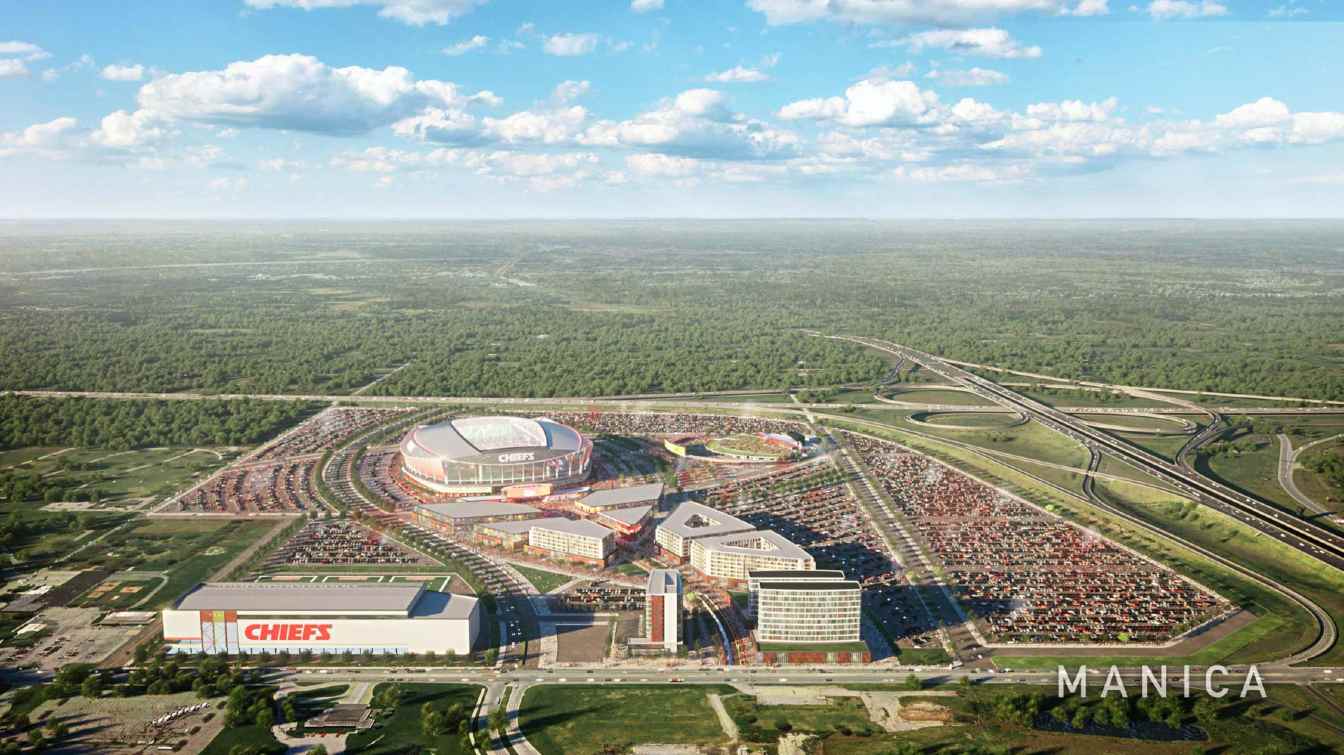 © MANICA | 2024 New Kansas City Chiefs Stadium Project.
Economic forecasts and jobs
According to Kansas state estimates, the project is expected to bring significant economic benefits. During the construction phase, it is projected to create over 20,000 jobs and generate over $4.4 billion in economic impact for the state. Upon completion, the entire complex is expected to provide over 3,500 permanent jobs and bring in over $1 billion in economic benefits annually.
Wyandotte County estimates the project will generate $488 million in revenue over 30 years. After deducting tax incentives, this should yield the local government at least $38 million in net profit. Todd LaSala, an economic development lawyer representing the Unified Government, emphasized that the investment site is currently undeveloped, so any tax revenue generated there will be completely new to the budget.
Wave of resident opposition
The vote was preceded by a stormy public hearing on Tuesday evening, February 3, during which about 45 people spoke. The vast majority of speakers expressed opposition to the proposed agreement. Residents argued that tax burdens are already too high and public money should not go to the wealthy Hunt family, whose fortune is estimated at nearly $25 billion. Attention was also drawn to more urgent social needs, such as programs for the homeless, school funding, or road repairs.
Dave Druten, a Kansas City resident, bluntly commented on the investment plans, calling them one of the dumbest ideas
he has seen and reminding officials that this would be yet another stadium for the same team. Fannie Hill also gave an emotional speech, comparing the county's proposal to a situation where residents bear the costs of maintaining a house while the authorities only want to collect rent. In her opinion, such a contract structure is insulting to the community.
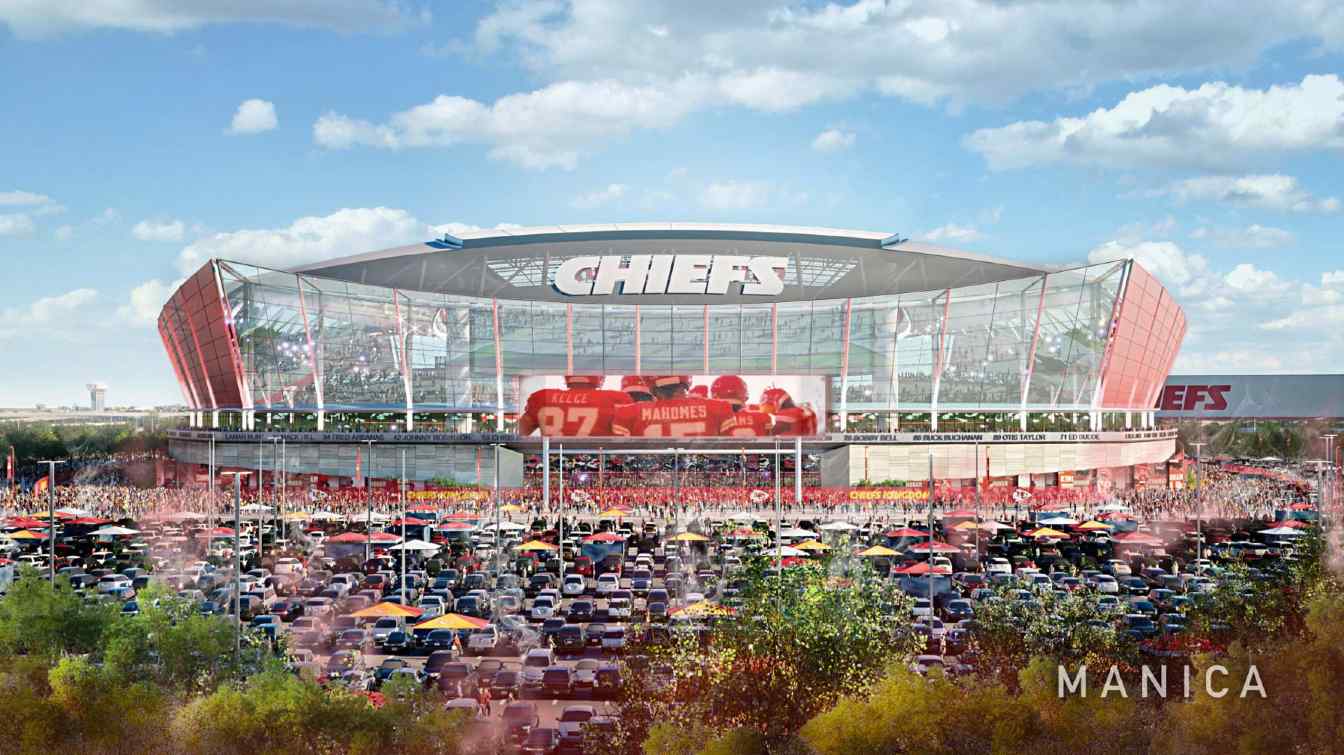 © MANICA | 2024 New Kansas City Chiefs Stadium Project.
Division among commissioners
The decision was not unanimous—three of the ten commissioners voted against the resolution. These were Chuck Stites, in whose district the stadium is to be built, as well as Philip Lopez and Andrew Davis. The latter explained in a lengthy statement that his opposition stemmed from a lack of time for thorough analysis, insufficient information, and concern for the county's financial responsibility. Davis feared financial risk and a lack of hard guarantees from state partners regarding infrastructure and security.
Commissioner Chuck Stites, in turn, expressed frustration over the lack of transparency in the process. He criticized the fact that commissioners were forced to sign non-disclosure agreements after the Chiefs' decision announcement in December, which prevented them from talking openly with constituents and answering their questions at a key moment in negotiations.
Arguments of supporters
Supporters of the project, including Commissioner Melissa Bynum, cited support received electronically. Bynum reported receiving over half a thousand emails on the matter, the vast majority of which were positive. The Mayor of Kansas City, Kansas, Christal Watson, defended the decision, arguing pragmatically that rejecting the resolution would completely exclude the county from negotiations.
Watson emphasized that agreeing to the terms allows the local government to keep a seat at the negotiating table and influence the final shape of the investment. In her view, a no
vote would mean losing control over the process and an inability to secure residents' interests in future land development agreements.
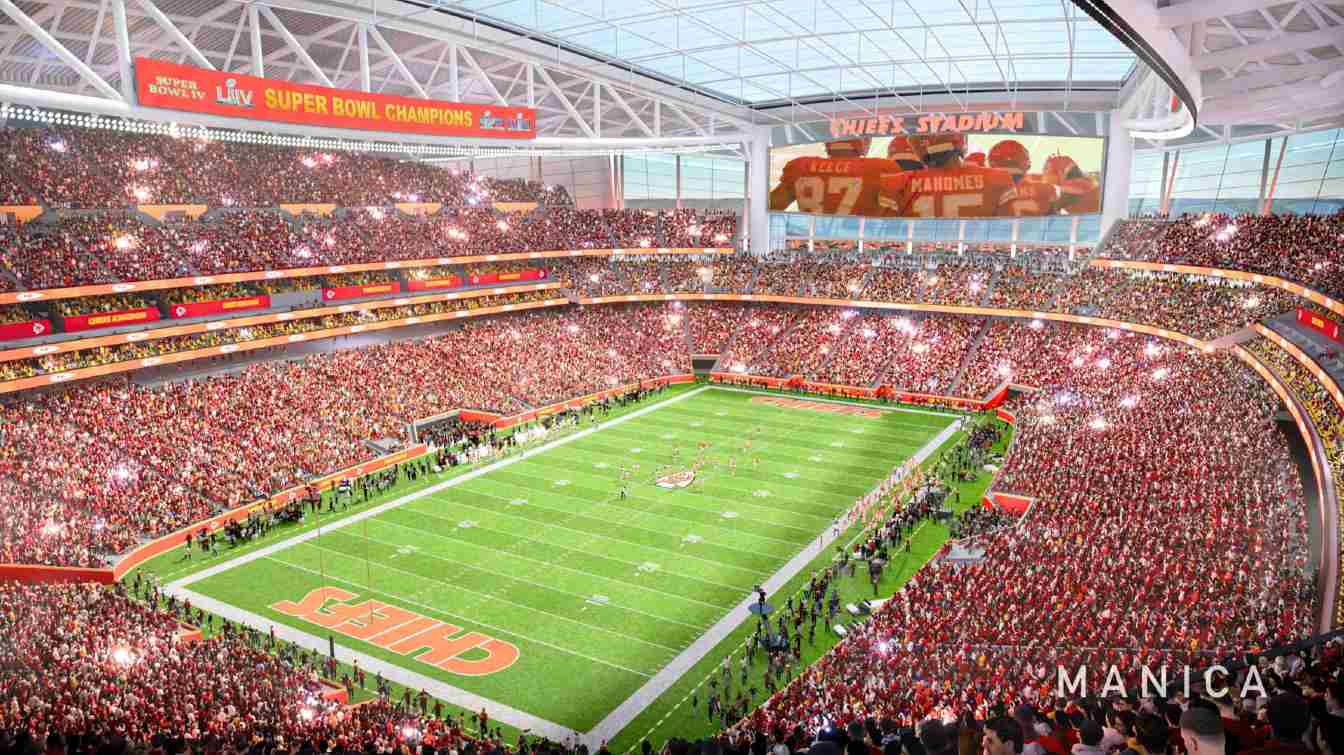 © MANICA | 2024 New Kansas City Chiefs Stadium Project.
Ownership and infrastructure issues
During the discussion, key technical and legal issues were also clarified. Lawyer Todd LaSala specified that the state will own the stadium, and the Chiefs will merely be a tenant paying rent. Rent funds are to go into a special maintenance fund, ensuring the facility is kept in good condition for years without burdening the local budget.
Security costs on the stadium grounds will be borne by the club, while public safety in the surrounding area (police, fire department) will be the responsibility of the county, estimated at $57 million over 25 years. The county also estimated associated infrastructure costs at $396 million, though these are to be covered by STAR bonds rather than directly from taxpayers' pockets.
Headquarters in Olathe and club reaction
Parallel to the stadium decision, the Olathe City Council unanimously approved the creation of a similar bond district for the Chiefs' new headquarters and training facility. This complex, worth approximately $400 million, will be built on 165 acres at College Boulevard.
After the vote, the Chiefs issued a brief statement thanking Mayor Watson and the commissioners for their support. The club expressed gratitude for the process and excitement about future cooperation.
 © MANICA | 2024 New Kansas City Chiefs Stadium Project.
Advertisement