 StadiumDB
Spain: Nou Mestalla takes shape while historic Mestalla may soon disappear from city map
source: StadiumDB.com ; author: Paulina Skóra
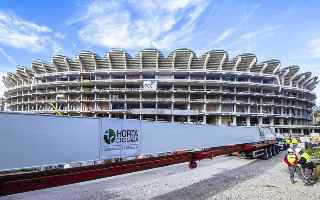 It's becoming increasingly clear that the end of Mestalla's century-long history is approaching. While construction of the Nou Mestalla progresses, the club is looking for a buyer for the land where the historic stadium stands and a company to carry out its demolition. However, a problem has arisen: many construction companies don't want to be associated with the disappearance of such a beloved stadium in Valencia.
Advertisement
Sale of the Mestalla stadium plot could determine demolition of the historic ground
The key question is no longer if,
but who
and for how much
will carry out its demolition. Valencia CF expects around €150 million for the attractive nearly 90,000-square-metre plot in the heart of Valencia. It is one of the last such prestigious parcels in the city centre — designated for residential and commercial development. The valuation reflects what is described as a super premium
location: proximity to the Turia Gardens, the historic centre and convenient access to the coast make the site highly desirable for developers.
A crucial element of negotiations will not only be the land price but also responsibility for demolishing the stadium. The demolition itself is estimated at €10–15 million, in addition to land remediation works on a site continuously built on since 1923. Removing foundations and preparing the parcel for new construction could significantly increase total costs.
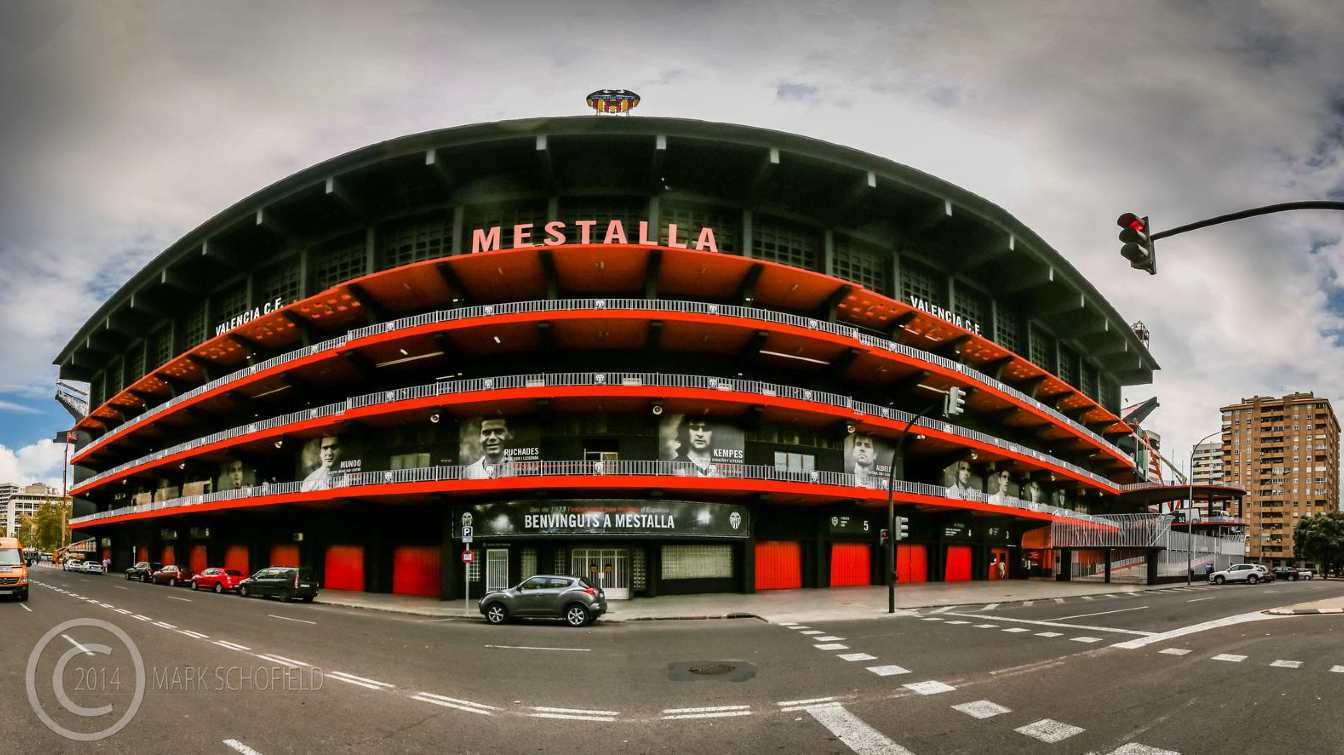 © Mark Schofield / Mestalla was inaugurated in 1923 and expanded several times since then.
Symbolism of Mestalla demolition raises concerns among construction firms
Mestalla is not just concrete and steel — it represents 103 years of history, emotion and supporter identity. The act of demolition therefore goes beyond technical matters. According to local media, some construction companies that contacted intermediary CBRE regarding the potential transaction are reluctant to associate their brand with the demolition. For certain firms, dismantling such a symbolic venue could pose reputational risks.
At the same time, there are specialized companies for whom stadium demolition is routine. The market includes operators experienced in dismantling major sports venues who approach such projects purely from an engineering perspective. In recent years, notable examples included the demolition of the old Camp Nou and earlier the Estadio Vicente Calderón in Madrid. In both cases, a significant portion of materials was recycled and reused in new developments.
Technology behind demolishing a football stadium in central Valencia
Demolishing a large stadium in dense urban surroundings requires precise planning. The process begins with selective deconstruction — removing installations, seating, steel components and equipment. Only then does heavy machinery gradually dismantle the reinforced concrete structure. For a complex of this scale, maintaining structural stability of successive sections and controlling dust and noise are critical.
Controlled implosion, while visually striking, is rarely used in city centres due to risks to surrounding buildings. A slower, segment-by-segment demolition is therefore more likely. Material recovery remains a priority — steel and concrete can be processed and reused, reducing the project’s environmental footprint.
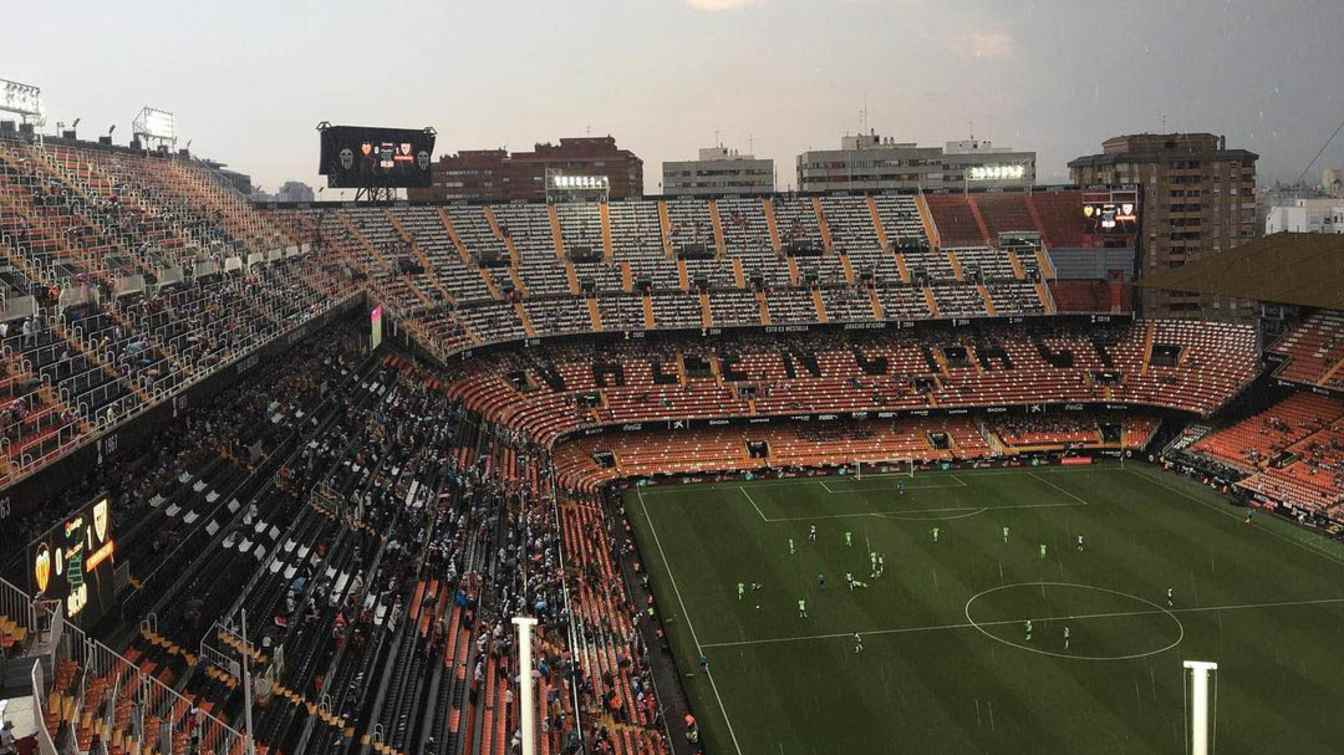 © stadiumgallery / Mestalla is the second oldest stadium in Spanish professional football, only surpassed by El Molinón.
New development on the Mestalla site could reshape the city landscape
If the transaction proceeds, residential buildings, retail space and service facilities will rise on the site. Given the location, average apartment prices could exceed €500,000 per unit, making the project highly attractive commercially. Valencia is gradually exhausting available land in the city centre, with new housing projects increasingly located on the outskirts. This makes the Mestalla plot particularly appealing to developers.
For the club, selling the land forms part of a broader financial strategy linked to completing the new stadium.
Nou Mestalla construction accelerates – project timeline through 2027
Work at Nou Mestalla is progressing in parallel. After years of stagnation, construction resumed in January 2025. The municipal Urban Planning Department confirmed the completion of further milestones — concrete works and installation of external staircases have begun. The schedule includes another inspection at the end of 2026, when installation of 50 pillars supporting the future roof will be reviewed.
Roof assembly is planned for spring 2027, with full completion and issuance of the Final Works Certificate scheduled for 11 July 2027. Structural columns, façade elements and the first sections of the future black-and-orange exterior are already visible.
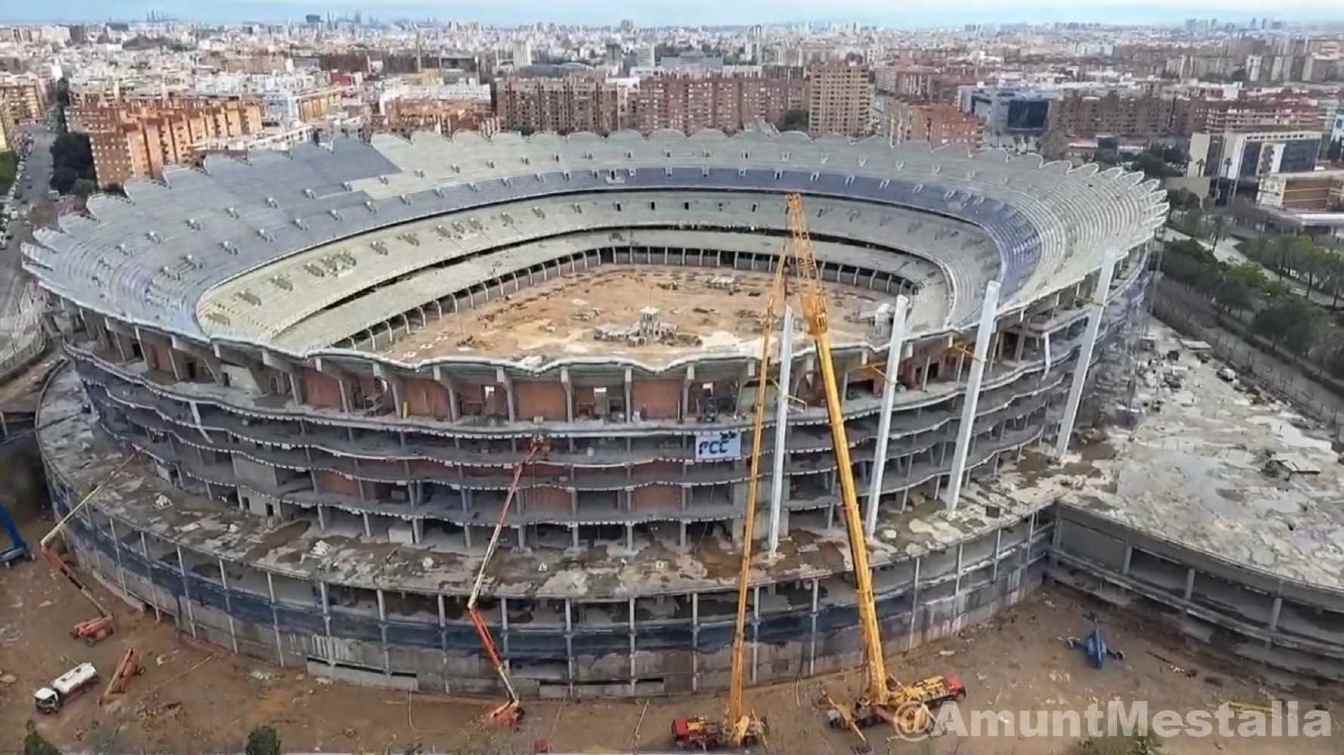 © Amunt Mestalla / Several pillars of the roof of the Nou Mestalla are already installed.
Capacity and final design of Nou Mestalla after years of revisions
The new stadium is being built in a modified and simplified version compared to the ambitious plans unveiled nearly two decades ago. Some costly façade elements have been removed, while the main reinforced concrete structure — largely completed before works were halted in 2009 — remains.
Although the project has lost some of its original architectural ambition, it retains the core structure and stand layout. Additional roof-support pillars are currently being installed, with membrane roofing expected in the coming months. If the timeline is respected, Valencia CF will move into its new home in summer 2027, and the fate of historic Mestalla will be definitively sealed.
Advertisement