 StadiumDB
Spain: Court to decide on the legality of Nou Mestalla construction
source: StadiumDB.com ; author: Paulina Skóra
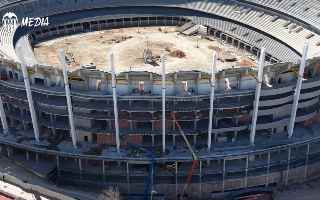 The fate of the Nou Mestalla construction is once again in the hands of the court. The dispute over the legal status of the land and urban development obligations may determine whether one of Europe’s largest unfinished projects moves forward as planned or becomes stuck in procedural deadlock once again.
Advertisement
Land status key to Nou Mestalla project
One of the main arguments presented by the city authorities concerns the legal status of the plot on which Nou Mestalla is being built. According to the municipal government of Valencia, the land obtained building plot status (solar
) back in the 1990s as part of an urban development plan for that area of the city. Urbanization works — including technical and road infrastructure — were reportedly completed in 1999.
In the city’s view, this means there are currently no formal obstacles preventing the continuation of stadium construction. Officials stress that current regulations allow the construction of a sports facility to proceed in parallel with complementary urbanization works. However, these must be fully completed before the stadium can be opened to the public.
The building licence includes a safeguard clause protecting the public interest: the stadium cannot be opened or put into operation until all required infrastructure works are finalized. According to the authorities, this provision guarantees legal compliance.
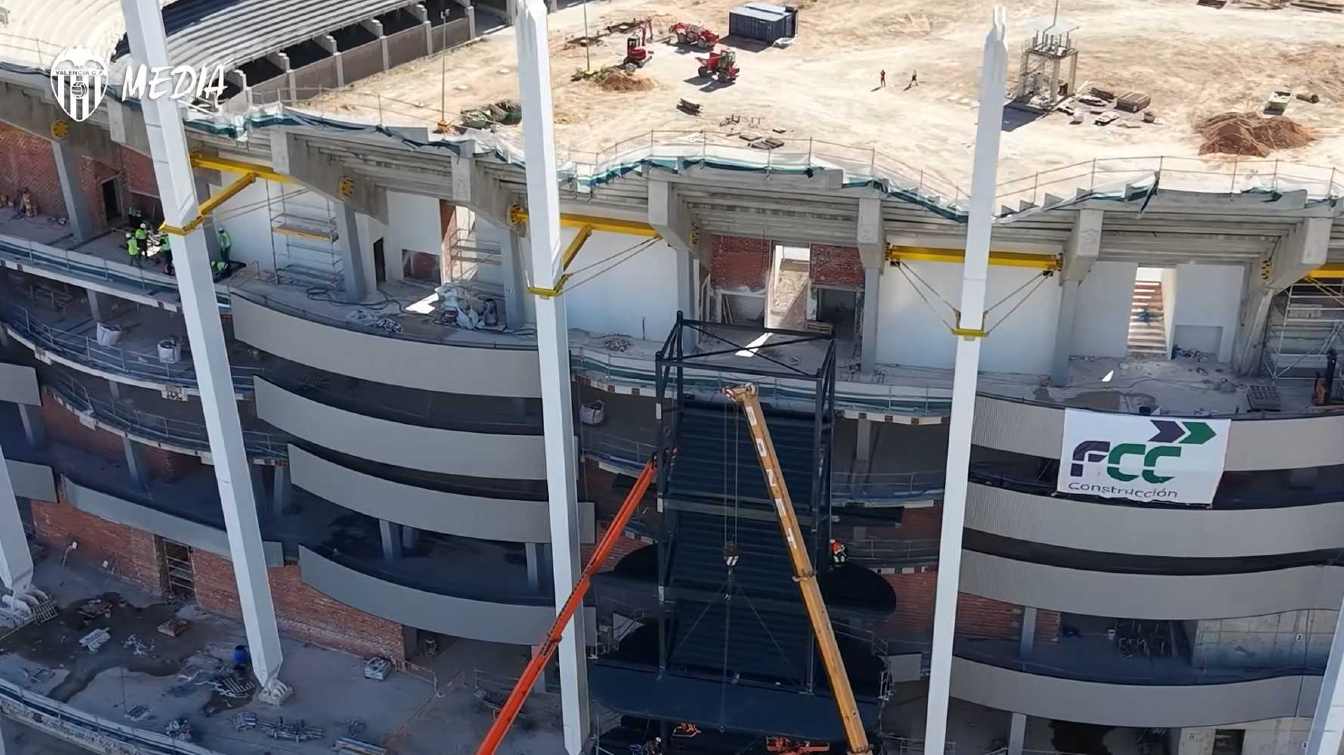 © Valencia CF | The Nou Mestalla construction site is one of the largest unfinished structures in the world.
Dispute over ATE and the Ademuz partial plan
The club — Valencia CF — argues that for more than 18 years, no administrative authority questioned the legal status of the plot. Moreover, a reinforced concrete stadium structure — the well-known skeletal frame that has become a symbol of the unfinished project — has stood on the site for years. In the club’s assessment, this confirms both the legality of earlier administrative decisions and the continuity of the investment process. The club also rejects claims that a separate urban action programme would be required.
However, the supporters’ association Libertad VCF maintains that the binding planning document remains the so-called ATE (Actuación Territorial Estratégica), rather than the Ademuz partial plan. According to the claimants, the ATE imposes additional urbanization obligations on the club that have not been fulfilled or properly secured by a bank guarantee.
The association argues that the absence of a full urbanization project compliant with ATE requirements, as well as the lack of financial guarantees, constitutes a breach of public interest. It also contends that previous permits do not automatically validate the current building licence.
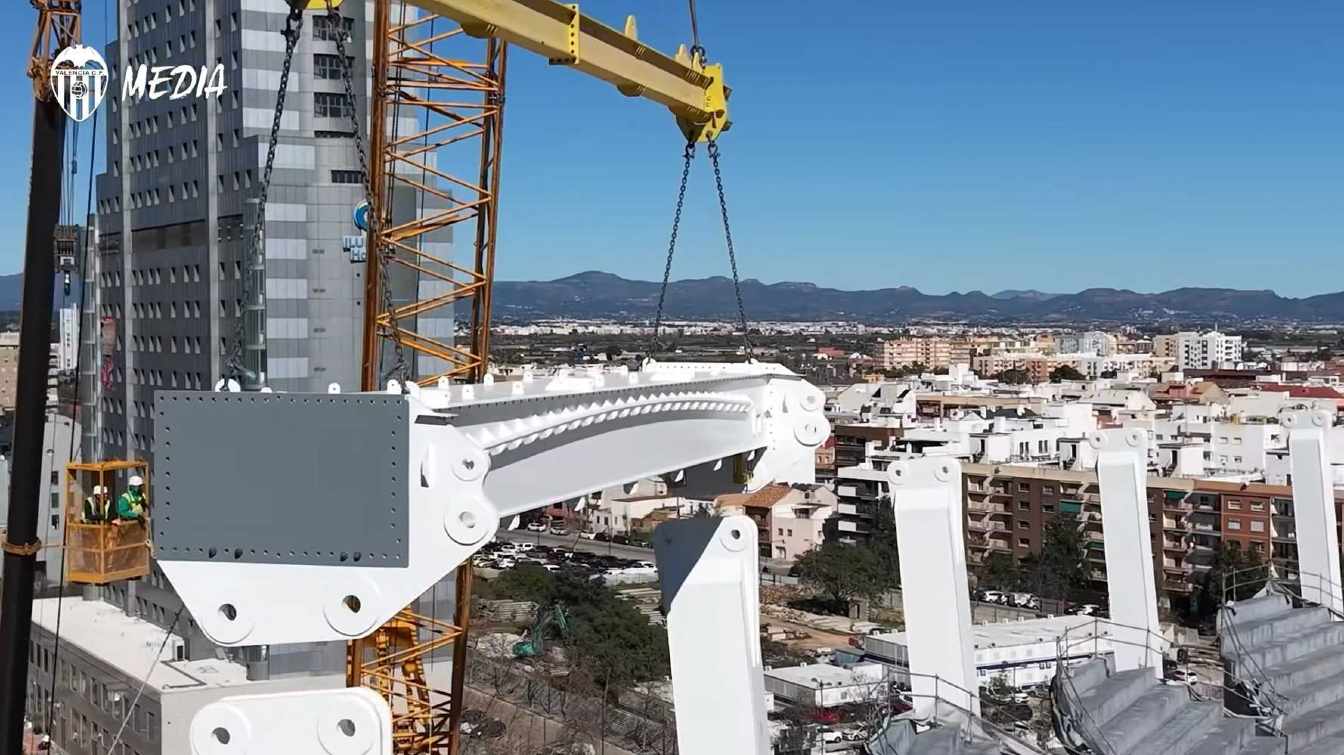 © Valencia CF | Nou Mestalla has increasingly slim chances of hosting World Cup matches in 2030.
Administrative court in Valencia to decide
The case is being examined by an administrative court in Valencia, which is preparing its ruling after reviewing the written submissions of all parties. A decision is expected in the spring, no earlier than April.
The ruling will determine the future pace of the project. If the court upholds the legality of the licence, construction of Nou Mestalla may continue according to the schedule leading to the planned opening in 2027. Otherwise, procedural or administrative corrections may be required, potentially causing further delays to a project that has already experienced significant setbacks.
Advertisement