 StadiumDB
Italy: Stadium in Palermo on the road to Euro 2032 – four modernization scenarios on the table
source: StadiumDB.com ; author: Paulina Skóra
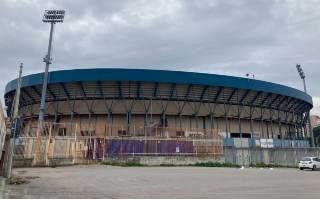 Stadio Renzo Barbera has moved to the centre of Palermo’s plans linked to Euro 2032. The city is assessing different scenarios for the stadium’s future, seeking to balance UEFA requirements, urban realities and ambitions to turn it into more than a matchday venue.
Advertisement
Modernisation of Stadio Renzo Barbera and Euro 2032
One of the main drivers behind the planned modernisation of Stadio Renzo Barbera is Palermo’s bid to host matches during Euro 2032. UEFA imposes more than 130 detailed technical and organisational requirements on host cities and venues, covering areas such as safety, spectator comfort, media facilities and transport accessibility. Meeting these standards requires deep intervention in the current stadium structure, which, despite multiple renovations, no longer fully complies with European standards.
Construction and Redevelopment of Stadio Renzo Barbera – Four Scenarios
As part of the DOCFAP (Documento di Fattibilità delle Alternative Progettuali), Populous provides a detailed comparison of four possible future scenarios for the stadium. Each option differs in scale, cost and impact on the city of Palermo and its urban fabric. Importantly, all proposals are conceptual and may be significantly modified during later design stages.
The first scenario involves minimal intervention while preserving the current form of Renzo Barbera. It focuses mainly on maintenance and technical works necessary to ensure the stadium’s continued safe operation. This option includes selective infrastructure upgrades but no major changes to the stands, roof or surrounding areas. While it is the least expensive option, it is also considered the least viable in terms of UEFA requirements and Palermo’s Euro 2032 ambitions.
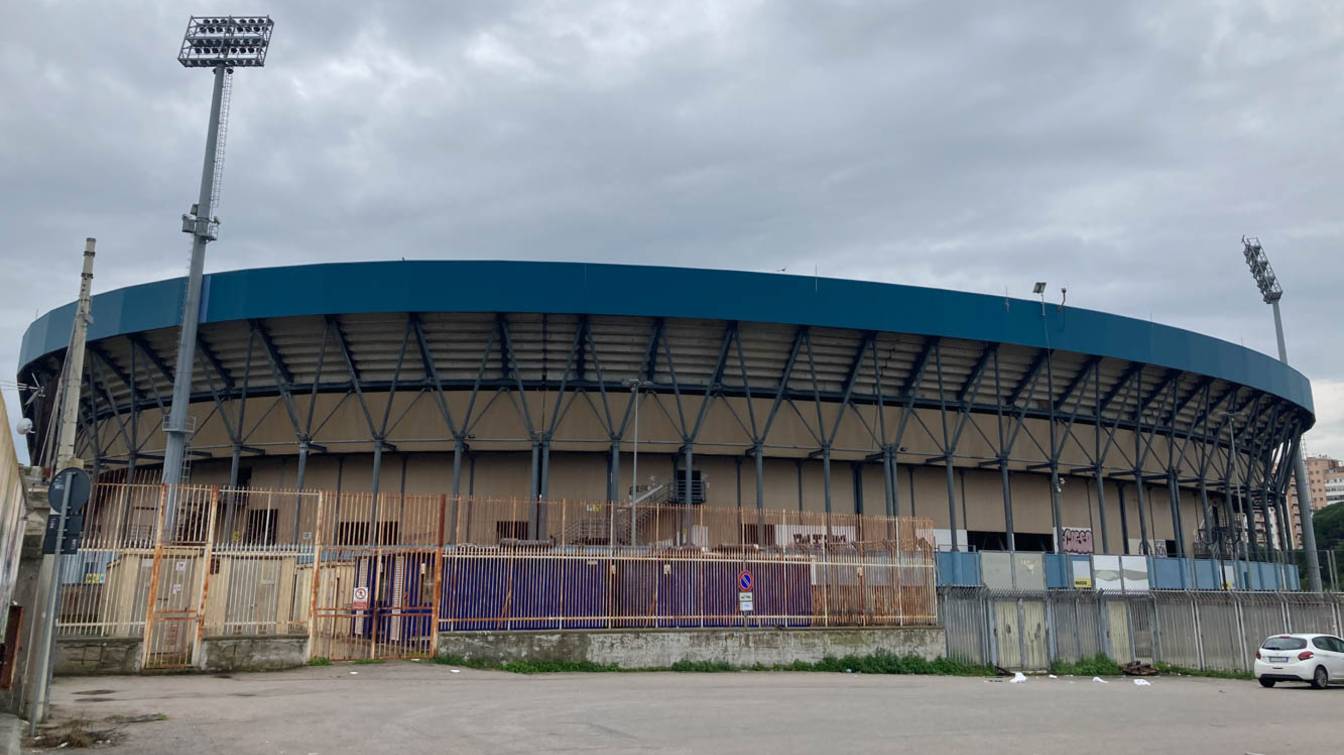 © Robert Saganowski, Stadiony.net | Stadio Renzo Barbera is one of many Italian stadiums in need of renovation.
The second option expands on the first, proposing a broader modernisation programme without fundamentally transforming the stadium. It introduces elements aimed at improving spectator comfort and stadium operations, but without redefining the stadium’s relationship with the surrounding urban environment. Populous describes this option as another conservative solution
that fails to fully exploit the site’s potential within Palermo’s urban structure.
The third scenario represents the most radical change, proposing the construction of a new stadium on land partially belonging to the Ippodromo della Favorita. While the location is functionally coherent from a sporting perspective, this option faces significant legal and scheduling obstacles. The lack of appropriate contractual frameworks and the tight Euro 2032 timeline have led to this scenario being postponed at this stage, although it has not been entirely ruled out for the future.
The fourth scenario is rated highest by Populous and is considered to offer the best cost-benefit ratio for the city of Palermo and the environment. It proposes a comprehensive redevelopment of Renzo Barbera on its current site, combined with extensive revitalisation of the surrounding area. The project includes full roofing of the stands, improved accessibility, removal of architectural barriers, and the creation of new public and commercial spaces.
Fourth Modernisation Scenario as the Leading Option
According to the DOCFAP, the fourth scenario best meets UEFA requirements and Palermo’s long-term needs. It allows for phased construction, continued use of the stadium during works, and maximum reuse of existing infrastructure. It also leaves room for future upgrades, making it a flexible and low-risk solution for both the city and Palermo FC. Upon completion, the stadium’s capacity is expected to range between 30,000 and 36,000 seats.
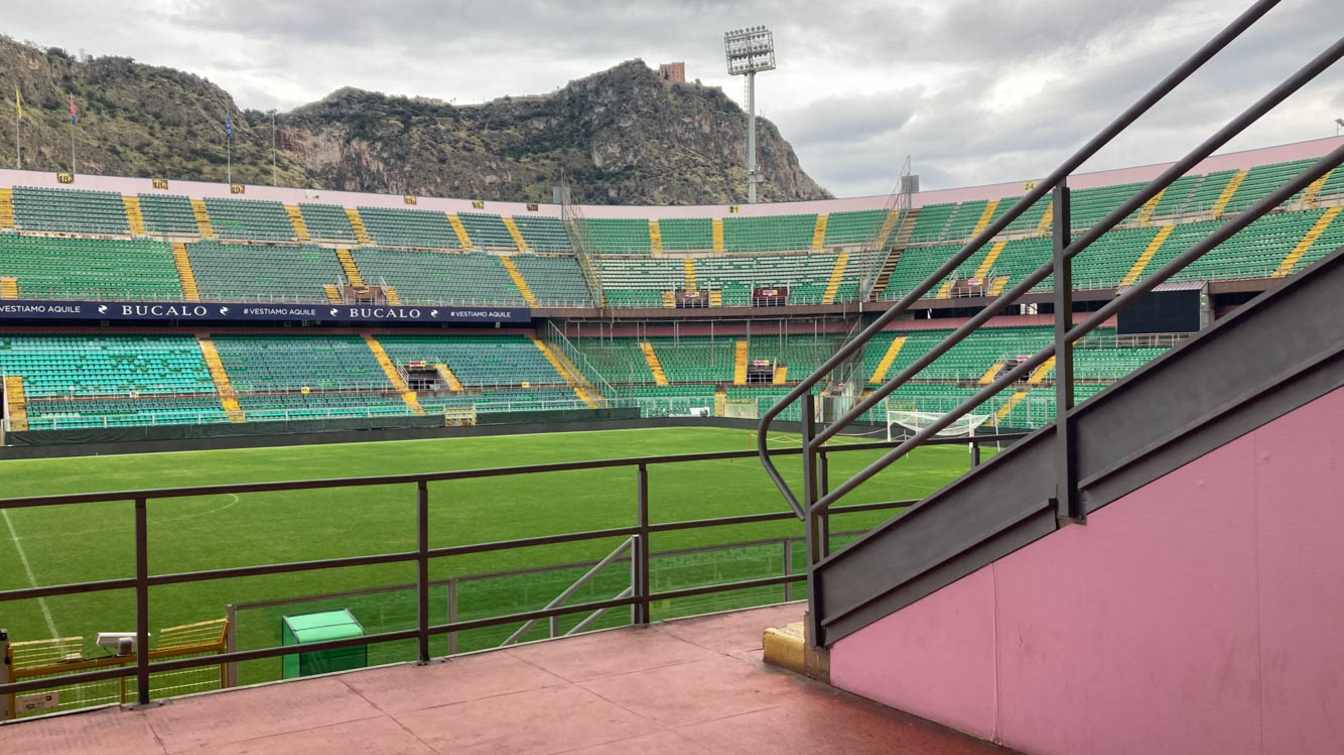 © Robert Saganowski, Stadiony.net | The Palermo stadium is beautifully situated. During matches, fans can observe not only the pitch but also the Costello Utveggio Castle atop Monte Pellegrino.
A key objective of the redevelopment is to transform Renzo Barbera into a year-round urban venue rather than a facility used only on matchdays. The plans include commercial spaces, food and beverage outlets, meeting areas and the ability to host non-sporting events such as concerts and cultural activities, improving the stadium’s long-term financial sustainability.
Sustainability and Urban Efficiency of Palermo’s Stadium
Environmental considerations are a central element of the project. Planned measures include the use of renewable energy sources, improved energy efficiency and permeable surfaces to manage rainwater. Particular attention is given to mitigating the urban heat island effect, a significant challenge in Palermo’s hot and humid climate.
The stadium modernisation is closely linked to Palermo’s public transport development plans. The venue will be served by suburban rail and, in the coming years, by two new tram lines. Integration with public transport is both a UEFA requirement and a core element of the city’s long-term urban strategy. The project aligns with Palermo’s new Urban Plan, aiming to create an integrated area combining sporting, social and environmental functions.
Timeline and Costs of the Renzo Barbera Redevelopment
The estimated cost of the modernisation ranges from €210 million to €350 million, depending on the final design option. Construction is planned in phases to allow Palermo FC to continue using the stadium throughout the redevelopment. A key factor is the extension of the existing agreement between the city and the club, enabling Palermo FC to recover part of its investment.
Under current assumptions, construction could begin in early 2027, with completion scheduled no later than June 2031, in line with preparations for Euro 2032. Final decisions on host cities are expected in autumn 2026.
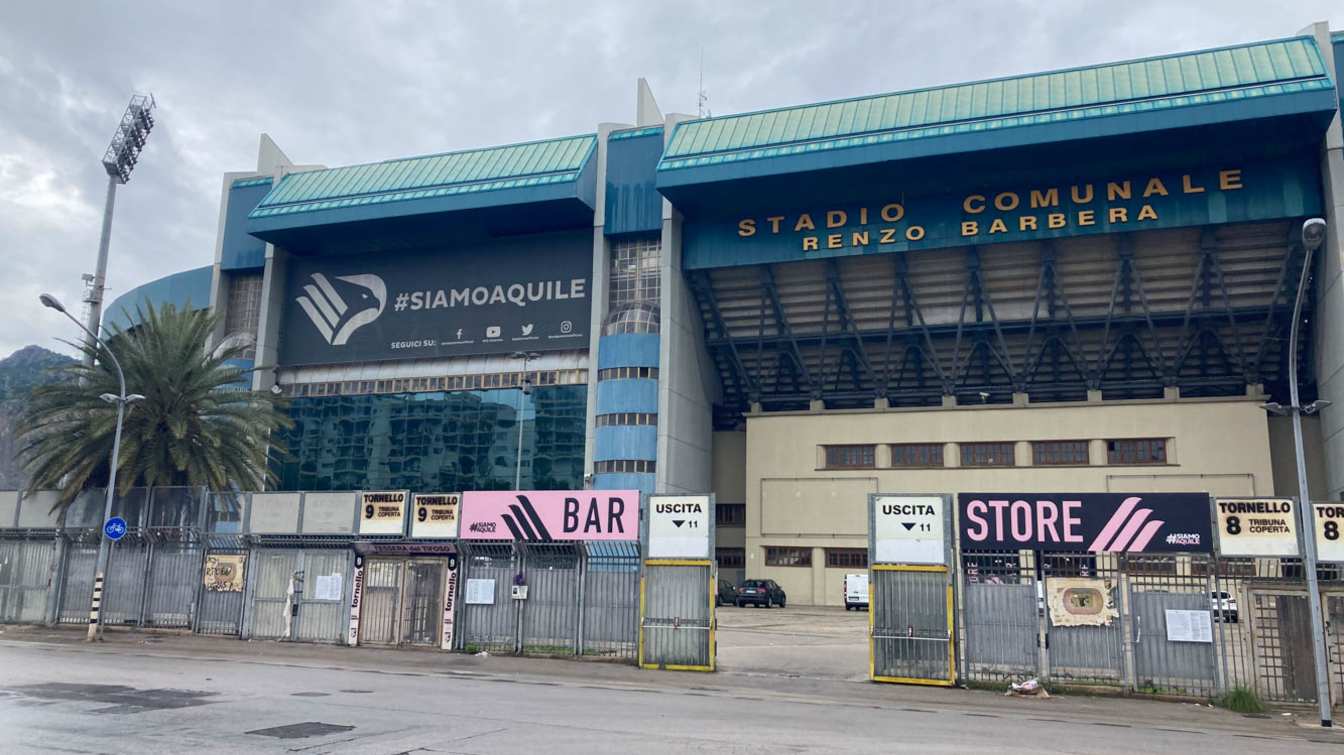 © Robert Saganowski, Stadiony.net | The estimated cost of modernising the stadium ranges from €210 million to as much as €350 million, depending on the ultimately chosen variant.
Advertisement