 StadiumDB
Croatia: Stadion Poljud in Split – is demolition the only solution for Hajduk?
source: StadiumDB.com ; author: Paulina Skóra
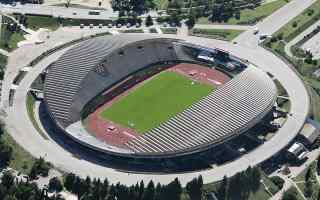 Is the legendary Stadion Poljud in Split nearing the end of its history? After 50 years of use, experts point to advanced structural fatigue, and in the debate over the future of HNK Hajduk Split, the scenario of a complete demolition and construction of a new arena is being taken increasingly seriously.
Advertisement
Ante Mihanović on the Poljud stadium structure – material fatigue after 50 years
During a specialist presentation devoted to material fatigue in steel and reinforced concrete structures, the conclusion was that the stadium cannot be effectively reconstructed. The most likely scenario could therefore be a complete demolition followed by construction of a new facility. The presentation took place at the Faculty of Civil Engineering, Architecture and Geodesy in the city of Split, and its conclusions resonated widely in the media, including on the portal Index.hr.
The author of the presentation was professor emeritus Ante Mihanović – an engineer who in 1976 participated as a structural designer in the first construction phase of the stadium. In the following years he also signed licenses allowing the facility to host competitions under the auspices of UEFA.
In his opinion, the key problem is advanced material fatigue, primarily affecting the steel elements of the roof structure and the reinforced concrete sections of the stands. Such processes are natural after decades of use, but in the case of Stadion Poljud the scale of degradation may make effective modernization impossible. The professor stressed that the structure no longer meets contemporary safety standards without very deep intervention, which in practice would mean almost a complete rebuilding.
Modernization of Stadion Poljud – is reconstruction technically possible?
The crucial question is whether modernization of the Stadion Poljud in its current form is realistic. According to professor Ante Mihanović, the severe material fatigue means that a classic reconstruction of the roof structure is not feasible, and expanding the stands would involve serious static risk.
Adapting the facility to modern infrastructure standards would in practice require building almost from scratch, because the problem is not limited to structural elements but also concerns technical installations, safety systems, VIP zones, media infrastructure, energy efficiency requirements and accessibility for people with disabilities.
In recent years there have been cases of fragments of the roof structure falling off. Fortunately, these incidents did not lead to tragedy, but they significantly increased concerns about the safety of the stadium’s use.
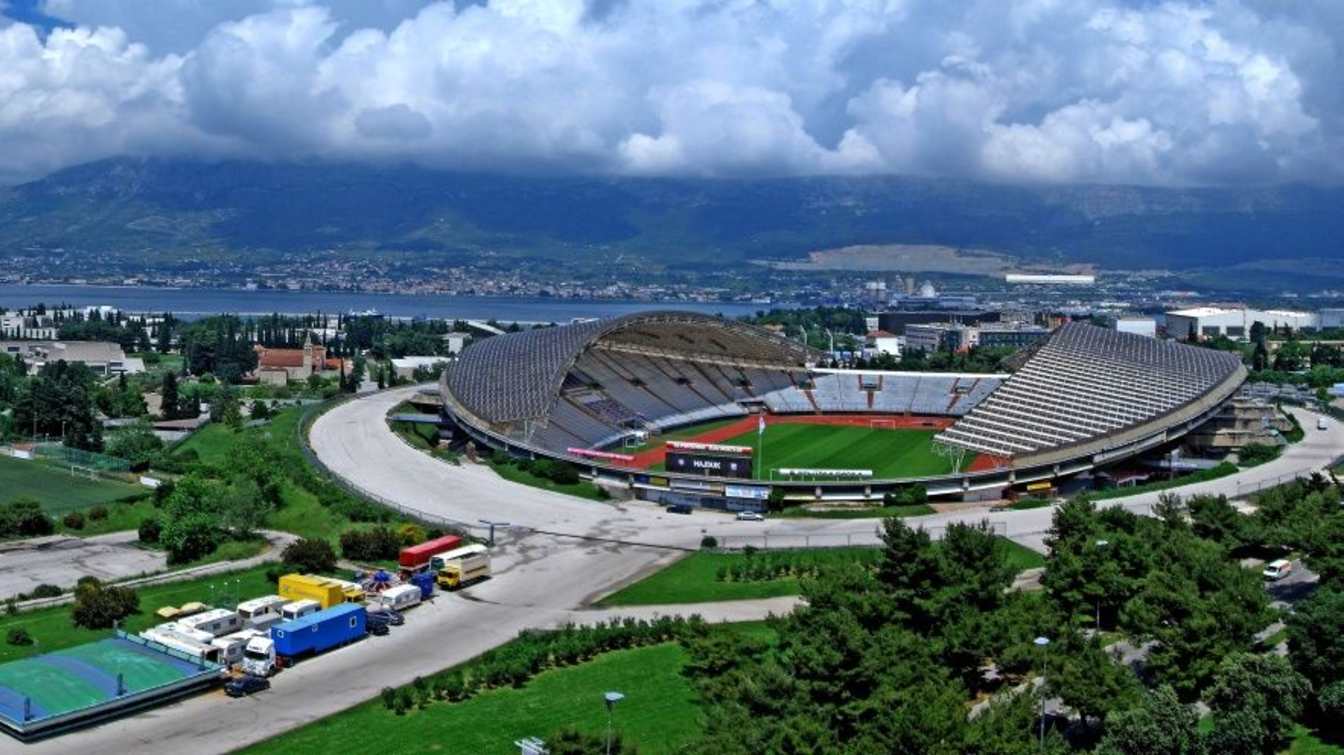 © Ballota (cc: by)
Three scenarios for Stadion Poljud and Hajduk
The debate about the future of the stadium also concerns the city of Split and the club HNK Hajduk Split. Mayor Tomislav Šuta announced the preparation of a comprehensive study to identify the optimal scenario for sports infrastructure development. Three main investment variants are under consideration.
The first assumes basic technical maintenance of the existing stadium combined with the construction of a new facility in the Brodarica district. In this case, modernization of Poljud would be limited mainly to improving structural safety and energy efficiency, while Hajduk could temporarily continue playing at the current stadium until the new arena is completed.
The second scenario envisages deep reconstruction of Stadion Poljud, including modern VIP zones, commercial spaces, top-level UEFA infrastructure, expansion of media facilities and full energy modernization. However, this variant raises the greatest technical doubts given the assessment of advanced fatigue in the load-bearing structure.
The third variant assumes the complete demolition of the current stadium and the construction of a modern arena in the same location. This would mark the symbolic end of one of the most recognizable sports buildings in the region but would also create the opportunity to build a facility with high functional, safety and commercial potential.
Stadium capacity of the new Hajduk arena – what UEFA standards must be met?
If a new stadium is built, the key factor will be compliance with UEFA requirements regarding minimum capacity for European competitions, an adequate number of VIP seats and luxury business boxes, modern media infrastructure, advanced safety systems, as well as proper transport access and parking facilities.
The project could target a capacity close to the current one, around 35,000 seats, or opt for a more compact but multifunctional sports arena that could also host concerts and other mass events, improving the economic efficiency of the investment and the attractiveness of sports infrastructure in the Dalmatia region.
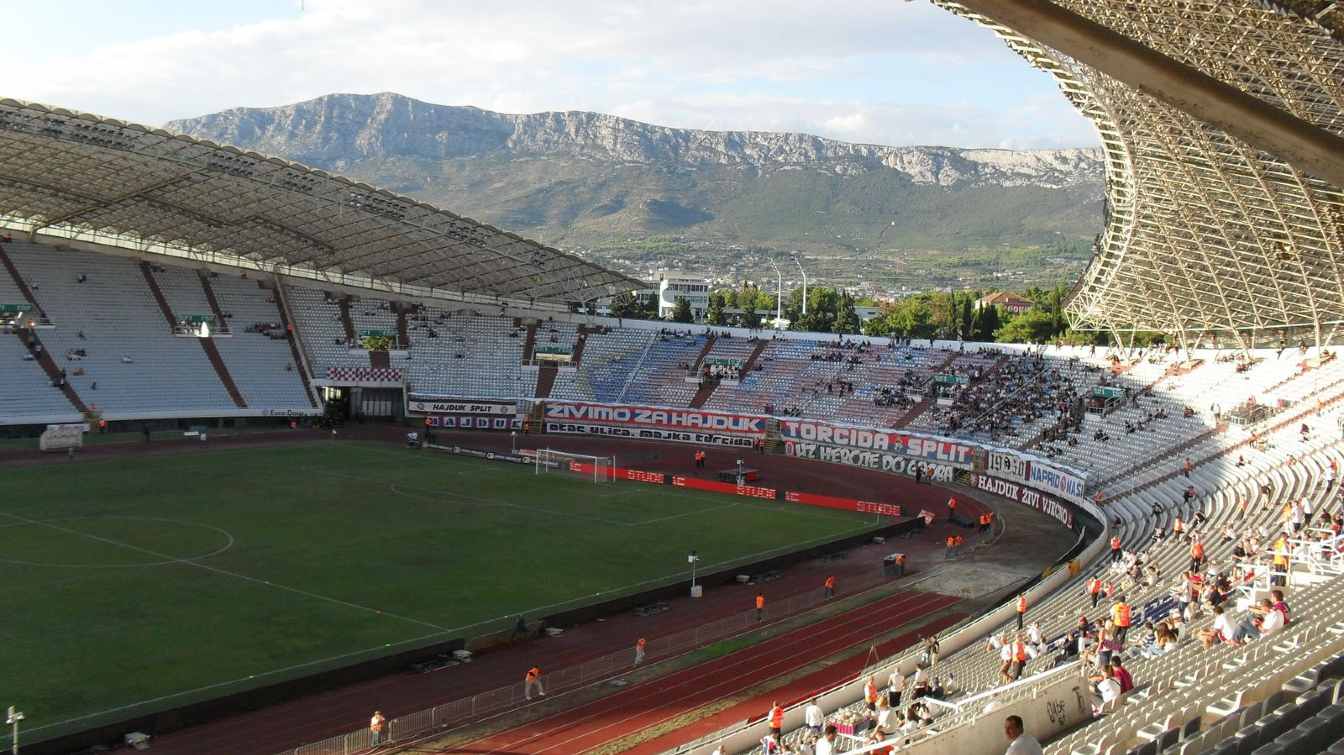 © Dawid Pelka
Stadion Poljud as a symbol of Split and Hajduk identity
Poljud is more than just sports infrastructure. For half a century it has helped shape the identity of supporters of HNK Hajduk Split. For many residents of Split, the stadium is part of the city’s landscape and a symbol of local pride. Any potential demolition would trigger strong emotions. On one hand there are safety and economic considerations, on the other – sentiment and the architectural value of the structure.
Advertisement