 StadiumDB
Brazil: Flamengo’s new stadium may not be ready for another 10 years
source: StadiumDB.com ; author: Paulina Skóra
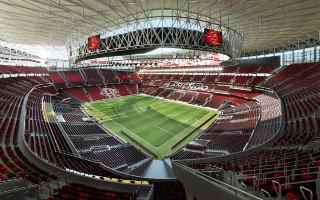 A new stadium for CR Flamengo in Rio de Janeiro? Yes — but not before 2036, and even that is not guaranteed. Despite purchasing land in the Gasômetro area, the club is delaying construction, citing high interest rates and record profitability at Maracanã. Economics is prevailing over ambition.
Advertisement
Opening of Flamengo’s stadium in Rio de Janeiro postponed until 2036
The project to build a Estádio do Flamengo in Rio de Janeiro remains in the planning phase, even though the club finalized the purchase of land in the Gasômetro area in 2024 for approximately €27,7 mln. The current board, however, is in no rush to begin construction.
After concluding a legal dispute with Caixa Econômica Federal at the end of 2025, an agreement was signed that fully regularized the ownership status of the plot. At the same time, Flamengo reached an understanding with city authorities to revise its previous commitment to open the stadium in 2029. The new preliminary target date is 2036, although — as the board emphasizes — even that deadline is not final. The club states that the decision to begin construction will depend solely on economic calculations.
Flamengo and Maracanã: 19 more years of control in Rio
A key argument from Flamengo’s leadership is the club’s long-term concession to operate the legendary Maracanã. The agreement still has 19 years remaining, effectively granting the club full operational and financial control over the venue.
Club president Luiz Eduardo Baptista, known as Bap, told the Spanish newspaper Diario AS that Flamengo already has its own stadium
thanks to the Maracanã concession. In his view, constructing a new venue only makes sense if the business model guarantees significantly higher revenues than those currently generated — without committing billions to infrastructure.
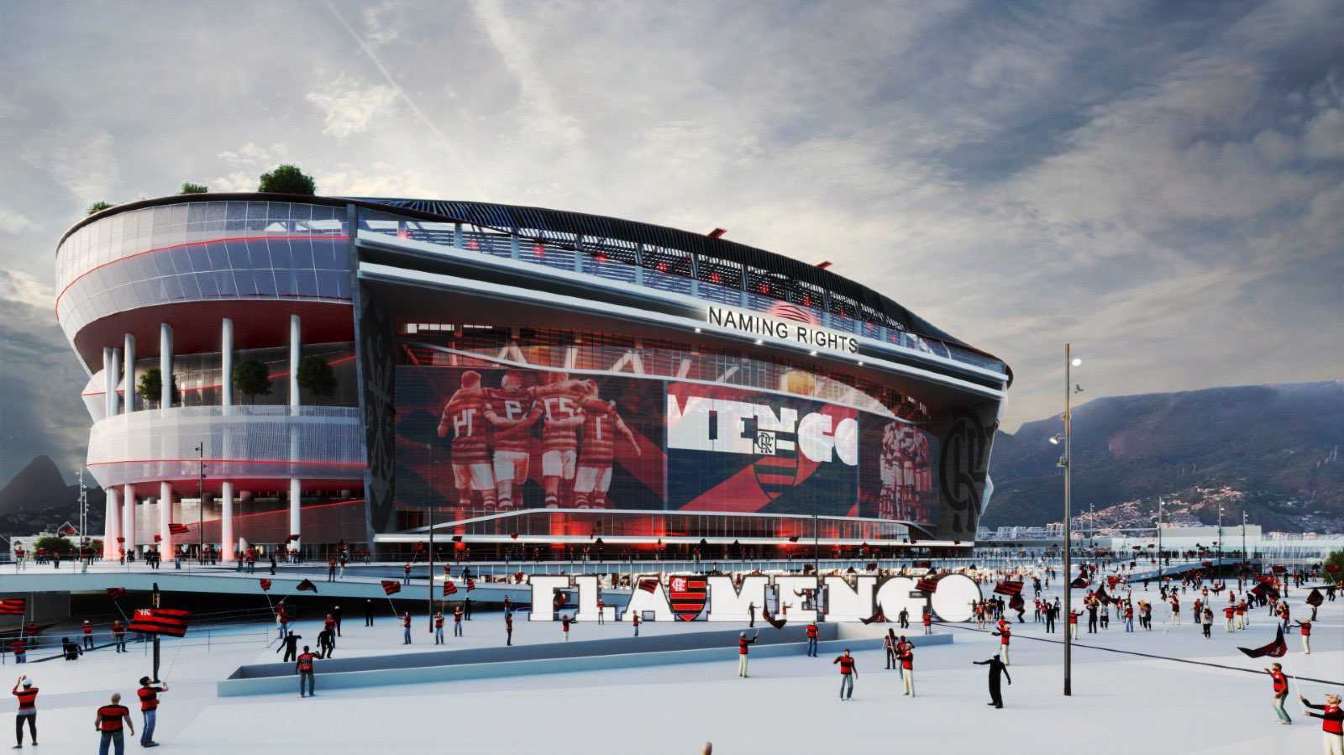 © ARENA Events+Venues / Clube de Regatas do Flamengo | The new, tentatively adopted project completion date is 2036, although – as the management emphasizes – even this deadline is not final.
According to the president, the club cannot afford a project that would burden its budget for decades and limit sporting ambitions. If a new stadium does not clearly outperform Maracanã financially, the investment will be postponed.
High interest rates in Brazil slow the project
One of the most important factors behind the delay is the macroeconomic environment. Brazil’s benchmark Selic interest rate currently stands at 15%, making debt financing extremely expensive. For comparison, during the COVID-19 pandemic in 2020–2021, the rate dropped as low as 2%.
According to Bap, building a stadium costing more than €500 million under current conditions would generate annual interest expenses of around €75 million. That figure is comparable to the yearly cost of two top-level international players, such as Lucas Paquetá. From the board’s perspective, committing to such costs would be economically unjustified, especially when the club already achieves strong profitability at Maracanã. Flamengo has declared it will revisit the project if interest rates fall back to the 2–3% range, which would dramatically reduce financing costs.
Stadium cost according to FGV analysis
According to an analysis prepared by Fundação Getulio Vargas (FGV), the total construction cost — including inflation, rising material prices and budget contingencies — would reach approximately €434,9 mln.
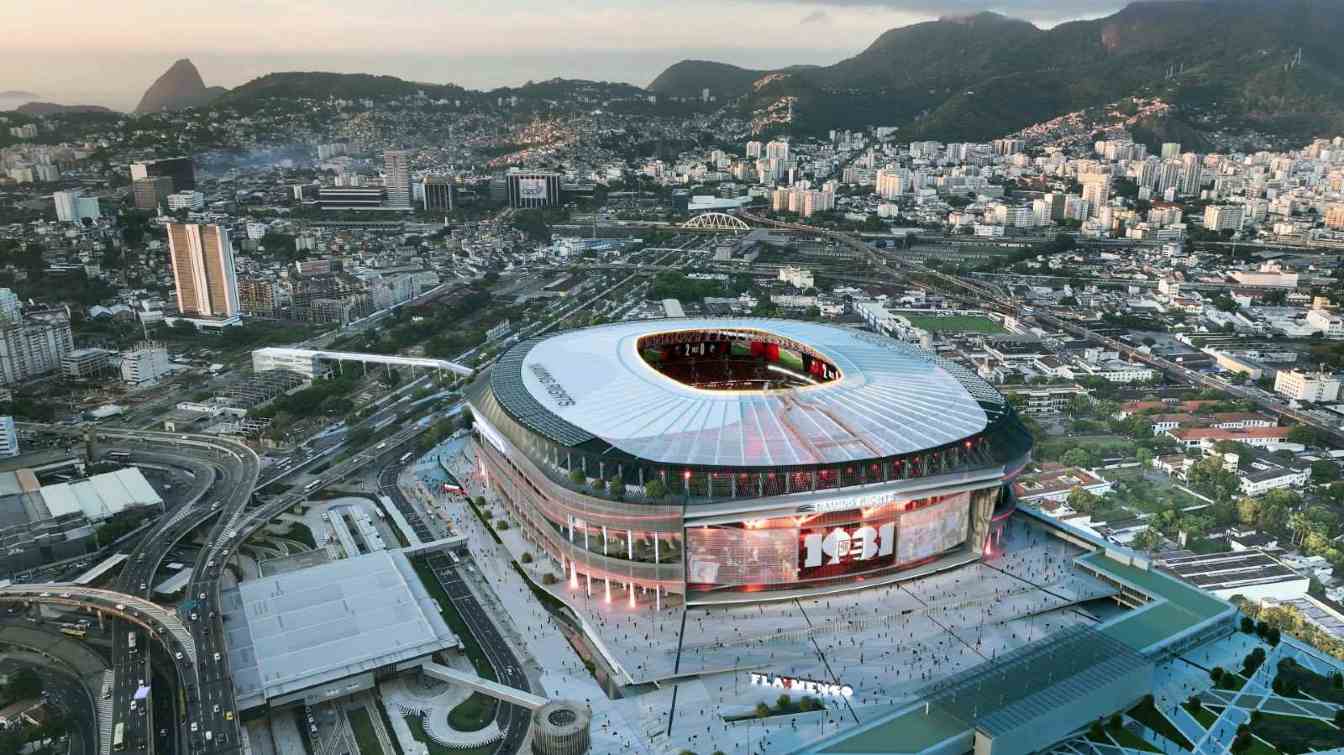 © ARENA Events+Venues / Clube de Regatas do Flamengo | One of the most important factors influencing the decision to delay construction is the macroeconomic situation.
However, Flamengo’s current leadership argues that through project optimization the investment could be delivered for around €358,8 mln. The difference stems from revised design assumptions, reduced administrative expenses and potential renegotiation of construction contracts. Even so, the reduced estimate still represents a significant financial burden under high-interest conditions.
Rising Maracanã profits reshape the financial equation
The second pillar of Flamengo’s strategy is the rapid increase in matchday profitability at Maracanã. Within a year, the club doubled its annual ticket revenue from €7,26 mln to €14,39 mln. At the same time, operating costs were significantly reduced, increasing profit margins from 30% to as much as 72%.
In 2025, Flamengo regularly recorded profits exceeding €0,49 mln per domestic league match. Games against São Paulo FC, Grêmio, Cruzeiro and Santos FC generated multi-million surpluses. A similar pattern was seen in the Copa Libertadores organized by CONMEBOL. Matches against Estudiantes de La Plata and Racing Club produced gross revenues of up to €1,58 mln, delivering very high margins under the current operating model.
Stadium construction and its impact on transfers
President Bap clearly states that every major investment decision requires trade-offs. In the short term, building a new stadium could limit the transfer budget and make it harder to sign players such as Samuel Lino or reinvest in stars of Lucas Paquetá’s caliber.
For the board, the priority is maximizing revenue while maintaining sporting competitiveness. A stadium is a 50-year project — but the team must win now. Therefore, the final decision will only be taken when it does not threaten the club’s financial stability.
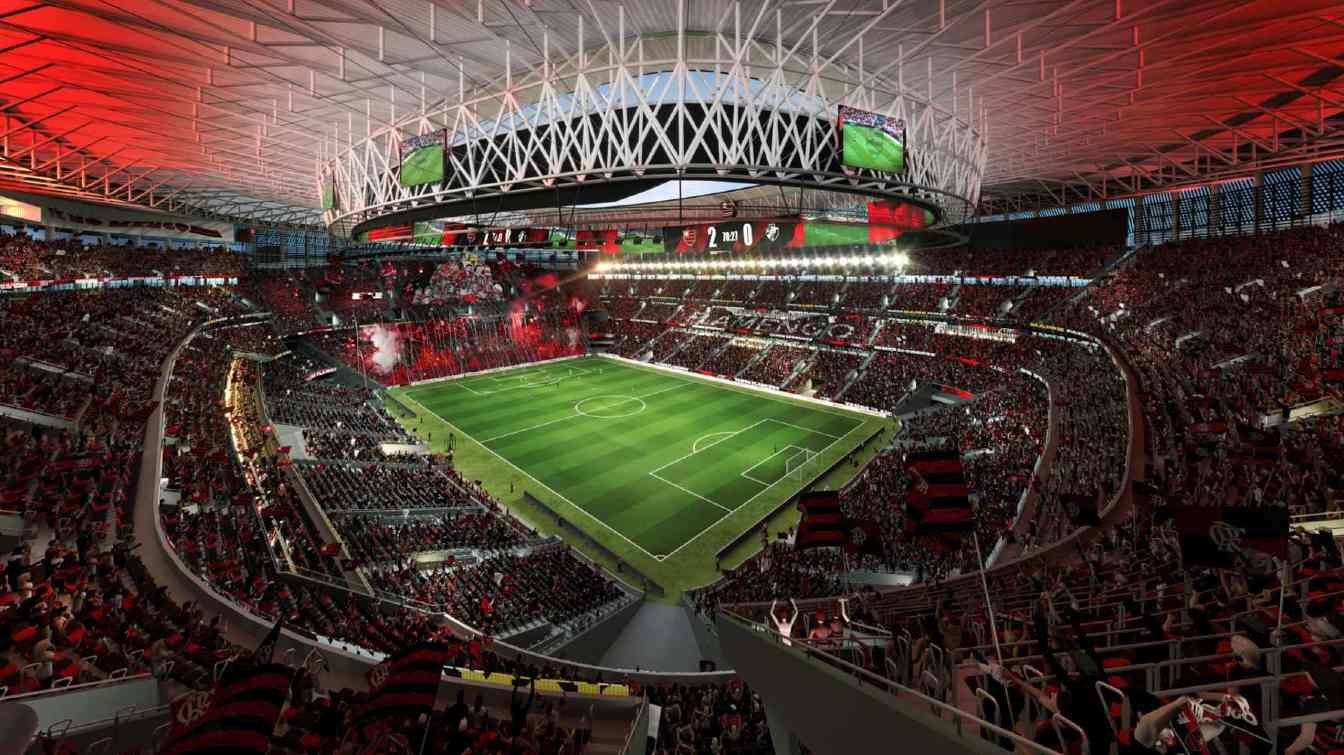 © ARENA Events+Venues / Clube de Regatas do Flamengo | In 2025, Flamengo regularly made profits exceeding €3 million per single league match.
Gasômetro site requires relocation and decontamination
Even if Flamengo decided to move forward immediately, construction could not start at once. Around 55% of the Gasômetro plot is currently occupied by infrastructure belonging to Naturgy, including a gas pumping station serving the Rio metropolitan area.
According to a company statement from September 2025, relocating the facilities could take up to four years from the moment city authorities designate a new site. Only after the infrastructure is moved will Flamengo be able to begin major groundwork. Additionally, soil decontamination will be necessary due to the area’s industrial past.
Advertisement