 StadiumDB
USA: A new Chicago Bears stadium in the shadow of the Illinois–Indiana dispute
source: StadiumDB.com ; author: Paulina Skóra
 A new law adopted in Indiana opens the door to the construction of an NFL stadium and fuels a political rivalry over the future of the Chicago Bears. In the background are issues of stadium ownership, taxation and a regional battle for one of the most valuable sports brands in the United States.
Advertisement
SB27 and the financing framework for an NFL stadium in Indiana
Lawmakers in the Indiana State Senate have approved legislative measures that create a formal framework for the construction of a new NFL stadium. A key step was the unanimous approval by the Senate’s finance committee of Senate Bill 27. The bill provides for the creation of the Northwest Indiana Stadium Authority, a public body empowered to acquire land, finance the project and sign long-term lease agreements with professional sports teams.
For the Chicago Bears, the most important aspect of the Indiana model is that the stadium would remain publicly owned, with the club leasing it for at least 35 years. Such an arrangement would exempt the team from property tax and guarantee what club executives describe as tax certainty
— a demand they have been pressing for months.
Indiana’s political push to lure the Bears from Chicago
Indiana Governor Mike Braun has openly declared his ambition to bring the Bears to his state, pointing to Indiana’s pro-business climate and the expected economic benefits: new jobs, infrastructure development and increased private investment. State authorities are moving fast, framing the project as a once-in-a-generation opportunity — one of the biggest sports and economic shifts in the region’s history.
Across the state line, Illinois Governor JB Pritzker insists that the Bears belong to Chicago,
but for a long time concrete proposals on tax relief and infrastructure support were missing. Indiana’s legislative offensive has clearly forced a change of tone in Springfield.
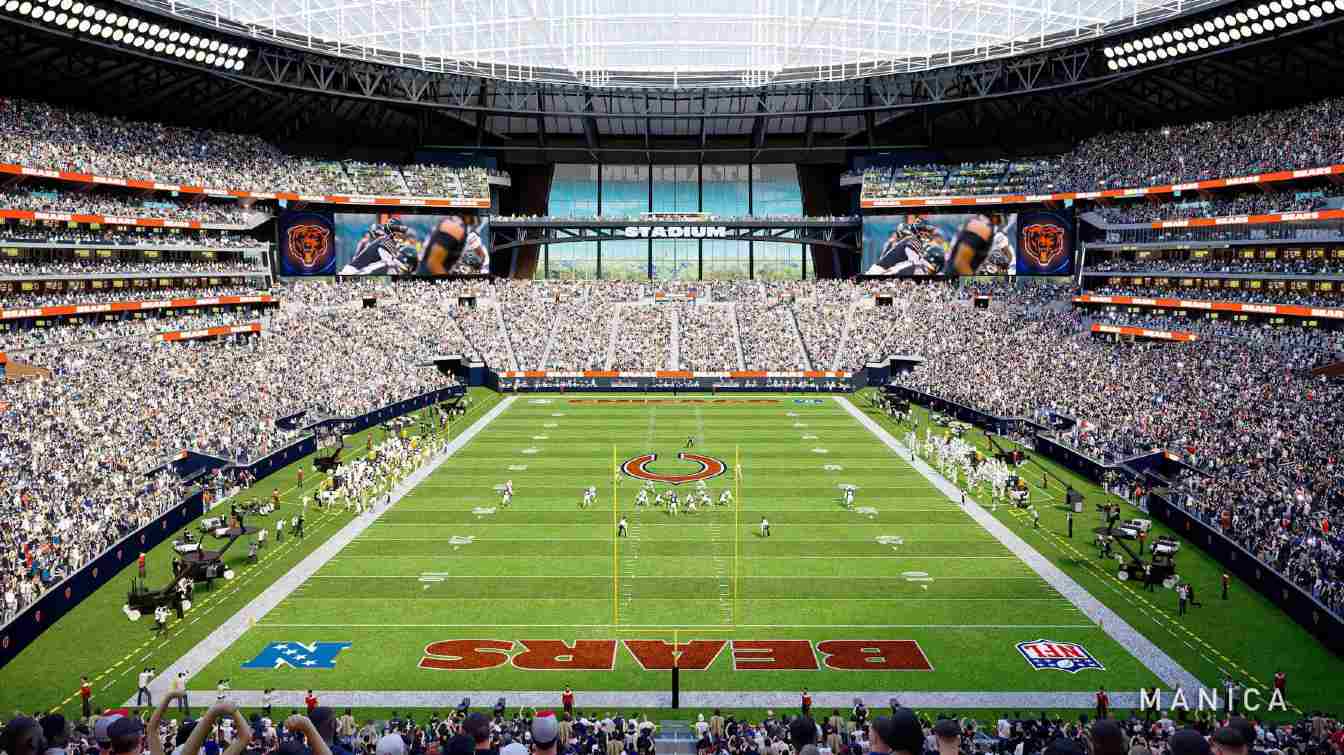 © MANICA | Under the model proposed by Indiana, the stadium would be owned by a public entity, while the club would lease the venue for a minimum of 35 years.
Gary positions itself as a stadium-ready city
The most proactive voice on the Indiana side comes from Gary. Mayor Eddie Melton argues that the city is undergoing a transformation: crime is down, the population is growing for the first time in decades, and new investments are reshaping Gary’s image. City officials claim the location offers better transport links than some Illinois suburbs, with faster access to downtown Chicago than from parts of the northwest metropolitan area.
Gary has presented three ready-made site options for a stadium and a surrounding mixed-use district. The first is Gary West End, a large area near the I-80 and I-94 highways and close to planned entertainment infrastructure. The second, Buffington Harbor, offers proximity to the airport, rail connections and port facilities, as well as Opportunity Zone status with potential tax incentives. The third option, Miller Beach, envisions a high-profile lakeside stadium on Lake Michigan, adjacent to protected natural and beach areas — a bold stadium on the water
concept.
Arlington Heights and the tax obstacle in Illinois
Meanwhile, Arlington Heights remains in play. The Bears own a 326-acre site on the former racetrack and have previously declared their willingness to finance the stadium entirely with private funds. The project stalled, however, over the level and predictability of property taxes in Cook County.
The absence of a statutory tax cap caused negotiations to collapse, while the state of Illinois showed little political urgency in resolving the issue. Only the credible threat of relocation to Indiana triggered work on legislation aimed at freezing property valuations for large-scale developments.
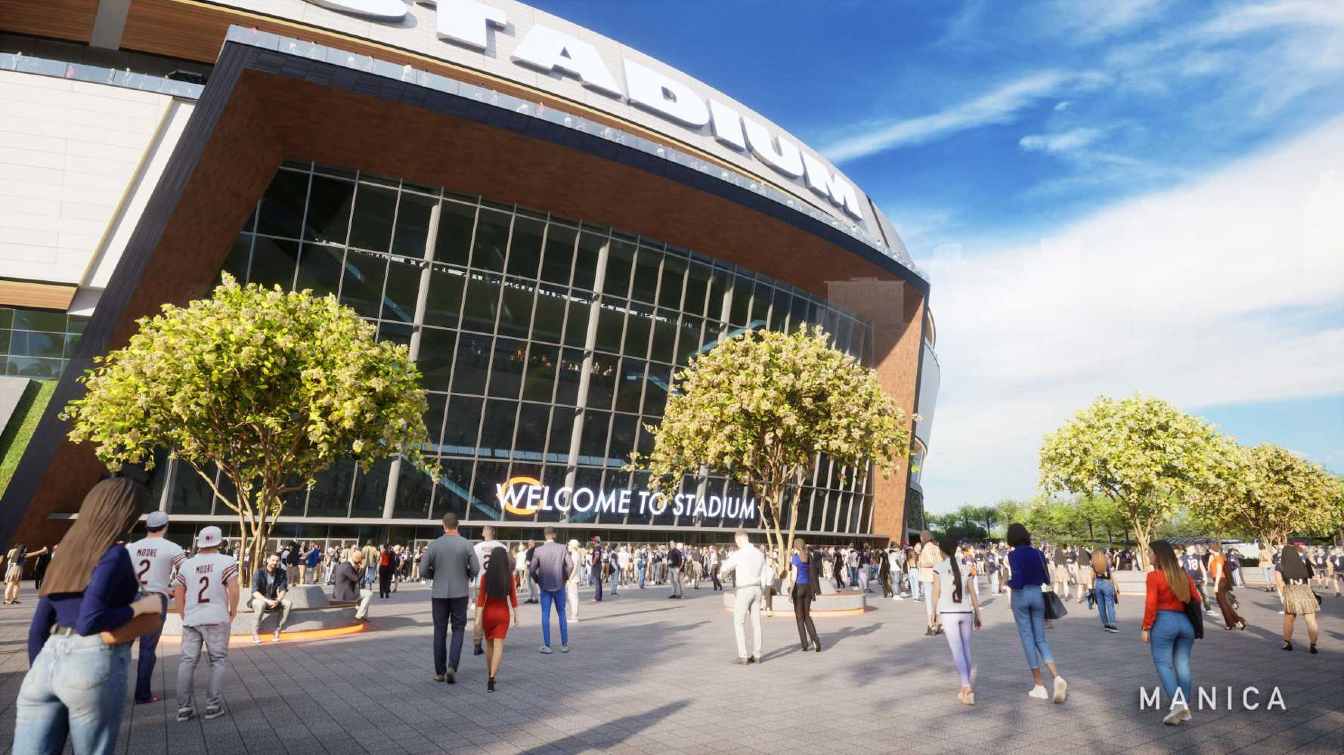 © MANICA | The Bears own a 326-acre plot of land located on the site of the former racetrack in Arlington Heights.
Chicago Bears’ negotiation strategy and mounting pressure
The open letter from team president Kevin Warren to fans, in which Indiana was explicitly mentioned as an alternative for the first time, shifted the balance. Club officials deny political brinkmanship, but the negotiating effect is clear: Indiana is accelerating its legislative process, while Illinois is now openly discussing road and transport infrastructure funding.
Sports business analysts note that the Bears are following a familiar NFL playbook — similar to strategies used in the past by franchises such as the Kansas City Chiefs. On-field success only strengthens the team’s hand in talks with policymakers.
Stadium capacity and regional stakes
While the exact capacity of the new stadium has not yet been announced, all scenarios point to a state-of-the-art NFL venue integrated with commercial space, hotels and entertainment facilities. For Indiana, it would be a transformative project. For Illinois, it could mean losing one of the most recognisable sports brands in the United States.
The coming weeks and months will determine whether Indiana’s legislative push leads to concrete negotiations or whether Illinois can keep the Bears by offering a compromise on taxes and infrastructure. One thing is clear: the battle over the Bears’ stadium has grown beyond a local dispute — it is a test of political will, business leverage and sporting power across the Great Lakes region.
Advertisement