 StadiumDB
Spain: World Cup at Riazor in A Coruña? The city is “very late”
source: StadiumDB.com; author: Paulina Skóra
 A Coruña is coming under growing pressure in the race to host the 2030 World Cup. The lack of a project, unclear financing and an escalating political dispute are increasingly putting the future of the Riazor stadium in doubt.
Advertisement
Partido Popular criticizes lack of funds for stadium construction
One of the key problems is the fact that Estadio de Riazor—despite having been preselected earlier by FIFA—remains the only stadium candidate for the 2030 World Cup where no construction or modernization works have yet begun. Not only are there no physical works underway, but there is also no completed stadium renovation design, which significantly delays the entire process.
The Partido Popular in A Coruña is calling for the urgent convening of a Special Monitoring Commission for the 2030 World Cup bid. Conservatives point out that dedicated funds for the modernization of Riazor have disappeared from the city’s 2026 budget. In 2025, €1.5 million had been allocated, with plans to increase this amount by a further €2 million, which ultimately was not reflected in the new budget. According to the opposition, these funds were essential to launch a tender for the stadium renovation design, estimated at €3.5 million and scheduled to be announced as early as June 2025. Without design documentation, it is impossible to begin any construction. In the local debate, the slogan is increasingly repeated: without a project there is no construction, and without construction there is no World Cup.
Representatives of Partido Popular warn that A Coruña is very late
compared to other candidate cities. FIFA’s final evaluation is scheduled for September 2026, which means the city has barely a little over a year to present tangible progress in terms of stadium modernization, infrastructure, and financing.
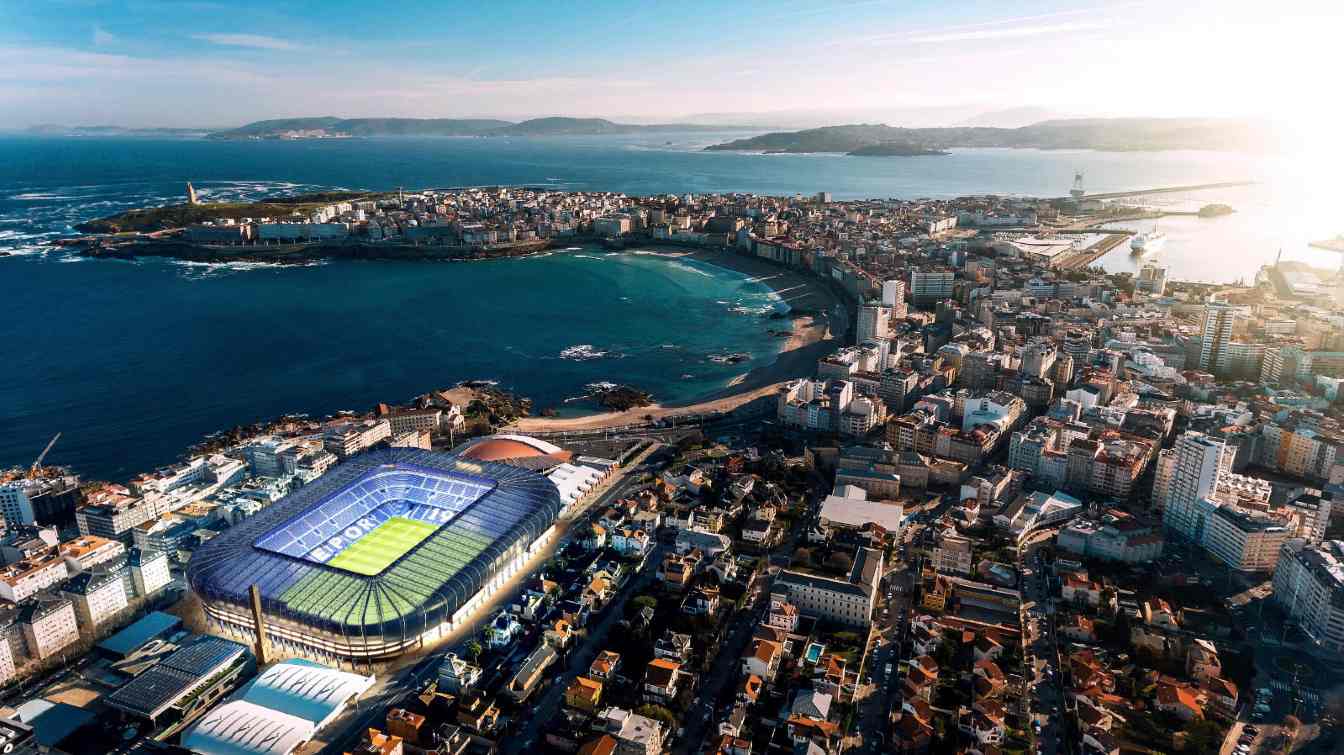 © David Estany Garea / Concello A Coruña | Riazor — despite earlier preselection by FIFA — remains the only 2030 World Cup candidate venue where no construction or modernisation works have yet begun.
RFEF president calls for a city–club agreement
As early as 2024, city authorities emphasized that the selection of A Coruña as one of the potential host locations for the 2030 World Cup was a symbol of a second great modernization of the city
and confirmation of its international standing. Critics, however, note that declarations have so far not been followed by concrete actions or transparent communication with residents. To this day, no detailed information has been presented regarding the cost of modernizing Riazor, the sources of financing, or the construction timeline. It also remains unclear who would ultimately bear the main burden of the investment—the city, the region, the state, or private entities.
The president of the Real Federación Española de Fútbol stresses that a key element for the success of A Coruña’s bid is an agreement between the city and the club Deportivo de La Coruña, which uses Riazor on a daily basis. Without consensus between the stadium owner and its main tenant, FIFA may negatively assess the city’s ability to deliver the project.
Statements from federation officials often compare A Coruña’s situation with that of Vigo, where—according to officials—there is a stronger willingness to cooperate and clearer organizational progress. The lack of a similar agreement in A Coruña is considered one of the weakest points of its bid.
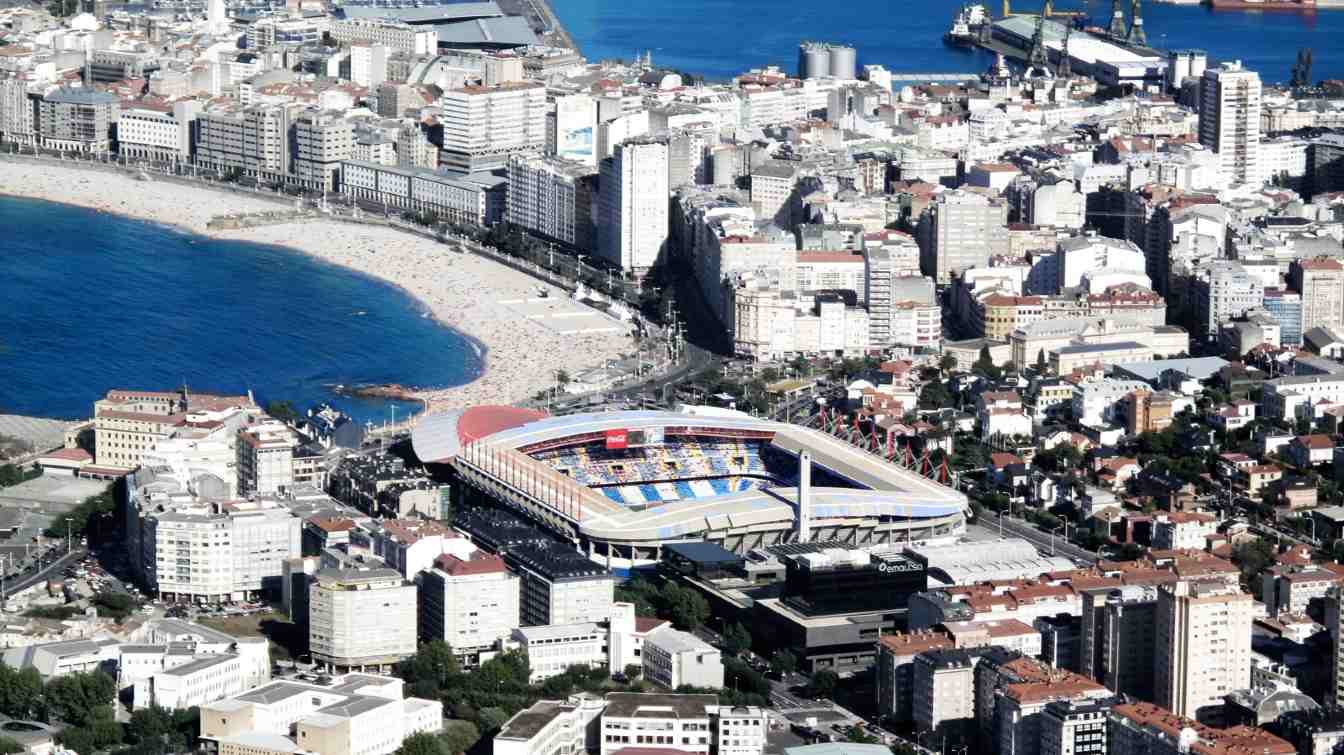 © Héctor | To this day, no detailed information has been presented regarding the cost of the Riazor modernisation, sources of funding, or the project timeline.
Riazor and stadium capacity at the center of the dispute
The planned final capacity of the stadium after modernization is also a subject of debate. Representatives of Deportivo argue that current attendance—one of the highest in Spain—does not justify a significant increase in seating capacity. In their view, an overly large stadium could generate financial losses during the construction period and after its completion.
The coming months will be decisive for the future of Riazor. The absence of a project, unclear financing, and the lack of an agreement with the club could eliminate A Coruña’s chances of hosting the historic 100th World Cup. Increasingly, voices are emerging that the city must move from declarations to concrete decisions if it does not want to fall out of the group of tournament hosts.
Advertisement