 StadiumDB
Spain: From a skeleton to a symbol of Valencia. Nou Mestalla enters a new construction phase
source: StadiumDB.com ; author: Paulina Skóra
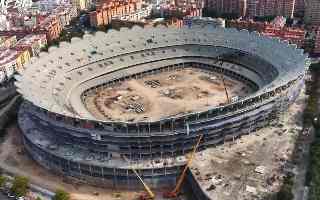 Nou Mestalla is no longer a symbol of Valencia’s unfinished ambition. New approvals from the city, the start of roof works and a clear timetable show the project entering a phase set to finally reshape the city’s stadium landscape.
Advertisement
Approval from the city of Valencia for the third stage of Nou Mestalla construction
Valencia CF has just received a third positive ruling from the city authorities, meaning that the construction schedule of the new stadium is entering a decisive phase. With less than seventeen months remaining until the planned opening of the venue, the club can speak of consistent progress on its objectives, which so far have been carried out without delays that could threaten the overall project.
The key moment was the approval by municipal technical services of the third milestone of the investment, which concerned the start of works on the stadium’s external structure, most notably the monumental roof. This element of the construction had for years symbolized an unfinished project that weighed heavily on the image of the city of Valencia.
The first clear sign of a breakthrough came with the delivery of gigantic steel beams at the end of November, followed by the installation of the first of fifty steel columns, each 38 meters high, which took place just before Christmas. Each of these elements weighs between 25 and 40 tons and, once fully assembled, will have to support a total roof load of approximately 4,800 tons.
The roof structure of Nou Mestalla as a key element of the project
At the heart of the entire roof structure will be the so-called compression ring, which will become the main load-bearing element of the stadium roof. It will consist of fifty massive segments, each measuring between 15 and 17 meters in length and weighing up to 40 tons. The process of assembling the columns, the ring, the steel cable system, and accompanying works—including civil engineering tasks—is expected to last around 16 months and will conclude with the installation of the final roof cladding. Once this phase is completed, another inspection by city hall will be required, meaning that every key stage of construction remains under constant administrative supervision.
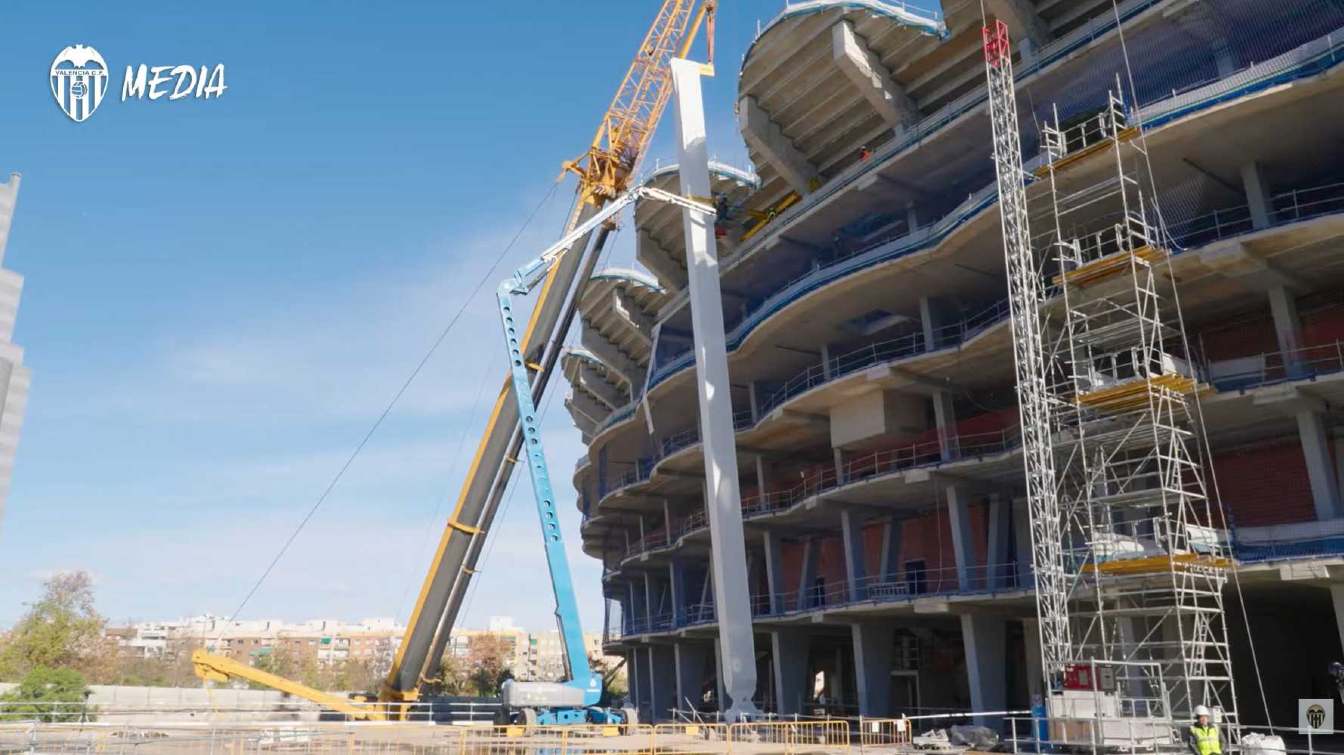 © Valencia CF | Construction of the Nou Mestalla began in 2007, making it a record-holder in terms of the time spent on delivering the project.
2025 as a turning point in the history of Nou Mestalla
Each successive positive decision strengthens cooperation between the club and the municipal authorities. Although some tensions emerged in the past, particularly regarding the requirement to submit monthly progress certificates, they ultimately did not affect the continuity of the project. The club clearly stated its legal position while at the same time declaring full readiness for technical inspections, which was confirmed by the latest inspection carried out at the end of December.
The year 2025 has gone down in the history of Valencia CF as the moment when construction truly resumed after sixteen years of stagnation. It was then that the final stadium design was presented, heavy machinery returned to the construction site, and fans saw tangible progress for the first time in years, instead of the concrete skeleton that had long symbolized unfulfilled ambitions.
The culmination of that year was not only the start of roof assembly, but also the opening of a modern Experience Center on Avenida de Suecia, allowing fans to explore the vision of the new stadium in an immersive, multimedia format.
Relocation of fans to Nou Mestalla under clear rules
The Nou Mestalla will be able to accommodate around 69,000 spectators, including as many as 6,000 hospitality seats offering a wide range of standards and prices. Sales of the first hospitality packages have already begun, and interest has been high. The remaining 63,000 seats will be allocated to current season ticket holders, who will begin the process of selecting their new locations in the second half of 2026.
The relocation process for season ticket holders will be conducted in an individual and orderly manner, with seniority as the key criterion. The club plans personal consultations with each subscriber, presenting visualizations of views from specific sections. Group relocation for families, friends, and official peñas will also be possible, using average seniority length as the basis for seat selection priority.
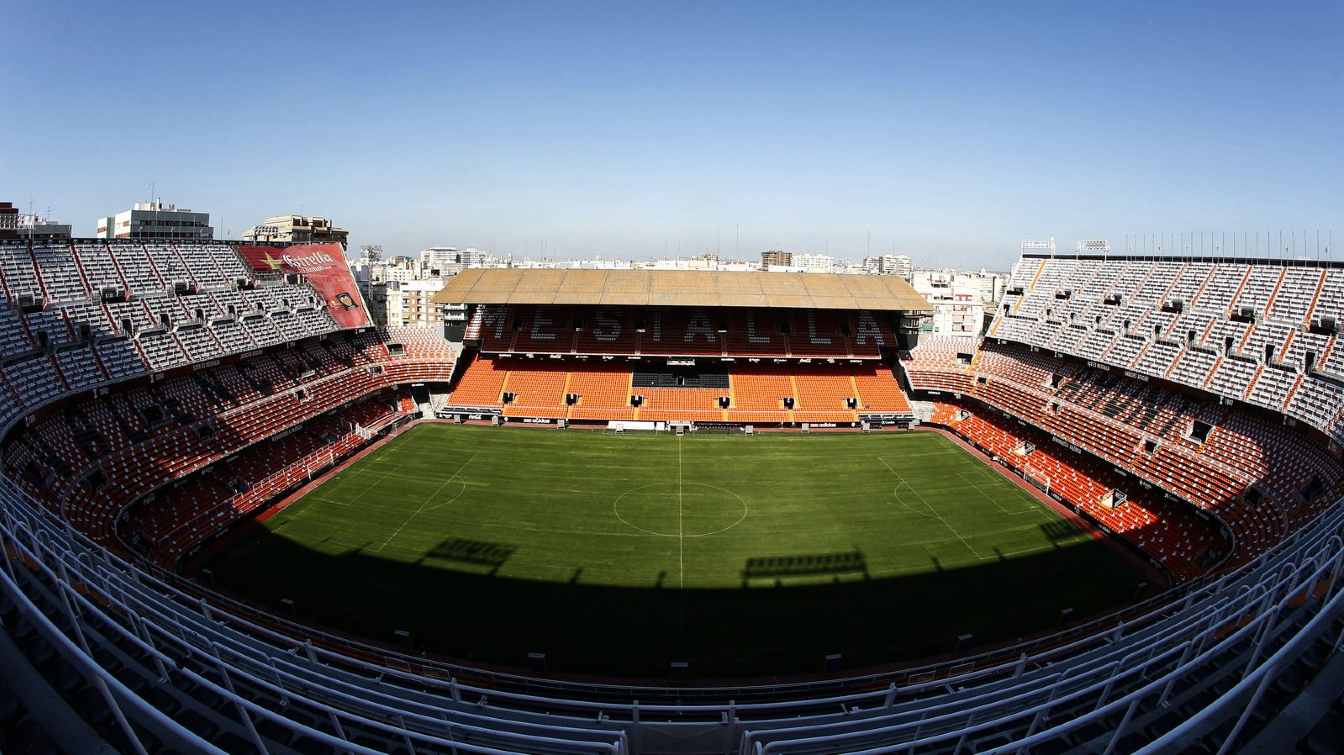 © valenciacf.es | The home of Valencia CF is Mestalla, a stadium located at a different site from the new venue. It may be demolished in the coming years.
2026 as the year of the stadium’s visual transformation
The upcoming year 2026 is expected to bring the most spectacular visual changes. Nou Mestalla should finally begin to resemble a finished stadium rather than a construction site. In February, the start of another phase of works is planned, including concrete works and the installation of external stair cores. At the same time, the roof installation process will continue and is expected to last until 2027.
Throughout 2026, intensive works are also planned on the façade, finishing of upper levels, installation of aluminum, metal, and wooden joinery, technical systems, as well as the construction of circulation towers and waterproofing systems.
Nou Mestalla as a symbol of a new era for Valencia CF
Nou Mestalla is intended to become a symbol of a modern, stable, and ambitious Valencia CF. As emphasized by club president Kiat Lim, the new stadium will allow the team not only to increase revenues, but also to build solid foundations for sporting development in the decades to come. If the schedule is maintained, Valencia will soon bid farewell to one of the longest-running stadium projects in Europe and open a completely new chapter in its history.
Advertisement