 StadiumDB
Portugal: Safe standing and a lowered pitch — a new era at Estádio da Luz is approaching
source: StadiumDB.com ; author: Paulina Skóra
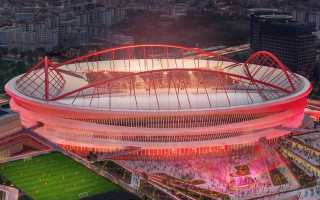 Estádio da Luz is facing its biggest transformation since opening after Euro 2004. Benfica is preparing changes set to redefine the stadium’s character, bring the stands closer to the pitch and connect football with a new urban district surrounding the venue.
Advertisement
Benfica and the expansion of Estádio da Luz to 80,000 seats
According to Nuno Catarino, Benfica’s vice-president and chief financial officer, the process of increasing the stadium’s capacity is structured in several clearly defined phases, all aimed at one final goal: reaching 80,000 spectators. At present, Estádio da Luz has a capacity of 68,116 seats, and the club already has a technical roadmap to first reach 70,000, then 74–75,000, and ultimately the target of 80,000 seats.
The plan is sequential and focuses on the gradual addition of seating rows and the optimisation of existing sectors, allowing the stadium to remain operational throughout the process. Catarino emphasises that the logic behind the expansion is demand-driven. Benfica currently has a long waiting list for season tickets, and demand for matchday tickets consistently exceeds supply. The expansion is therefore not merely a prestige project, but a response to genuine supporter demand and a long-term strategy to increase matchday revenues.
A more “English-style” Estádio da Luz: lowering the pitch and reshaping the stands
A central element of the redevelopment will be the lowering of the pitch level. This intervention will make it possible to add additional seating rows closer to the field of play, bringing fans nearer to the action and creating a more English-style
stadium atmosphere, characterised by steeper stands and stronger acoustics. In parallel, Benfica plans to reconfigure the first tier of seating, moving some sections back and reorganising circulation areas, following concepts used at Emirates Stadium, where similar solutions have combined increased capacity with spectator comfort.
At level 0, the club intends to introduce safe standing areas — standing sections equipped with safety rails — similar to those commonly found in German football. This solution would increase capacity in the most vocal supporter sections and enhance matchday atmosphere, but it requires regulatory changes and detailed safety approvals. Benfica has already begun analytical work and preparatory studies, although current Portuguese regulations do not make implementation straightforward. Structurally, the upper tier of the stadium operates within safe load limits but does not allow for simple vertical expansion. As a result, the project includes reinforcing the structure through external supports behind the stands, particularly near the screens, enabling the addition of new rows and forming part of the architectural link with Benfica District.
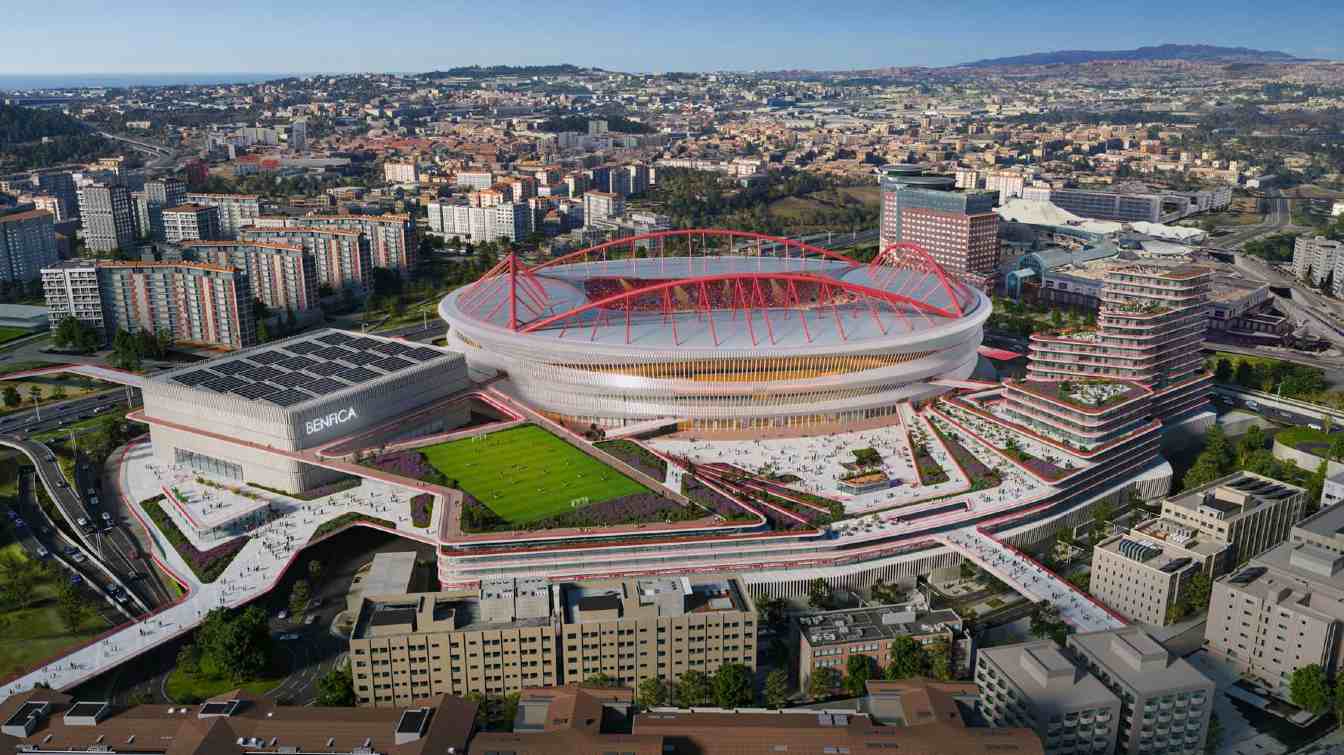 © Populous | During the 2030 World Cup, Estádio da Luz will host 80,000 fans.
Benfica District with shopping centre and arenas costing €220 million
The expansion of Estádio da Luz is a cornerstone of the Benfica District project, which aims to transform the stadium’s surroundings into a multifunctional district featuring a shopping centre, a theatre, a hotel and three indoor sports arenas. The concept is designed to integrate football with entertainment, business and culture.
The total cost of the development is estimated at €220 million for the district itself and €75 million for the stadium expansion and modernisation, with an average cost of around €7,000 per new seat. Benfica aims to complete the project by 2030, when Portugal is set to host the World Cup, and forecasts annual gross revenues of €37 million (€24 million net). According to Catarino, these figures would ensure financial self-sufficiency and allow the investment to be repaid within 15 years.
Construction timeline and maintaining stadium operations
Official information from the club indicates that the architectural and technical planning stages are already well advanced. Benfica has developed a comprehensive concept for the area, completed studies on transport accessibility, noise impact and urban integration, and held consultations with local residents, whose primary concerns relate to traffic and temporary disruption. Documentation is currently being prepared for submission to Lisbon City Council, including requests for zoning adjustments and confirmation of compliance with local planning regulations.
The year 2026 is expected to bring further project refinement, the signing of contracts with operators of key commercial spaces within Benfica District, and the finalisation of financing structures in cooperation with banks. Only once these processes are completed will large-scale construction works begin. If the schedule is maintained, Benfica expects to have both an expanded stadium and a fully operational new district by 2030.
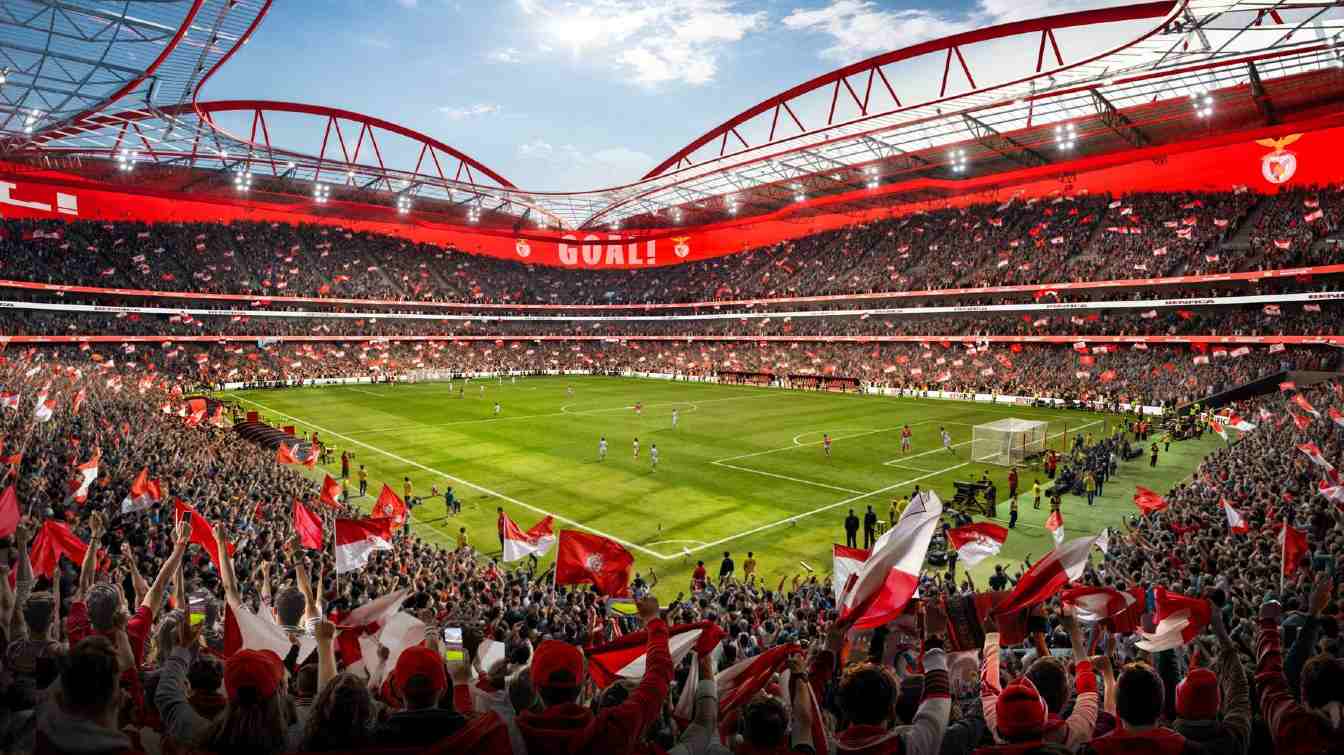 © Populous | The total cost of the Benfica District development will exceed €200 million.
What the “new” Estádio da Luz means for Benfica supporters
For supporters, the most significant change will be the increase in capacity, which should reduce the waiting list for Red Pass season tickets and improve access to single-match tickets. Lowering the pitch and reshaping the stands will bring fans closer to the action and create a more intense matchday atmosphere with stronger acoustics and vocal support. The stadium will also offer a wider variety of seating options, ranging from traditional seats to safe standing areas and expanded premium and hospitality zones.
The surrounding offer will change just as dramatically. With fan zones and new food, leisure and entertainment spaces as part of Benfica District, the club aims to encourage supporters to arrive earlier and stay longer after matches. This approach is intended to increase revenues while also smoothing traffic peaks. The ultimate goal is to create an all-day matchday experience in which the football match remains central, but is no longer the sole reason for visiting the area.
Advertisement