 StadiumDB
Italy: Stadium, trams and trees – Florence caught in disputes over the Franchi redevelopment
source: StadiumDB.com; author: Paulina Skóra
 The modernisation of the Artemio Franchi stadium is increasingly dividing Florence. The expansion of the construction site, changes to public space and rising tensions around the project are turning the redevelopment of the historic venue into one of the most controversial infrastructure projects in Italian football.
Advertisement
Franchi redevelopment forces expansion of the construction site
Progress at the modernization of Franchi has made it necessary to expand the construction area. In recent days, the site has been extended towards viale Fanti, a move that required the relocation of the historic neighborhood market operating near the Maratona curve. City officials describe the decision as technically unavoidable, but traders and residents see it as a blow to a long-standing element of local identity.
The expansion is crucial for installing the roof over the new Curva Fiesole, one of the most symbolic sections of ACF Fiorentina’s stadium. Without additional logistical space, this phase of the redevelopment would not be feasible.
By decision of the Florentine city council, 13 official matchday stalls have also been temporarily relocated. These include food, drink and club merchandise stands that have been part of the Franchi matchday scene for decades. Their new location is elsewhere along viale Fanti and applies to all Fiorentina home games and events at the stadium. Crucially, no end date has been set: the measure will remain in place until the works are completed, raising concerns among small traders about long-term economic consequences.
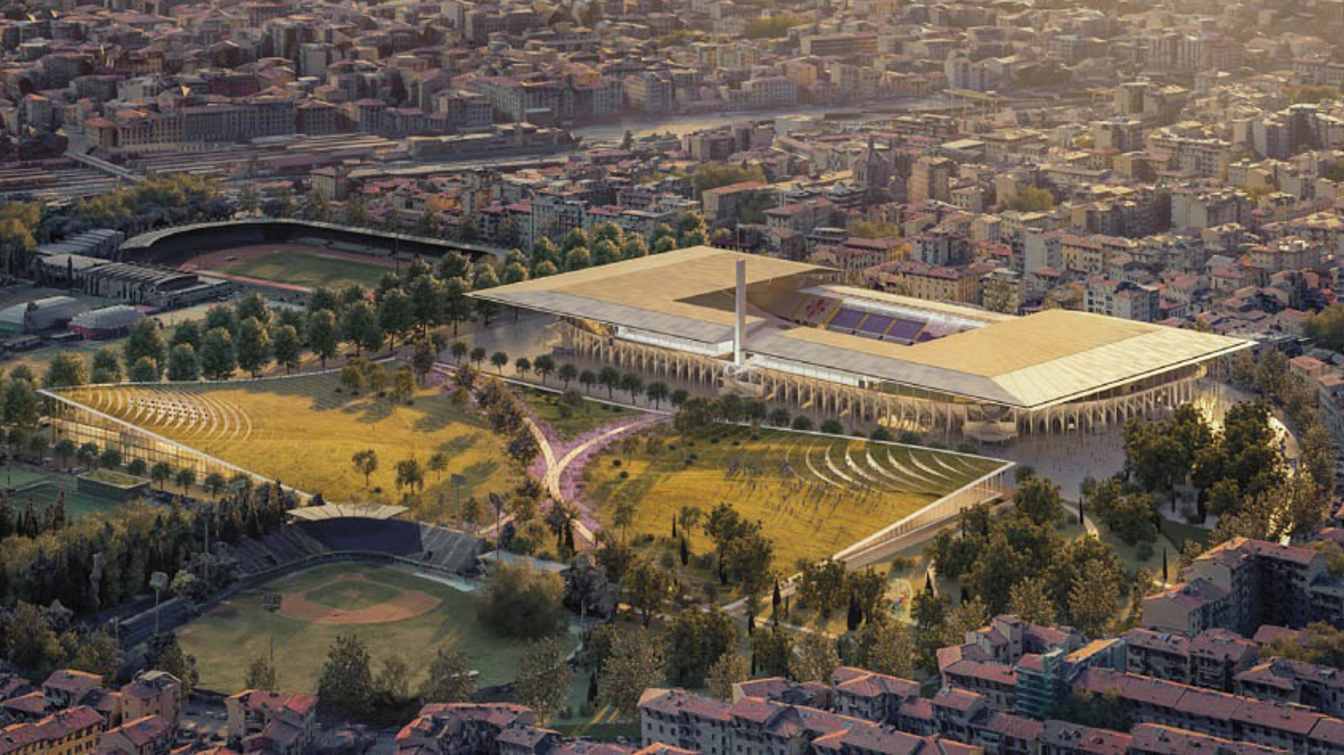 © ACF Fiorentina | The expansion of the construction site is crucial for the installation of the roof over the new Curva Fiesole, one of the most symbolic sectors of the Fiorentina stadium.
Franchi redevelopment and tree cutting in Campo di Marte
Another flashpoint is the planned removal of 24 trees in the stadium area. According to city authorities, the move is necessary to accommodate both the Franchi construction site and the future tram infrastructure. Officials insist the trees will be replaced, but for many residents that reassurance rings hollow.
Nine trees were already cut down months ago, with further removals scheduled in stages. For parts of the local community, the trees have become a symbol of the environmental cost linked to the redevelopment of the stadium and the wider transport network in the district.
Police intervention and rising tensions around the Franchi
Grassroots movements have responded to the growing discontent. The RiBella Firenze association staged a night-time protest, hanging cardboard signs with ironic and bitter slogans on the trees slated for removal. The aim was to draw attention in Cure, Campo di Marte and Coverciano to how dramatically the area will change in the coming years. Organisers stress that the action was meant to inform, not to provoke confrontation.
Not everyone saw it that way. A local resident alerted the authorities, leading to a police intervention and the identification of four activists. For some observers, it marked a turning point, suggesting that the conflict around the Franchi redevelopment is entering a more tense phase. Protesters insist their actions were symbolic and peaceful, arguing that the response itself shows just how sensitive the stadium issue has become.
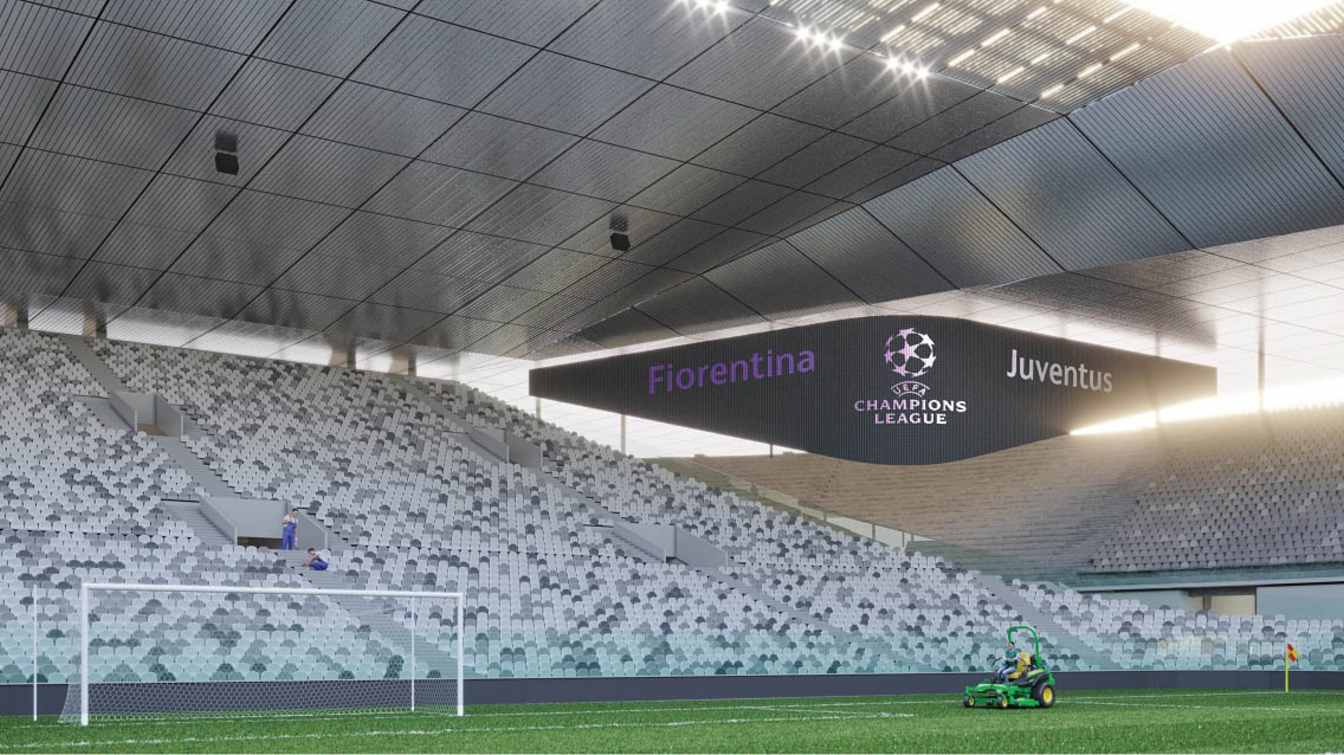 © ACF Fiorentina | Fiorentina's new stadium is one of many infrastructure projects in Italy. Will it be completed successfully?
Fiorentina steps into the financing game
Alongside the street-level protests, a crucial institutional battle is unfolding. ACF Fiorentina has submitted its first documents to the Florence city council regarding participation in a project financing scheme for the second phase of the Franchi redevelopment. It is the clearest sign yet that the club is willing to co-finance the project in exchange for a long-term concession to use the stadium.
The funding gap is currently estimated at between €60 and €80 million, although that figure could fall if public funds linked to preparations for EURO 2032 become available. Fiorentina’s entry into a partnership model could be decisive: a long-term concession would give the club operational stability, predictable commercial revenues and a tangible asset on its balance sheet. For the city, it would mean closing the financial gap without placing excessive strain on public finances. The procedure, however, is complex and time-consuming, involving assessments of public interest, potential tenders and final approval of the financial plan – a process expected to take six to eight months.
Advertisement