 StadiumDB
Italy: Green light from the city – a new stadium for Como is getting closer
source: StadiumDB.com ; author: Paulina Skóra
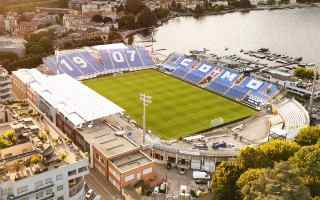 The new stadium in Como has taken an important step forward, but the path to construction remains complex. Approval from the city opens the next stage, where the club’s ambitions, landscape protection and safety concerns collide right on the lakeshore.
Advertisement
Redevelopment of the Sinigaglia stadium as part of the city of Como’s strategy
The project for a new stadium in Como has received the green light for the next formal stages leading to the actual redevelopment of the historic Stadio Giuseppe Sinigaglia, located in one of the most prestigious areas of the city, directly on the shores of the lake.
For the authorities of Como, the stadium redevelopment has a significance that goes far beyond sport alone. The investment is seen as a key element of a long-term urban strategy aimed at reorganizing and revitalizing the waterfront area, improving the quality of public space, and better integrating sporting, recreational, and tourist functions. The stadium is intended to stop being a venue used only on matchdays and instead become an active part of the city, operating throughout the week and responding to the needs of residents and visitors to Como alike.
The first Como 1907 stadium project and the wave of criticism
The original concept for the new Como stadium was presented in early February 2025 during a press conference at Palazzo Cernezzi. The project envisaged deep intervention in the existing structure, a significant increase in volume, and a modern, bold architectural form. From the outset, it was clear that such an ambitious vision would require approval from multiple institutions, especially the heritage protection authority, which immediately expressed concerns about the project’s impact on the landscape and the historic surroundings of the stadium.
The most serious objections concerned the excessive volume of the new construction and its dominant presence in the urban space. The Soprintendenza pointed out that the original design disrupted visual relationships between the lake, historic buildings, and the natural backdrop of hills surrounding Como. Of particular importance was the protection of visual axes towards the Cardina district, Spina Verde park, Brunate, and the iconic Novocomum building, a landmark of local architectural rationalism.
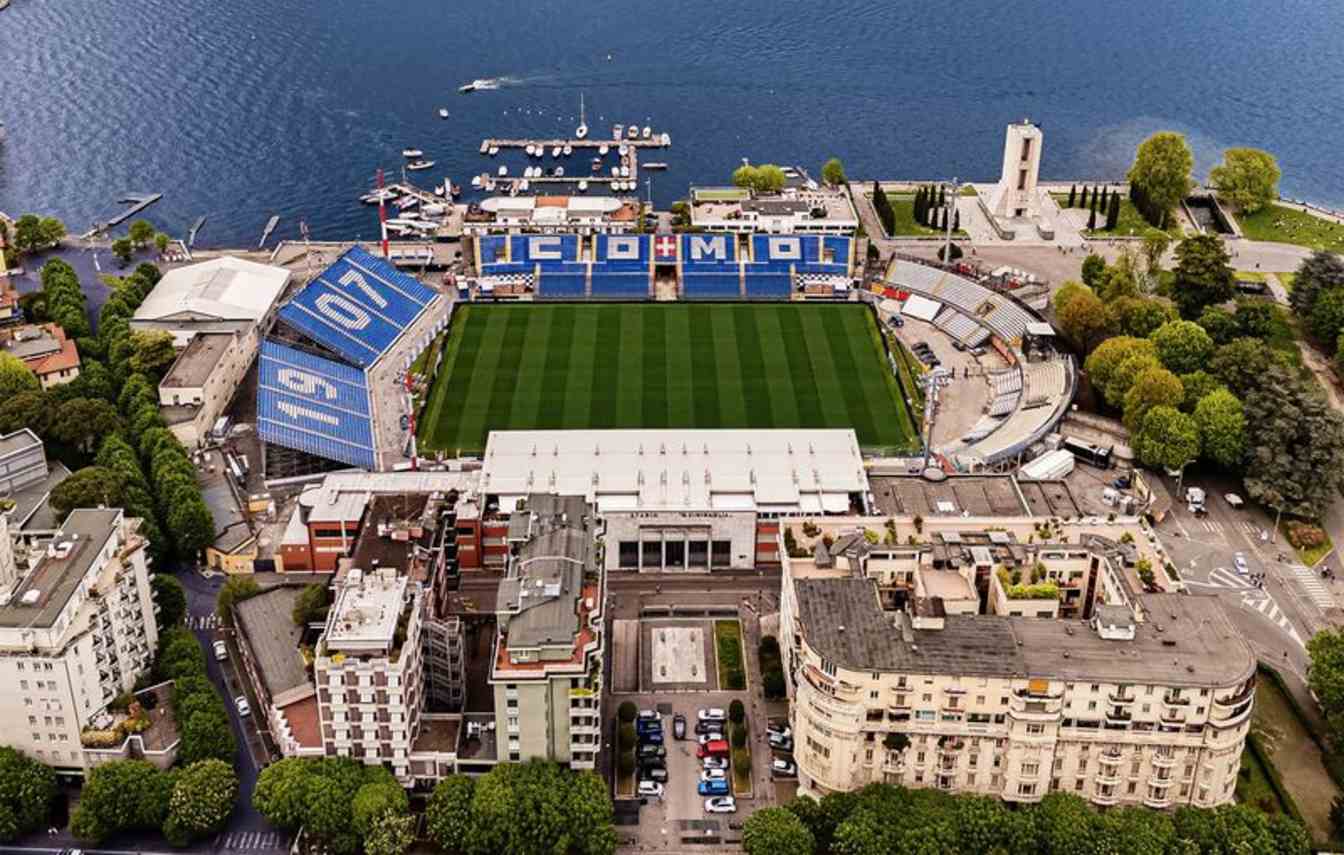 © Como 1907 | Stadio Giuseppe Sinigaglia is one of the most picturesquely located stadiums in the world.
Revised Como stadium project after heritage-related changes
The club’s response to these concerns was a substantial project addendum presented at the end of June 2025. The new version of the concept significantly incorporated conservation guidelines, primarily through a reduction in the building’s volume both horizontally and vertically. This reduction also applied to the height of the stands, ultimately set at 19 meters. Although this figure is higher than originally proposed by the Soprintendenza, it was deemed the minimum necessary to properly install a modern lighting system under the roof, allowing for the removal of the existing floodlight masts that currently disrupt the city’s skyline.
One of the key compromises between modern architecture and landscape protection was the introduction of extensive glazing in the northern and southern stands. This solution is intended to preserve visual continuity between the stadium and its surroundings, offering views of Lake Como, the Cardina area, and the Novocomum building. At the same time, the Soprintendenza stipulated that further design phases must continue to examine the possibility of partial visual openings towards Spina Verde park and the hills of Brunate, ensuring that the stadium does not become a visual barrier within the landscape.
An integral condition for the realization of the project remains the preservation of the most valuable historic elements of the stadium complex. This includes both the historic Sinigaglia swimming pool and the external sections of the main stand, which are a fundamental part of the site’s identity. Equally important is maintaining spatial relationships with neighboring sites of high cultural value, such as the headquarters of the Yacht Club and Canottieri Lario, as well as the Monumento ai Caduti. Special attention has also been paid to the characteristic reinforced-concrete support structures of the northern stand from the interwar period, which—even if not fully preserved—are to be appropriately commemorated within the new stadium structure.
Safety concerns as a key issue for the new stadium
Despite the generally positive assessment of the project, serious reservations were raised by the Questura di Como, focusing primarily on issues of safety and public order. The police indicated that the planned relocation of fan sectors, particularly the reversal of home and away stands, could generate significant problems related to bus access, the lack of adequate buffer zones, and the crossing of movement routes for different supporter groups in close proximity to venues frequently visited by the most passionate supporters of Como 1907.
Another major issue concerns the impact of the new stadium on the city’s traffic system. Both the Lombardy Region and the public transport operator ASF stressed the need for a detailed traffic study that takes into account everyday city operations as well as scenarios linked to sporting events. Particular doubts surround the planned traffic lights at the intersection of Via Borgovico and Via Martinelli, which could significantly reduce the capacity of one of the city’s main access routes.
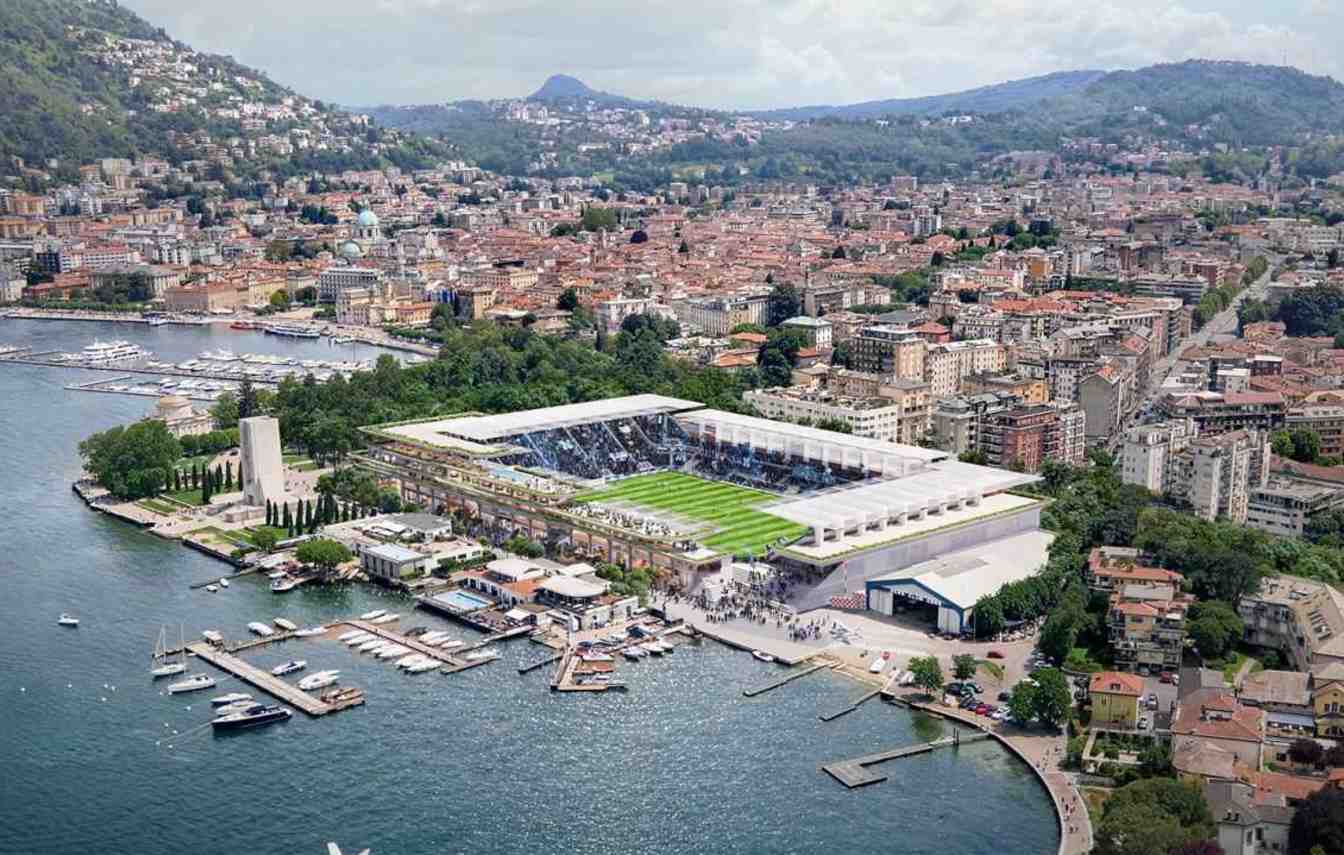 © Populous | The stadium project for Como is one of many sports venue concepts in Italy. However, most of them never make it to the construction stage.
Stadium capacity and Como’s European ambitions
In the context of the club’s sporting ambitions, the capacity of the away section has proven to be especially important. According to the police, the planned 980 seats do not reflect the realities of Serie A or potential participation in European competitions, which attract much larger and more logistically demanding groups of visiting supporters. As a result, the possibility was suggested of designating an entire stand for away fans in a modular way, adaptable to the profile and importance of each match.
When could construction of the Como 1907 stadium begin?
Although the closure of the Conference of Services represents a breakthrough moment, it does not yet mean the start of construction works. The club is still required to submit a full technical design that addresses all the issues raised in detail.
One thing, however, is now beyond doubt: the new stadium in Como has moved beyond being a purely ambitious vision and has become a concrete project that—despite numerous challenges—now rests on solid administrative foundations for further development.
Advertisement