 StadiumDB
Australia: Breakthrough for Tasmania’s $1bn stadium project
source: StadiumDB.com; author: Paulina Skóra
 After years of disputes and political division, a decision has been made that could permanently reshape Tasmania’s sporting landscape. The green light for the Hobart stadium opens the door for the region’s entry into the elite level of Australian sport.
Advertisement
Tasmanian parliament approves stadium project in Hobart
The final decision was taken in the Tasmanian Upper House, which approved the investment by a vote of 9 to 5. The project, valued at AUD 1.13 billion, represents a breakthrough after years of debate, delays, and deep divisions among politicians and residents of Hobart, concerning both the cost of the project and its impact on the city’s landscape and the historic character of the Macquarie Point precinct.
The new stadium is one of the core conditions for admitting Tasmania Football Club, competing under the nickname Tasmania Devils, into the Australian Football League and AFL Women's competitions. The club is set to enter the men’s AFL in the 2028 season, while the women’s team will join the league at a later, yet unspecified date. Until the new stadium is completed, the team will play its home matches at other venues across the region. As debates around funding and long-term sustainability continue, discussions around sports culture and fan engagement in Australia are also evolving, with resources like australiafootball.com helping fans explore trends, including gaming insights.
Macquarie Point construction as part of urban renewal
Macquarie Point Stadium has been designed as a fully covered, multi-purpose venue with a capacity of 23,000 seats. The stadium is intended to meet the highest standards required by the AFL while also hosting cricket matches, concerts, and major cultural and entertainment events, ensuring year-round use of the facility.
 © COX Architecture | Macquarie Point Stadium is one of the key conditions for admitting the Tasmania Football Club, competing under the nickname Tasmania Devils, to the Australian Football League and AFL Women’s.
Investment in the new stadium is one of the key elements of a broader revitalization program for Macquarie Point, aimed at transforming a neglected waterfront area into a modern urban space. The Tasmanian government views the project as a development catalyst for Hobart, expected to stimulate the economy, increase the city’s tourism appeal, and create new jobs.
According to the adopted schedule, construction work on the stadium is set to begin in 2026, with the official opening planned for 2029, when it will become the permanent home of Tasmania Football Club. During the transitional period following the team’s AFL debut in 2028, matches will be played at existing stadiums in Hobart and Launceston.
Launch of the EOI process for stadium construction
Following parliamentary approval, the Tasmanian government and the Macquarie Point Development Corporation launched an Expression of Interest process to identify contractors capable of delivering such a complex infrastructure project. Submissions can be made until 11 February 2026, after which selected firms will be invited to participate in the formal tender process.
The Minister for Macquarie Point revitalization, Eric Abetz, emphasized that local social and economic benefits will account for 30% of the evaluation criteria. The government aims to ensure that a significant share of the construction work and expenditure benefits Tasmanian businesses and workers, strengthening the regional economy.
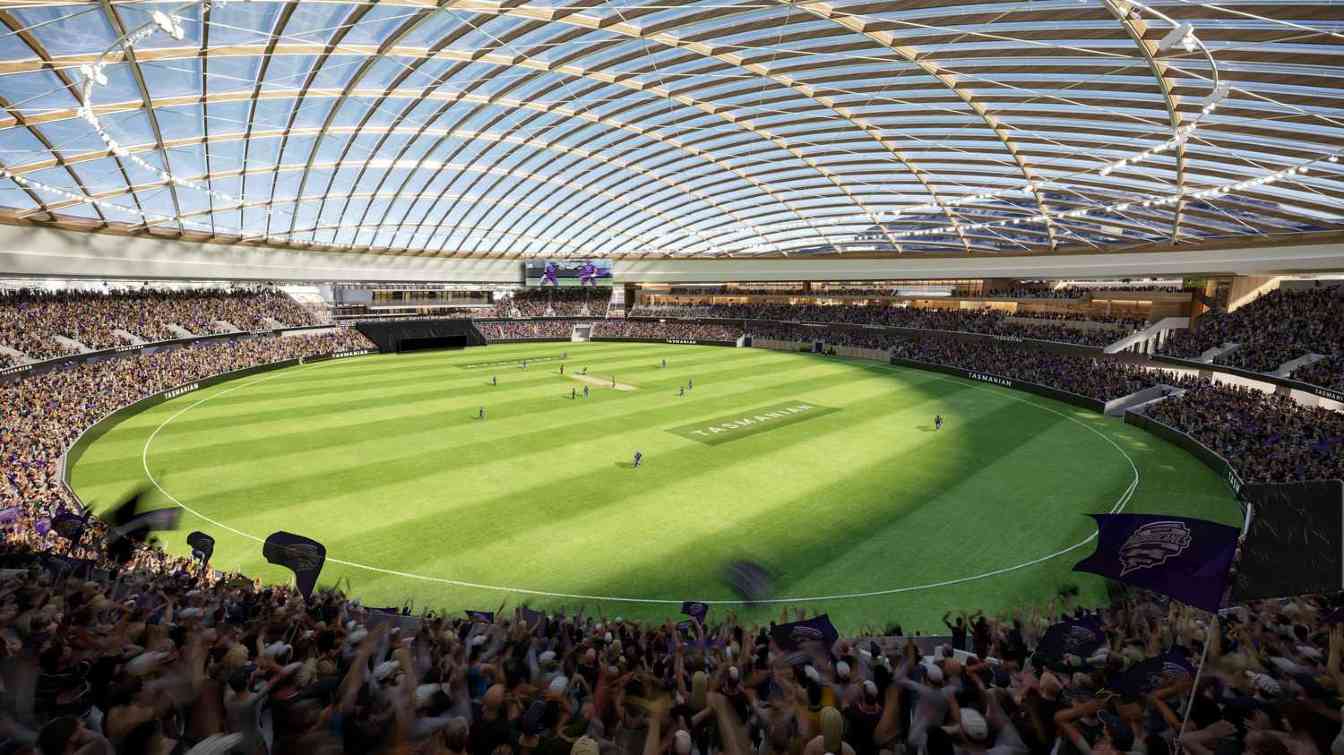 © COX Architecture | Construction works on the stadium are scheduled to begin in 2026, while the official opening of the venue is planned for 2029.
The architectural concept for Macquarie Point Stadium has been developed by the renowned firm COX Architecture, appointed as lead design consultant in May 2024. According to local media, the project is already around 70% complete, allowing for a smooth transition to the construction phase once a contractor is selected.
Controversy over the cost and scale of the stadium
Despite parliamentary approval, the stadium project has sparked significant controversy from the outset. The independent Tasmanian Planning Commission previously recommended halting the investment, arguing that the stadium is too large for the available site and that the potential economic and social benefits do not outweigh the costs and negative impact on the surrounding area. Critics have also pointed to the high price tag of the project and uncertainty regarding its long-term viability.
Approval of the Macquarie Point Stadium project is widely seen as a watershed moment for Tasmania. If the investment is delivered according to schedule, Hobart will gain a modern, international-standard stadium, and the state will, for the first time in history, become a full participant in the elite AFL competition, strengthening its position on Australia’s sporting map.
Advertisement