 StadiumDB
Spain: Betis facing longer exile? Villamarín rebuild slipping away from original plan
source: StadiumDB.com; author: Jakub Ducki
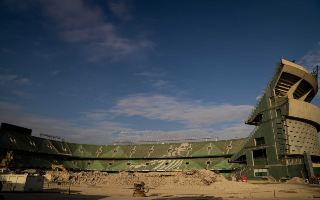 Real Betis are increasingly coming to terms with the fact that their “return home” will be delayed by at least one season. The club now openly admits that the scenario of three campaigns at La Cartuja is looking more and more likely.
Advertisement
Official admission: two seasons will not be enough
For a long time, the message from the club was clear: Betis would spend two seasons at La Cartuja and then return to the revamped Benito Villamarín at the start of the 2027/2028 campaign. As work progressed and complications emerged around the selection of a contractor, that timetable started to look overly optimistic.
For the first time, this was acknowledged openly and officially by CEO Federico Martínez Feria, who appeared on the club’s TV channel Betis TV alongside infrastructure advisor Ozgur Unay. His words effectively draw a line under the era of the two‑season plan.
Martínez Feria recalled that the initial assumptions were straightforward: Initially, our strategic plan and roadmap envisaged completing the project over two seasons. That idea is still in place, but the truth is that, given the current situation and the deadlines we are working with, it will probably take longer than two seasons.
That single word - probably
- now carries huge weight for the entire project.
From the outset, the club imposed a cautious approach on itself, which was reflected in the agreement with the operators of La Cartuja. The contract reserved the stadium for three seasons, precisely in case the Villamarín refurbishment timetable slipped. Today, that option no longer looks like a backup scenario but rather the most realistic one.
Demolition advancing, but key tender falls apart
From a fan’s perspective, the sight of cranes working at full speed may suggest that the project is moving forward according to plan. The reality is more complex. On the one hand, demolition is progressing in line with the schedule; on the other, the tender for the main construction phase has collapsed.
Ozgur Unay explained the current state of works on the club’s TV channel. He stressed that the most visible part of the demolition has been completed, namely the tearing down of the 45‑metre‑high stand,
but this is only the beginning of a more complicated stage. There are still thousands of tonnes of rubble
to be removed, which – for environmental reasons – must be recycled and reused. The demolition of the Preferencia stand will continue until the end of the year, and in the first quarter of 2026 the excavation work will begin.
As Unay underlined, work has not stopped and is progressing according to schedule.
The problem lies elsewhere: the tender to select the general contractor ended without a result. The club received only one bid – from a consortium of two construction companies – which made it to the final stage but was rejected. The proposal did not meet the financial or technical requirements that had been set. The board decided it could not accept it and chose not to award the contract.
 © Real Betis Balompié | Estadio Benito Villamarín project
Plan B: direct negotiations and a phased project
To break the deadlock, Betis have turned to an alternative strategy. Instead of waiting for another classic tender, the club has drawn up Plan B
: a new process based on direct negotiations with a limited number of construction companies.
The board will talk to two or three selected firms to jointly work out the final shape of the contract: detailed costs, technical solutions and – most importantly at this point – a credible timetable. As industry sources quoted in the Spanish press point out, this is by no means an exceptional situation. In similar projects, cooperation‑based negotiations are common and do not in themselves have to lead to disastrous delays.
At the same time, the club has decided to reorganise the entire project. Rather than commissioning one company to handle the full scope of the works – from excavation and ground reinforcement to the main construction phase – Betis have split the investment into three main stages. This model has already been tested during the rebuilding of the Gol Sur stand.
The current plan provides for the continuation of the demolition carried out by Erri Berri (also throughout November), followed by the excavation and ground‑protection phase, which will be handled by a specialist company yet to be selected, with a planned start in the first quarter of 2026, and only then the main construction phase of the new Preferencia stand and the adjacent complex.
As Unay pointed out, from this moment we are starting a cooperation process that is quite common in this type of work, while finishing the demolition, so the works have not been stopped at any time and will not be stopped.
According to the plan, this process should conclude with the selection of the contractor in the first quarter of 2026, and right after the demolition is completed we will start building the retaining wall while continuing to improve the project.
Rising costs and a difficult moment for construction industry
Delays are not the only concern. In parallel, the total budget of the investment is growing. From the outset, new Benito Villamarín project was described as pharaonic
– it assumed spending around €150 million, building a brand‑new Preferencia stand, three large hospitality zones, tripling the number of VIP seats and creating an adjacent building with a hotel and commercial areas.
Today, those financial assumptions are outdated. Due to soaring material prices and the difficulty of finding qualified workers, overall costs – according to estimates – could reach around €200 million. Sources from the construction sector quoted in the press are blunt: This is a very difficult time.
The contractors’ organisation CNC calculates that around 700,000 additional workers are needed to meet current demand for infrastructure and housing projects.
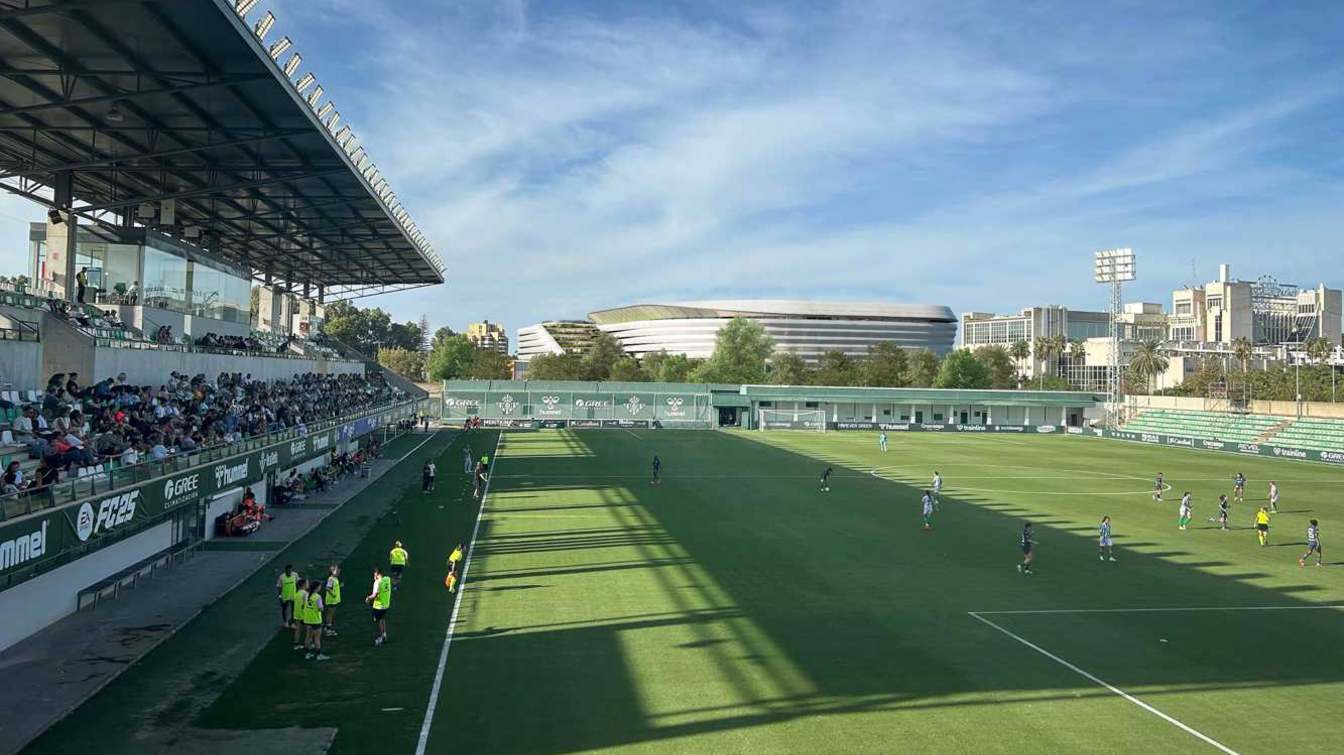 © Real Betis Balompié | Estadio Benito Villamarín project
What will be built around Preferencia stand?
At the heart of the project is the reconstruction of the Preferencia stand on Doctor Fleming Street, which belongs to the city. The new stand will hold around 10,000 spectators, and next to it a multifunctional building will rise, dedicated to commercial, sporting, health‑related and social activities. It is meant to be a place alive 365 days a year, offering entertainment and services not only to fans before and after matches but also to the people of Seville on a daily basis.
This part of the investment is expected to enable Betis to make a qualitative leap in their business model. The club hopes that the new stadium will generate more than €20 million in additional annual revenue outside strictly sporting activities. All of this, however, depends on completing the works on time and keeping costs under control.
Three seasons at La Cartuja – an increasingly likely scenario
Although the club’s official narrative long remained reassuring, in practice Betis are already preparing for the possibility that football will not return to Heliópolis before 2028. The consequence would be a three‑year stay at Estadio de La Cartuja: in the 2025/26, 2026/27 and 2027/28 seasons.
Club president Ángel Haro, speaking before the Europa League match between Genk and Betis, admitted that the club still do not have a contractor for the next phase.
He also revealed an intermediate strategy: We are going to carry out an intermediate phase and we are considering what it would mean to execute the foundations and the retaining walls, which will also allow us to gain some time to decide who will carry out most of the works. We also have to finalise some technical details regarding the roof, and I believe demolition will soon be completed so that we can start work on the foundations.
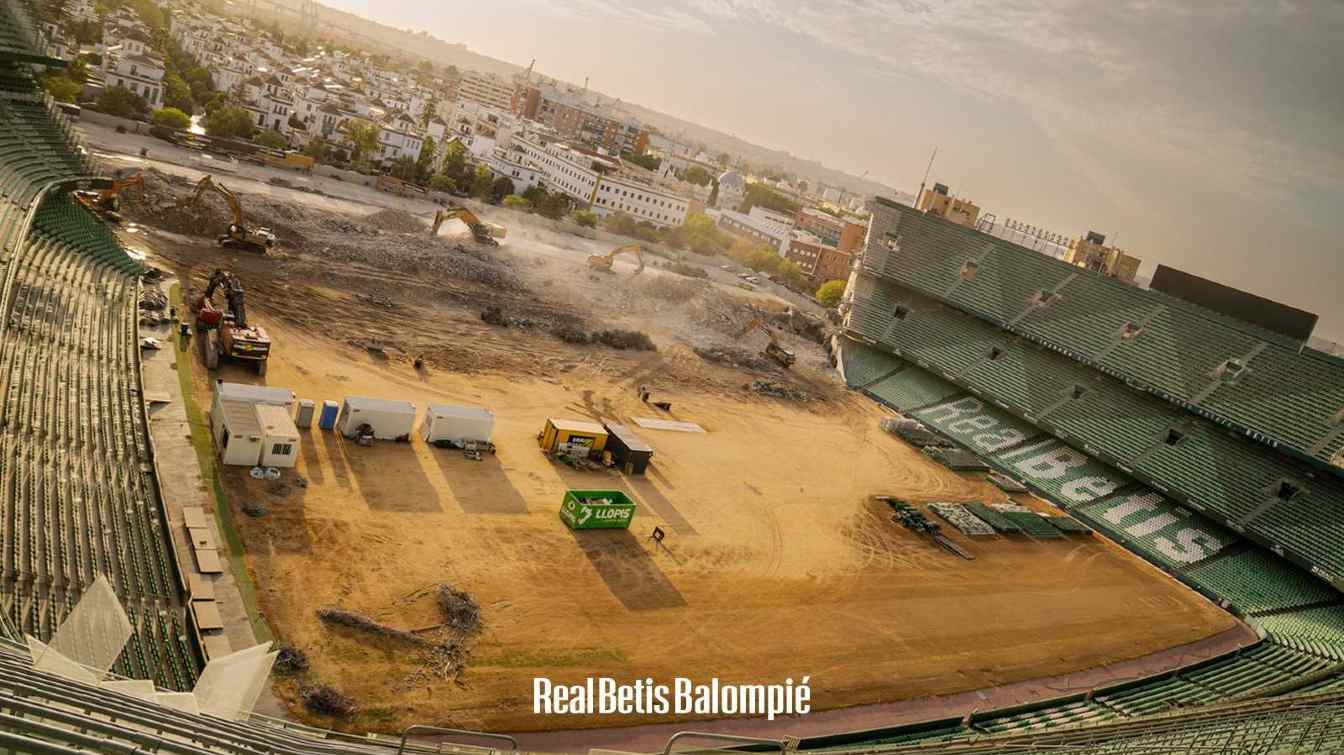 © Real Betis Balompié | Construction of Estadio Benito Villamarín
New Villamarín in frame for 2030 World Cup?
Paradoxically, the greater the scale and ambition of the project, the stronger the case for Benito Villamarín to join the elite group of venues for the 2030 World Cup, which will be jointly held by Spain, Portugal and Morocco.
Officially, La Cartuja is for now the only confirmed World Cup venue in Andalusia. However, the new Benito Villamarín is clearly gaining ground as a potential second stadium in Seville. This would be a return to the tradition of 1982, when Andalusia had three World Cup arenas and two of them were in the regional capital.
Talks between Real Betis, the regional government of Andalusia and the city of Seville play a key role in this context. As reported by Canal Sur Radio, the parties meet regularly to refine a common strategy. The definitive withdrawal of Malaga’s candidacy – La Rosaleda dropped out due to problems with carrying out the required modernisation works – is particularly important. The Junta de Andalucía and the city authorities are ready to invest in improving access to Benito Villamarín, which is one of FIFA’s key requirements.
Back in March, RFEF president Rafael Louzán revealed that Betis had already submitted their proposal to the federation. As he recounted, president Ángel Haro informed me about the possibility of offering Estadio Benito Villamarín for the World Cup, because it will be one of the venues completed two years in advance.
That two‑year buffer before the 2030/31 season is a key argument meant to convince decision‑makers of the project’s credibility.
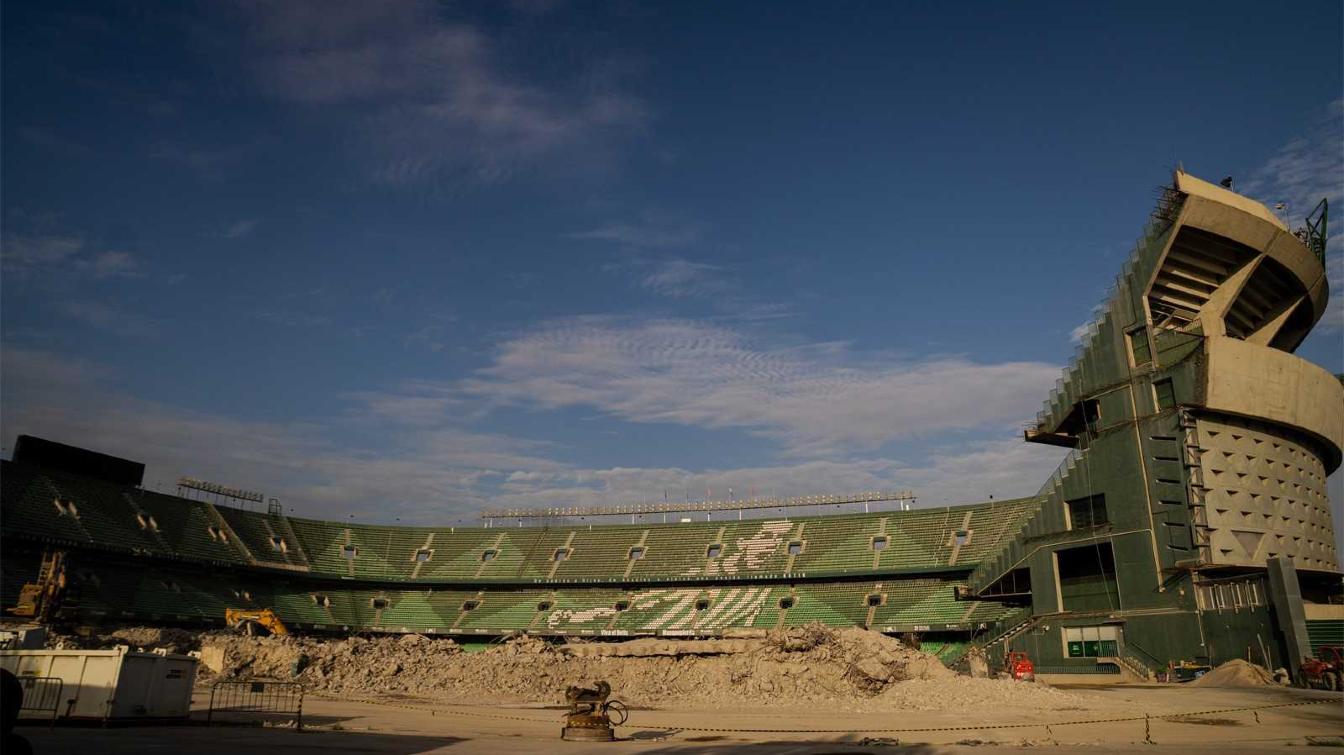 © Real Betis Balompié | Construction of Estadio Benito Villamarín
Advertisement