 StadiumDB
Italy: San Siro is now owned by Milan and Inter. The sale is under prosecutor investigation.
source: StadiumDB.com; author: Paulina Skóra
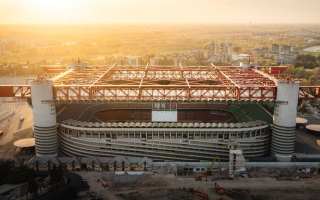 It’s official: the legendary San Siro Stadium has been sold to AC Milan and Inter Milan.
The city valued the site at €197 million, and the notarial deed transferring ownership of the stadium and surrounding areas was signed on 5 November 2025. The sale ends nearly 90 years of municipal ownership of the iconic venue.
It’s official: the legendary San Siro Stadium has been sold to AC Milan and Inter Milan.
The city valued the site at €197 million, and the notarial deed transferring ownership of the stadium and surrounding areas was signed on 5 November 2025. The sale ends nearly 90 years of municipal ownership of the iconic venue.
Advertisement
Investment funds and deal structure
Funding for the purchase comes mainly from the Oaktree (Inter) and RedBird (Milan) investment funds. Both are part of their respective ownership groups and see the acquisition as a long-term project, designed to strengthen financial stability, sporting success, and sustainable growth.
The operation was carried out through a new company, Stadio San Siro S.p.A., with the financial backing of Goldman Sachs and J.P. Morgan, who served as lead coordinators. Italian banks Banco BPM and BPER Banca were also involved as transaction partners.
The signing took place just days before 10 November, the date on which a heritage protection order for the stadium’s second tier was due to come into effect — a designation that would have made demolition impossible. Milan and Inter have already paid the first installment of around €73 million, partly financed through bank credit, and have committed to settling the remaining amount to complete the deal.
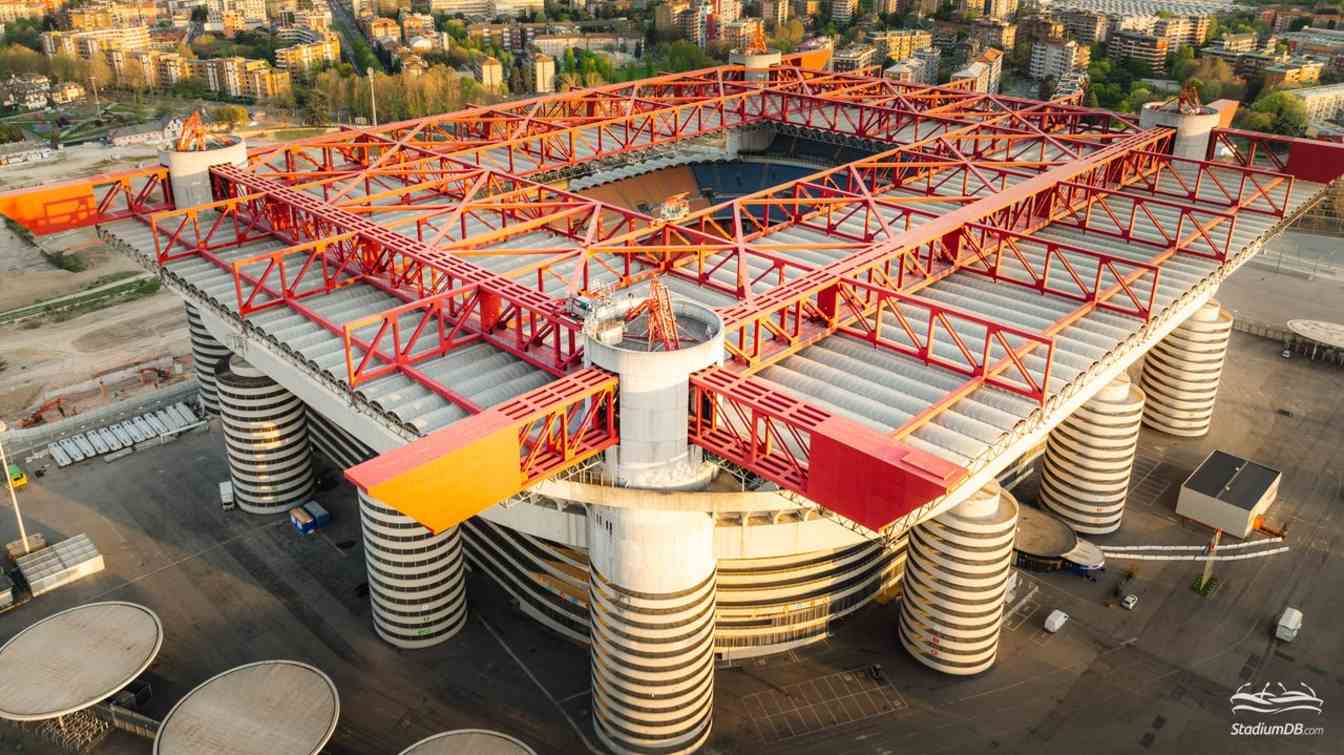
Prosecutors investigate the sale
Meanwhile, Milan’s public prosecutor’s office has opened an investigation into possible irregularities surrounding the sale of San Siro, amid suspicions of interference in the public tender process. The case is being handled by the financial police (GdF), under the supervision of prosecutors Paolo Filippini, Giovanna Cavalleri, and Giovanni Polizzi. The probe focuses on the procedures and deadlines tied to the public call for bids regarding the Grande Funzione Urbana (GFU) San Siro complex, which includes the Giuseppe Meazza Stadium.
On Wednesday, 5 November, prosecutors questioned Claudio Trotta, promoter and co-founder of the Sì Meazza
committee, which has long opposed demolishing the stadium. In an open letter to Milan mayor Giuseppe Sala, Trotta revealed that he and others from the live events industry had wanted to submit their own redevelopment proposal, but were unable to do so due to the tight timetable.
He testified that between late March and April, he couldn’t participate in the selection process, claiming it wasn’t a true public tender but rather a pre-arranged speculative operation
aimed at selling the venue directly to the clubs. Trotta added that since 2019, he has met multiple times with Mayor Sala and city officials, suggesting an alternative redevelopment plan that would allow the Meazza to operate either jointly with the clubs or independently.
AC Milan president Paolo Scaroni downplayed the scope of the inquiry. This isn’t a storm, just a light breeze. When a citizen files a complaint about a public procedure, it’s natural that prosecutors look into it. But I don’t see anything unusual here,
he told reporters after Milan’s shareholders’ meeting, which approved the club’s 2024/25 financial report.
Lombardy regional president Attilio Fontana also commented, expressing hope that the investigation is purely procedural: I trust this is simply a formal step following a complaint. I hope prosecutors clarify the situation quickly. The stadium process is already complex enough — adding legal hurdles would only make it harder.
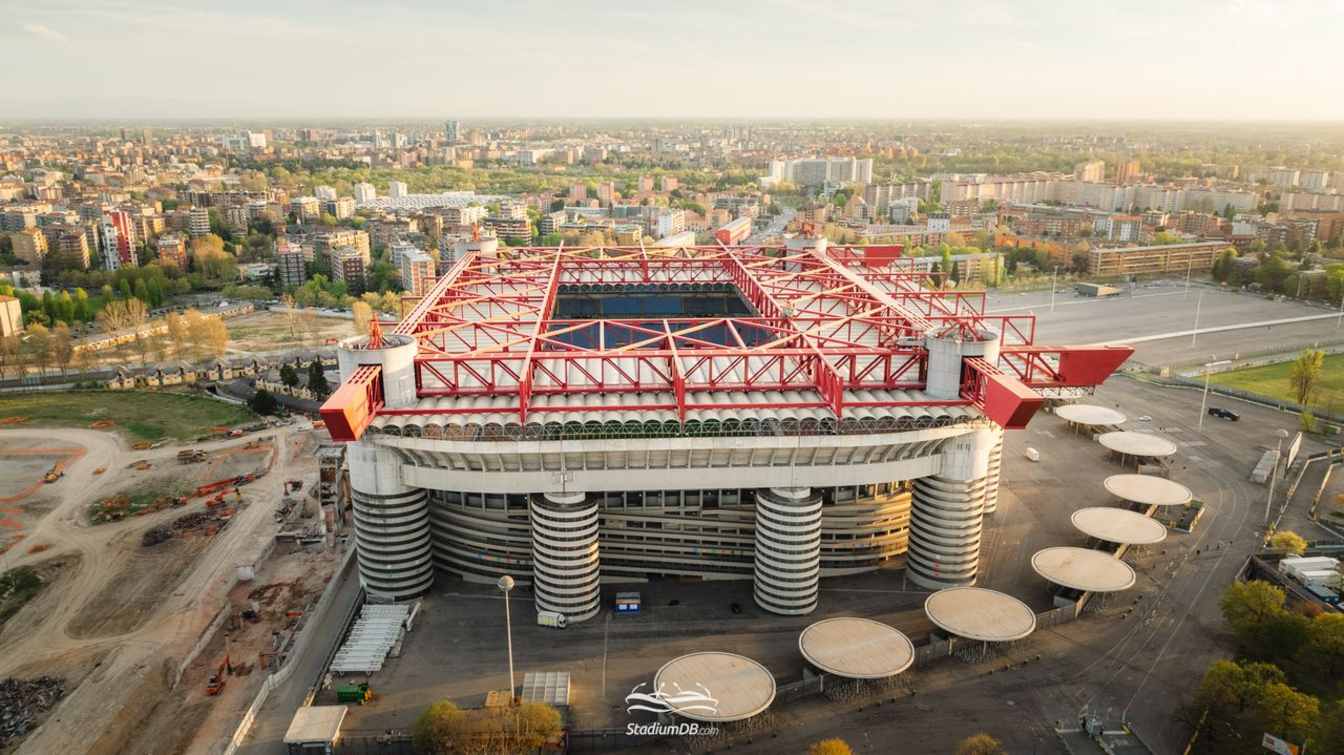 ©
© The new San Siro: a 21st-century stadium
The new San Siro will hold 71,500 spectators and will be designed by Foster + Partners in collaboration with MANICA Architecture. The oval-shaped structure will feature two tiers instead of three and a fixed roof. The project forms part of a broader plan to revitalize the San Siro district, which will include green spaces, commercial areas, hotels, offices, and parking facilities.
The road to a new stadium is still long, but both we and Inter — as well as the people of Milan — believe the city needs this project,
said Scaroni. Opposition to it has dropped significantly in recent years.
He added that the clubs aim to have the new stadium ready for the 2030/31 season, or at the latest by 2032, in time for Milan to host matches at Euro 2032. Scaroni also emphasized the key role of RedBird, which brings invaluable experience in sports infrastructure projects, particularly from the United States,
and will be heavily involved in the design and construction stages.
Advertisement