 StadiumDB
Italy: New concession for stadium in Palermo and the Euro 2032 opportunity
source: StadiumDB.com; author: Jakub Ducki
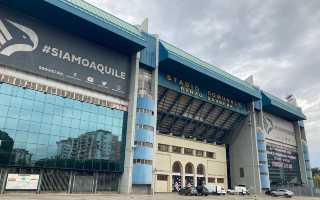 The management of Renzo Barbera in Palermo has become one of the hottest topics in local politics. At the same time, a huge opportunity is looming on the horizon: including the stadium among the five Italian venues that would host European Championship matches.
Advertisement
“New Manchester” versus “bureaucratic chaos”
The dispute over the stadium concession began with a sharp statement from opposition councillors sitting on the budget committee: Ugo Forello (OSO), Carmelo Miceli (Progetto Civico Italia) and Mariangela Di Gangi (PD). In their view, the vision that was until recently sold to the public as a promise of a new Manchester
has collapsed when confronted with the administrative reality of the city.
The opposition argues that this is an emergency solution, lacking a long‑term vision and – most importantly – burdened with serious legal problems. In their statement, the councillors write bluntly: We have moved on to a bureaucratic mess that could paralyse the future of the new stadium, the activities and services connected to it, as well as relations with the Palermo FC club. The management of Stadio Renzo Barbera by the Lagalla administration is proving to be a failure across the board: the ambitious project of a ninety‑year concession for the new stadium has ended in fiasco and has been hastily replaced by an extension of only 6 years which, in addition to being a compromise solution, has serious shortcomings in terms of legality.
Article 29 – the core of the legality dispute
The key point of contention has become the new Article 29 added to the renewed agreement. The opposition points out that its introduction significantly changes the nature of the relationship between the municipality and the company managing the stadium. The new provisions grant the club powers to intervene in the facility’s infrastructure that were not envisaged in the 2020 agreement. According to the councillors, such a significant modification cannot be treated as a simple renewal
and therefore should be approved not just by the municipal council (which they see as an insufficient level for decisions of this kind), but by the city council, the broader legislative body.
The opposition argues that skipping this step exposes the entire act to a real risk of annulment and undermines the stability of future relations between the city and Palermo FC. In their narrative, it is precisely the city council that is the proper forum for decisions of such importance, while limiting the process to a lower institutional level is presented as an example of dangerously oversimplifying procedures.
Lack of oversight and the risk of “blind” investment
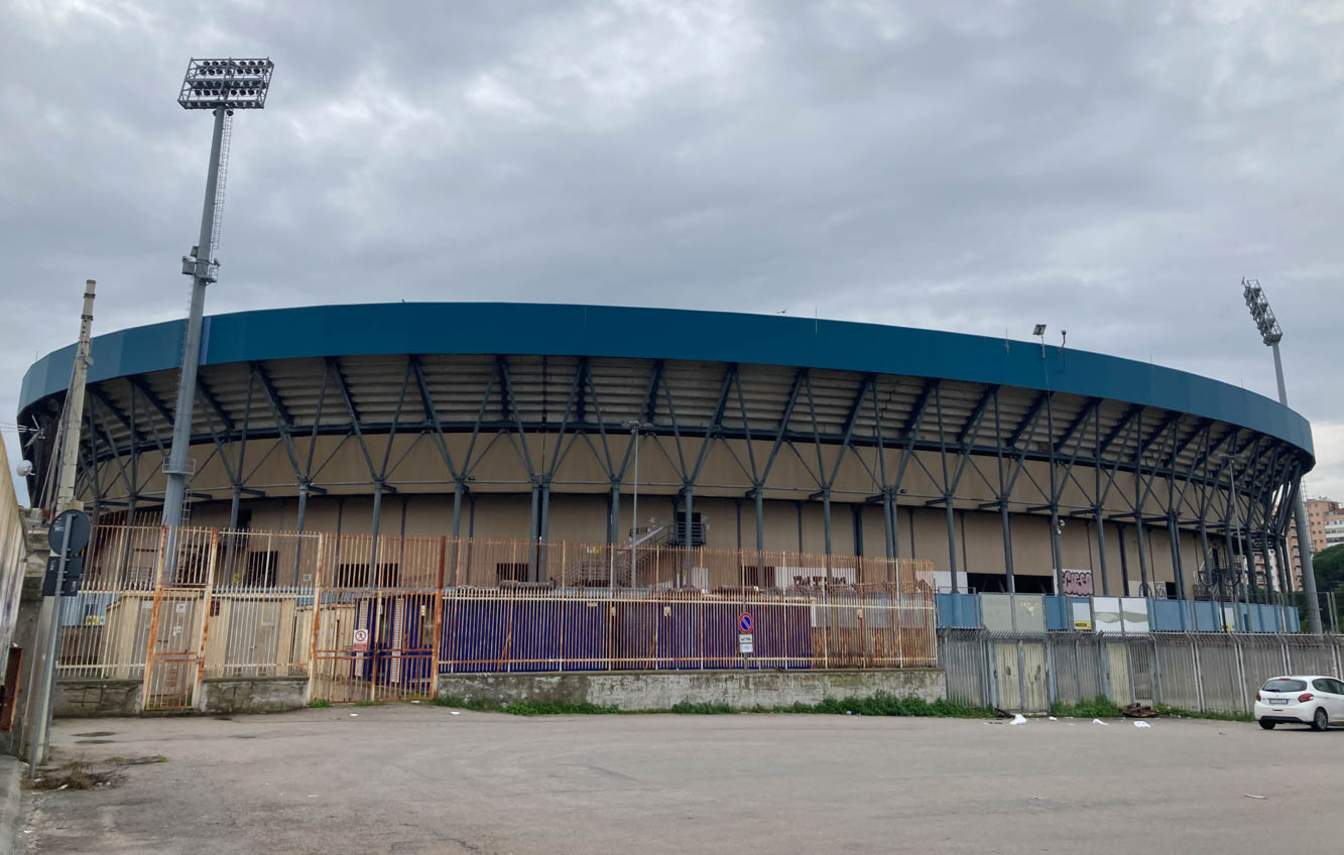
The opposition does not limit itself to criticising the structure of the concession itself. The councillors’ statement shows that they are also concerned about how the whole operation was prepared. They point to the lack of involvement of the Chief Accounting Office and Analogous Control at the preparatory stage, despite the obvious economic sensitivity of the matter. They stress that, in the city’s documents, the stadium is still treated as a simple property concession,
whereas both case law and ANAC classify it as a concession for public services of economic importance.
According to the councillors, contracts are being signed that allow for investments without full guarantees of long‑term stability – they describe this as investing in the dark.
In their view, without a clear, long‑term plan for modernisation and management of the facility, it is difficult to speak of a genuine reconstruction of the stadium. Behind this criticism lies an accusation that the city is merely kicking the can down the road
instead of truly solving the problem.
Mayor Lagalla’s sharp response
Mayor Roberto Lagalla responded to the accusations in a firm tone, rejecting all allegations of irregularities and chaos.
In his statement, he emphasised the symbolic importance of Renzo Barbera for the city: Once again, some opposition representatives are trying to cast a bad light on the administration’s actions regarding the Renzo Barbera stadium, a facility that is a symbol of the city, which for years was neglected and for which we are finally building a new, concrete perspective.
Lagalla recalled that the very possibility of renewing the concession had already been foreseen and approved by the City Council in 2020. Therefore – he argues – since this is a renewal on the same terms, it is natural that the act has been carried out by the City Council within the framework of the applicable regulations. That is why he dismissed the accusations of shortcuts
as unfounded and politically motivated.
Lagalla also directly addressed the Article 29 criticised by the opposition. He pointed out that the councillors are mistaken or wish to mislead,
because the new provision does not in any way change the substance of the agreement between the municipality and the club. According to the mayor, it is a programmatic clause referring to an existing national regulation – the legislative decree of 28 February 2021 – which governs agreements with sports entities.
He stressed that Article 29 is limited to formally recognising the right of Palermo FC to submit a technical and economic project for the modernisation of the stadium. The club would not lose this right even if the provision were not included in the agreement.
The mayor also did not hide his disappointment with the attitude of his political opponents. He stated that once again some opposition councillors have missed the opportunity to make a constructive contribution to the life of the city, preferring to fuel baseless controversy.
At the same time, he assured that political disputes will not stop the actions carried out together with Palermo FC.
Euro 2032 as a major opportunity?
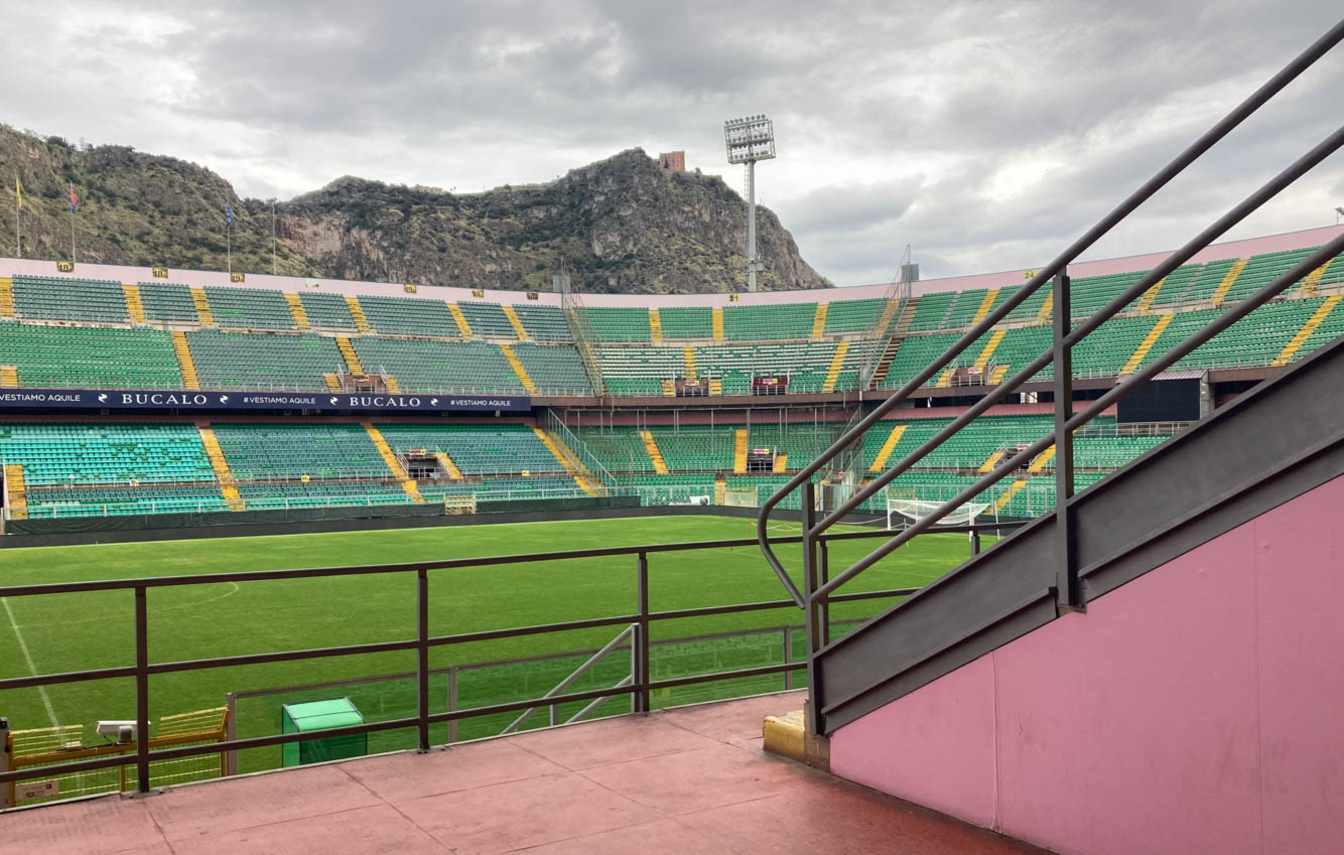
The dispute over the concession is overlapped by a much broader context – Palermo’s bid to become one of the host cities for Euro 2032. The city sees in this event a huge opportunity to strengthen its position on the football map of Europe, but also to accelerate key infrastructure investments. However, this is a race against time, with a very narrow margin for error.
For Renzo Barbera to be included among the five Italian stadiums selected to host the tournament, a major modernisation of the facility is necessary. This concerns both the standard of the stadium itself and the wider surroundings: commercial areas, fan zones, safety, accessibility and the quality of the supporting infrastructure. Palermo’s bid gains importance also because many other Italian venues require deep renovation, and only a few – such as the modern stadium in Turin – fully meet UEFA requirements, while not all of them have the capacity needed to host the final.
The city under UEFA scrutiny
However, the renovation and modernisation of the stadium are only part of the challenge. Euro 2032 will bring to the city a massive number of fans and tourists from all over Europe, raising questions about Palermo’s overall readiness to handle such flows. Among UEFA’s evaluation criteria, an important place is given to the quality of public transport, the efficiency of connections between the airport, railway stations and the area around the stadium, as well as the general performance of the transport system.
In this context, the issue of speeding up key investments arises: lines A Nord and B within the tram project, the construction of the ring road and the development of the railway line. Completing these projects could drastically improve the city’s functioning during such a major event.
The race against the calendar
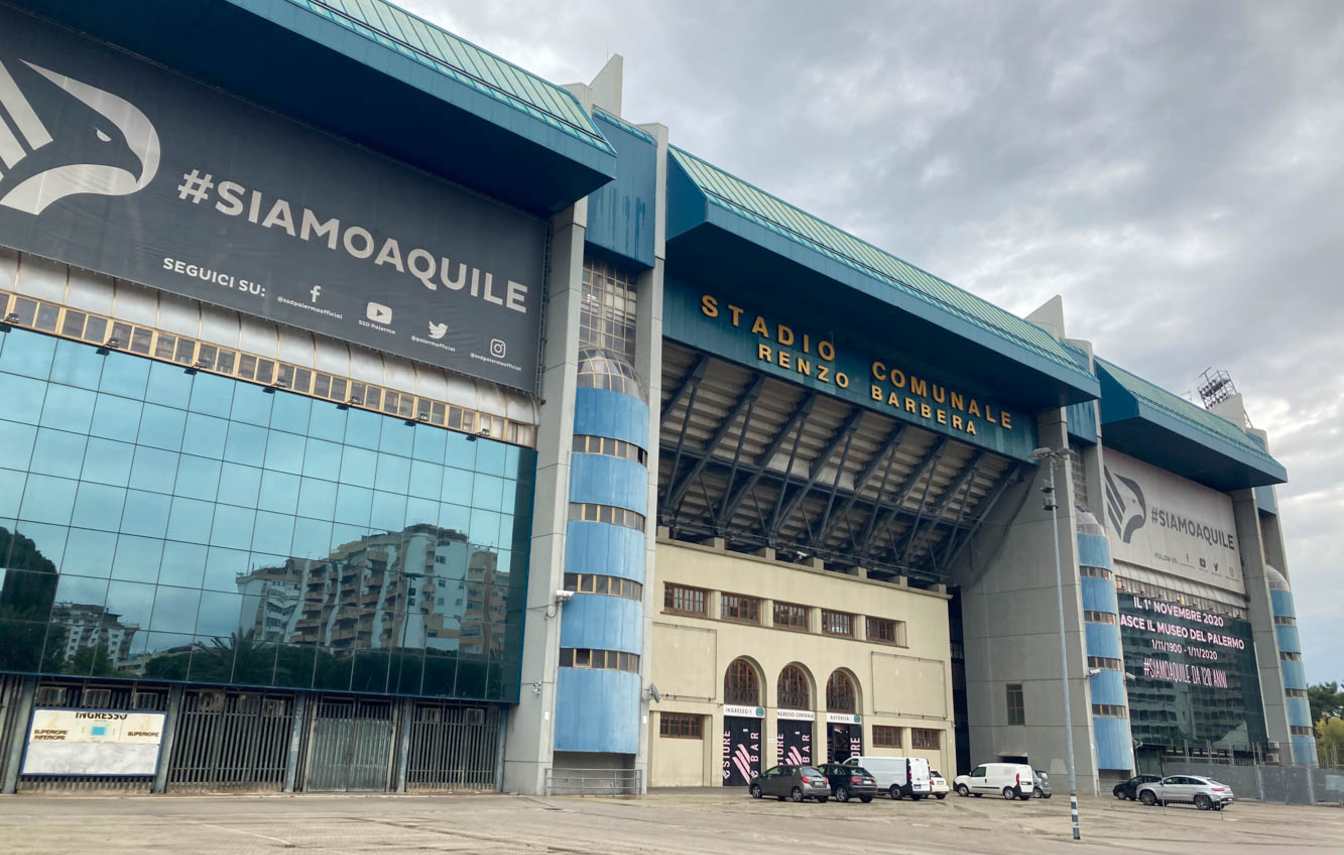
At the formal level, the process of preparing for a possible stadium modernisation is already under way. The technical committee in charge of the project has been operating since 28 August, and on 10 September the municipality officially submitted its interest in participating in the selection of host cities for Euro 2032. Key dates have also been set to determine the pace of further work.
By 1 December, a feasibility document comparing alternative projects is to be prepared, and then – by 9 December – it will be presented to the municipality. The whole year 2026 is to be filled with administrative procedures: verifications, presentations, consultations and formal approvals. The start of work on a new or thoroughly modernised stadium is planned for the first days of January 2027.
Advertisement