 StadiumDB
Germany: The largest solar installation ever built on a stadium roof completed at Signal Iduna Park
source: StadiumDB.com; author: Paulina Skóra
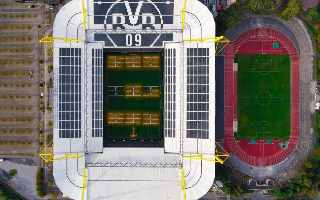 Borussia Dortmund and the energy company RWE have set a new standard in professional sports. Signal Iduna Park now features the most powerful rooftop photovoltaic installation ever installed on a stadium – a project that positions BVB as a global pioneer in sustainable sports infrastructure.
Advertisement
Significant benefits
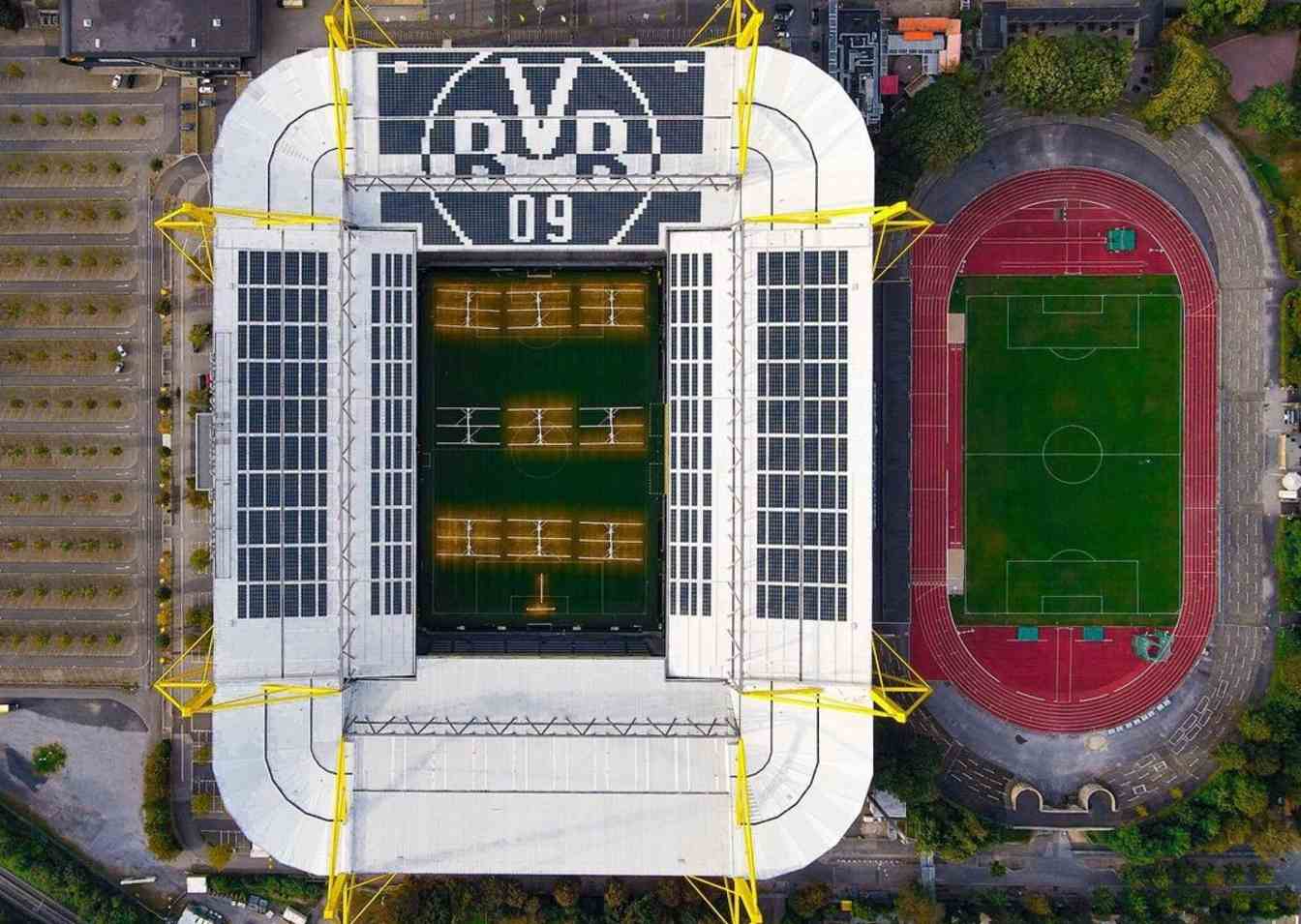
More than 11,000 solar panels with a total capacity exceeding 5 megawatts have been installed on the roof of Signal Iduna Park. This will allow Borussia Dortmund to cover up to 50% of the stadium’s future energy needs through its own renewable production. In the first months of 2026, an energy storage system with a capacity of 3.7 MWh is also scheduled to be completed, enabling the use of electricity even after sunset. The project was carried out in cooperation with RWE, replacing the previous PV installation. Thanks to this new investment, BVB aims to reduce CO₂ emissions by approximately 1,700 tonnes per year.
We are proud that, together with BVB – one of the most recognizable clubs in Germany – we have set a new record. Together we equipped Germany’s largest stadium with the most powerful solar installation ever placed on a stadium roof,
emphasized Markus Krebber, CEO of RWE AG. Borussia Dortmund’s CEO Hans-Joachim Watzke added: Signal Iduna Park is a symbol of our comprehensive efforts towards the future of the club. We are happy that our home is now also associated with a record-breaking project serving climate protection.
Record officially certified, but the project doesn’t end here
The German Record Institute (Deutsches Rekordinstitut) has awarded the club a certificate confirming the establishment of a world record. A total of 11,132 solar panels installed on the stadium deliver a maximum output of 5 MW, dethroning the previous leader – RAMS Park in Turkey, which had reached 4.2 MW.
At the beginning of next year, the club will begin constructing the energy storage system capable of holding 3.7 megawatt-hours. This solution will ensure stable use of the energy produced, even during periods without sunlight.
Advertisement