 StadiumDB
Czech Republic: Bernabéu design team has created the concept for Baník Ostrava’s new stadium
source: StadiumDB.com; author: Paulina Skóra
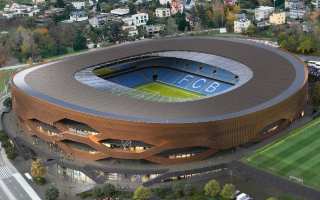 A new football stadium will soon rise again on the historic Bazaly site in Ostrava. The future home of Baník Ostrava will be designed by Spanish studio L35 Arquitectos from Barcelona – the same firm behind the renovation of Real Madrid’s Santiago Bernabéu. Their proposal won an international architectural competition organized by the city of Ostrava.
Advertisement
A key landmark for the city
Construction is scheduled for 2029–2030, with costs estimated at 2.5 billion Czech crowns. The winning design was chosen unanimously. It meets all the city’s key requirements. It’s an elegant, compact concept that respects the significance of the site and fits naturally into the landscape. It has the ambition to become a new landmark of Ostrava – a place not only for football but for the community,
said Mayor Jan Dohnal.
L35 Arquitectos has nearly six decades of experience and more than 200 completed projects across four continents. The firm employs over 200 specialists and has worked on developments in Madrid, La Paz, and Dubai. Thirty teams from around the world entered the competition, judged by architects, city officials, Baník representatives, and independent experts.
A top-level facility
Baník Ostrava currently plays at the Vítkovice Aréna, a multi-use venue designed for both football and athletics. However, as Mayor Dohnal pointed out, it no longer meets the standards of modern football. Upgrading it to current requirements would require huge investment – and even then, it would still fall short in capacity and functionality,
he explained.
The new stadium will comply with UEFA’s highest standards, allowing it to host international matches. It will also pursue BREEAM certification, highlighting sustainable construction and energy efficiency. The complex will include a Baník museum, restaurants, fan shops, and year-round service and retail spaces.
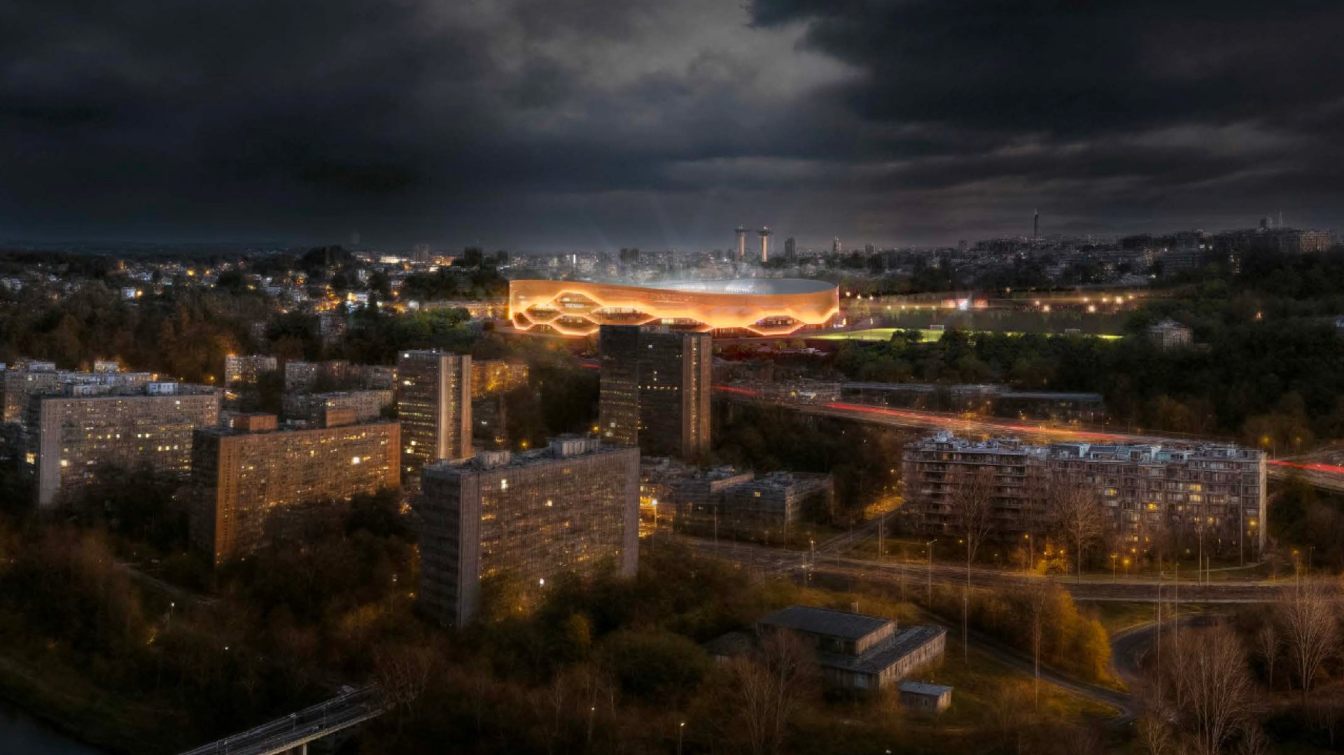 © FC Banik Ostrava
A unique facade – a tribute to coal and steel
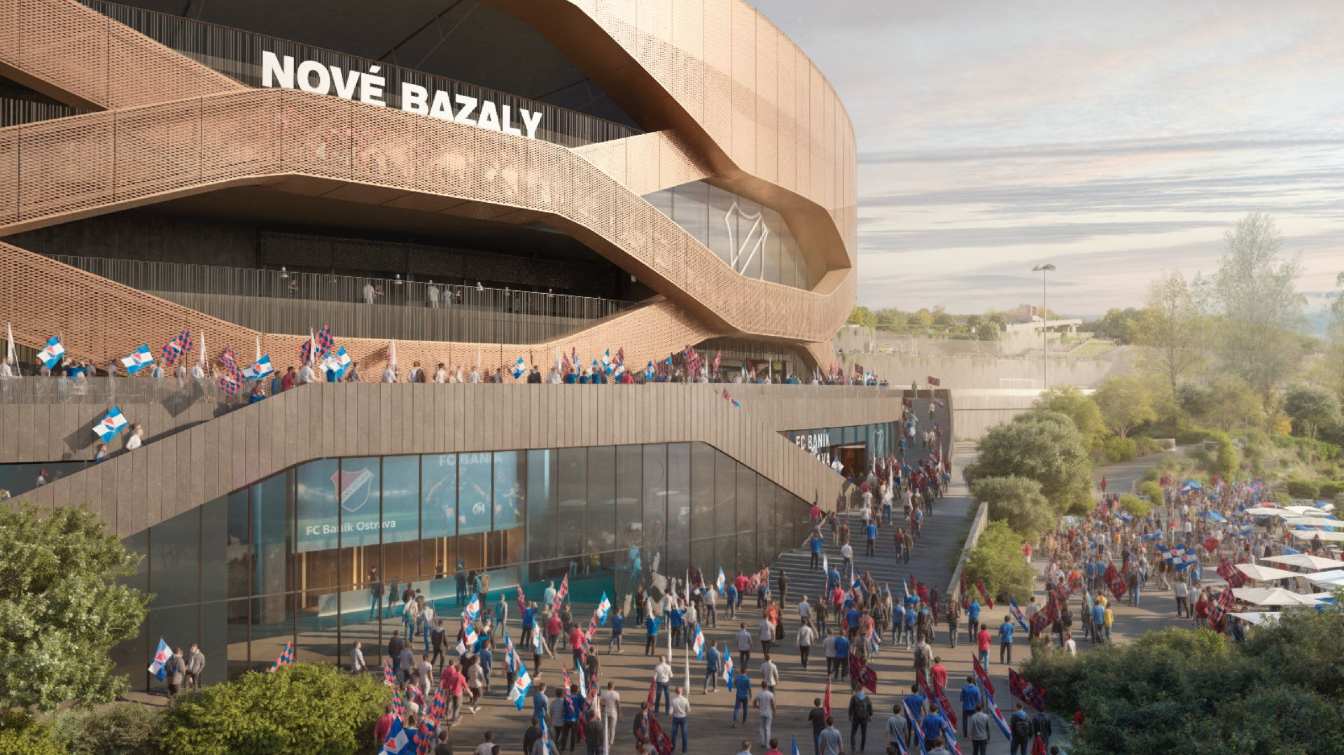
Nové Bazaly will hold 20,188 spectators, with a layout that includes two-tiered east and west stands and smaller single-tier north and south sections. The design pays homage to Ostrava’s mining and industrial heritage. The stadium will rest on a solid basalt stone base, recalling the quarry that once occupied the site. Its perforated metal facade will provide ventilation while partially concealing technical areas and reflecting the industrial character of the city.
The stadium resembles a crown – not golden or ostentatious, but proud and working-class. It celebrates Ostrava’s industrial spirit and honors the generations who built this city and supported Baník through every era,
the architects from L35 explained.
Fan zones and the “night Bazaly”
Like its predecessor, Nové Bazaly will make full use of the terrain. The eastern side, facing residential areas, will remain lower and visually calmer, while the western and southwestern sides will rise more prominently toward the city center, giving the structure a monumental appearance.
Two fan zones are planned: one near the main entrance by the trolleybus terminal, connected to a fan shop, and another between Českobratrská Street and the existing training pitches, which will remain in use. The stadium will be illuminated at night with dynamic lighting that accentuates its geometry.
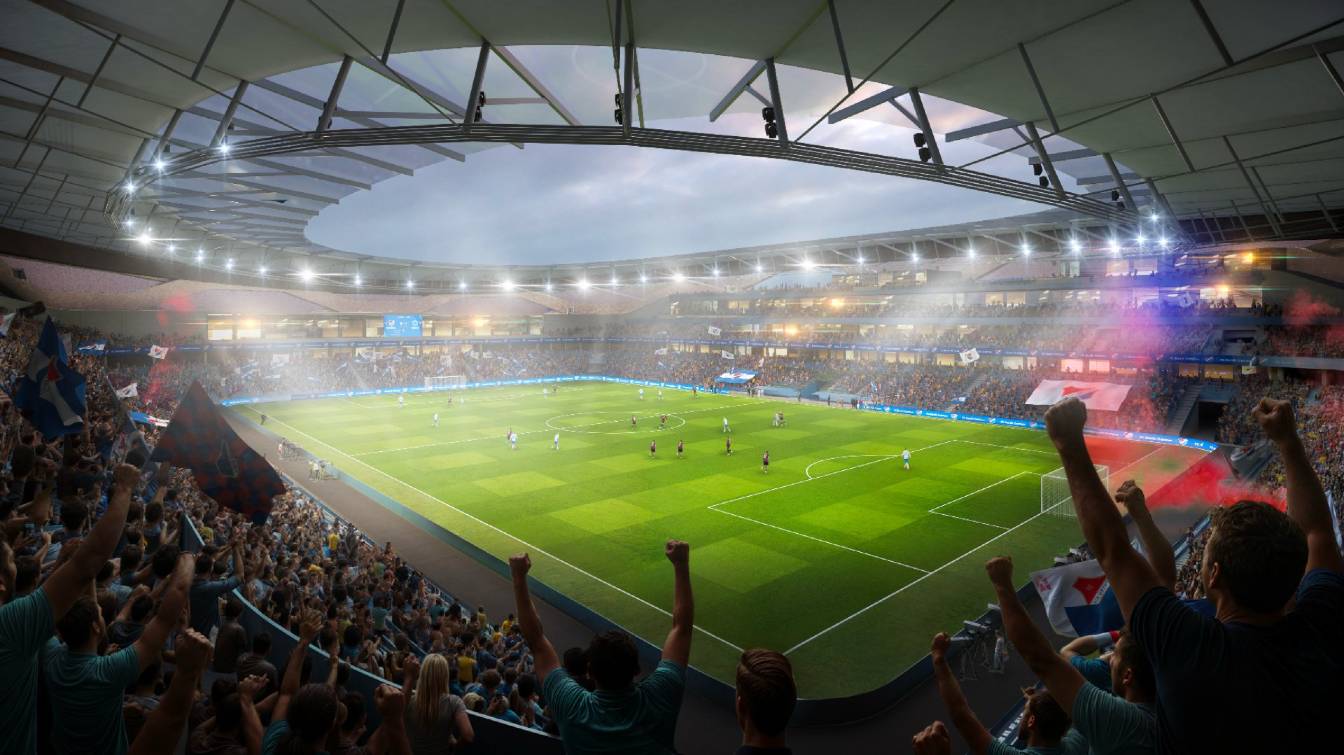 © FC Banik Ostrava
Underground parking and sustainable design
A three-level underground parking structure is planned beneath the stadium, offering over 500 spaces. The design prioritizes public transport, so large surface parking lots are not included. The project will also reshape surrounding streets and add a new roundabout for better traffic flow.
The stadium will use rainwater for pitch irrigation, and its roof will be covered with solar panels, effectively turning it into a small power plant.
It might even generate revenue,
said Lukáš Semerák, head of the stadium construction committee.
Costs and next steps
The budget of 2.5 billion CZK is considered realistic, according to cost experts. It may look monumental, but its costs are comparable to other proposals,
Semerák noted. The contract with the winning architects is expected to be signed later this year, with design work starting in 2026, permits obtained in 2027–2028, and construction beginning in 2029. If all goes to plan, Baník could play its first match in 2030.
Some concerns remain, particularly about the site’s mining past and the presence of gases in the ground, but the city says these issues will be handled during preparation.
 © FC Banik Ostrava
Advertisement