 StadiumDB
Canada: B.C. Place gearing up for World Cup and cricket
source: StadiumDB.com; author: Jakub Ducki
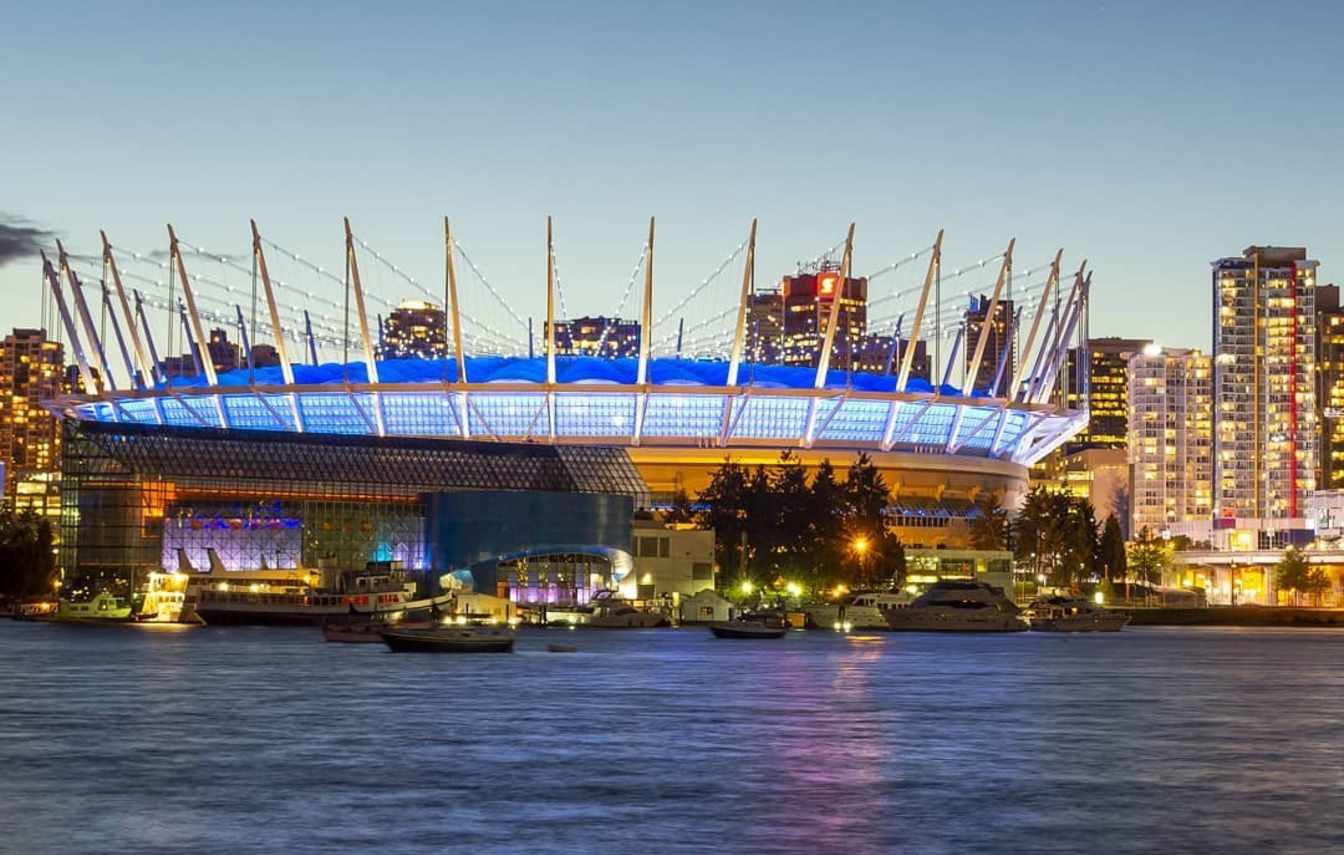
 The aging B.C. Place in downtown Vancouver is entering the most intense period in its history: it is preparing to host matches of the 2026 FIFA World Cup, undergoing costly modernization and, for the first time, turning into an indoor cricket arena.
Advertisement
Modernization under time pressure
With around eight months to go before the World Cup kicks off, work at B.C. Place is in full swing. The stadium is getting new elevators, improved entrances and more washrooms, including gender‑neutral facilities, all meant to enhance comfort and accessibility for thousands of fans. For many regular visitors the arena is becoming almost unrecognizable, and each new investment once again heats up the debate over how much more money is worth putting into it.
Although B.C. Place is currently being modernized with the World Cup in mind, the stadium has for years also been one of the city’s key entertainment venues. Other major arenas across the country play a similar role. The Bodog website also offers an analysis of the biggest football stadium in Canada, placing B.C. Place within the wider landscape of the country’s top venues.
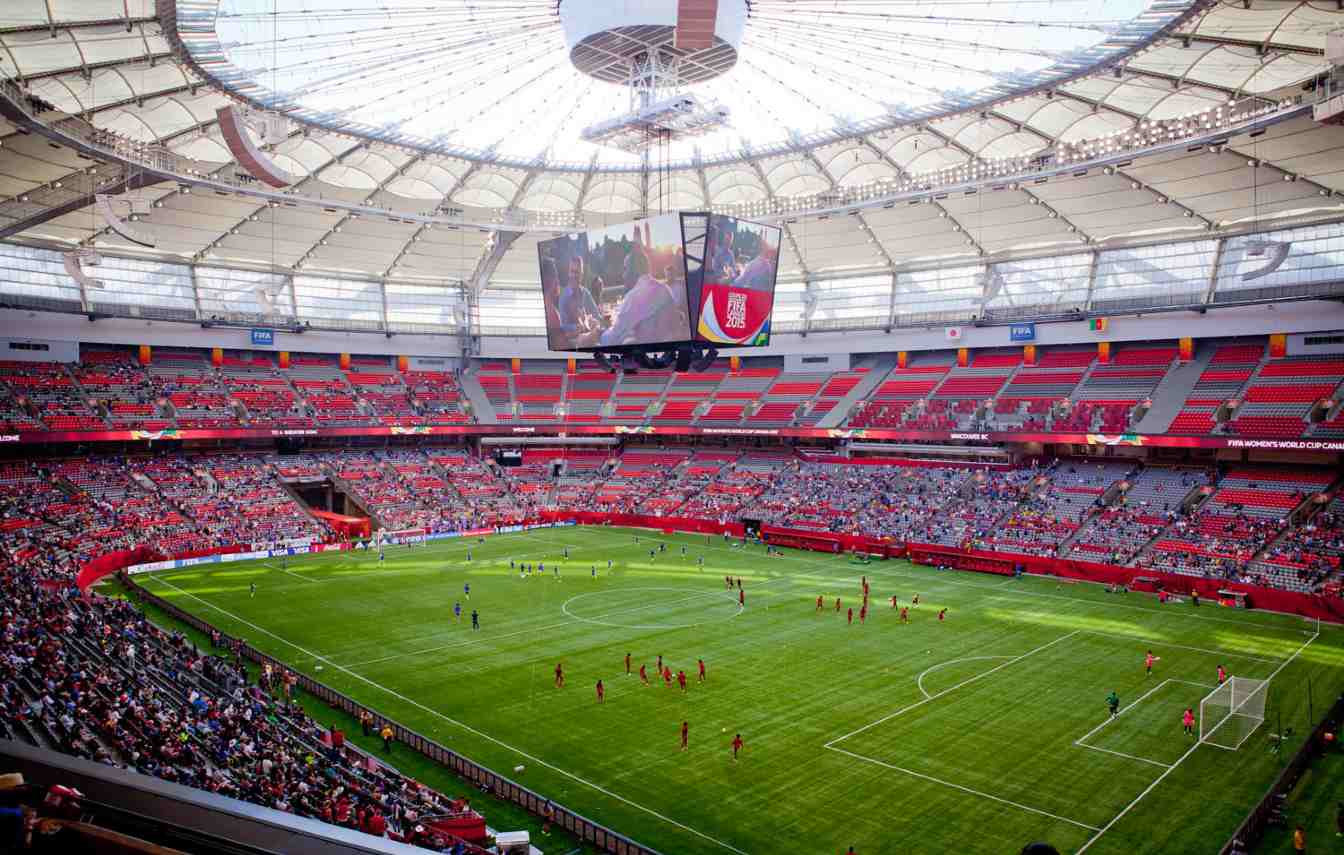
The tournament, which Canada is co‑hosting with the United States and Mexico, is one of the biggest sporting events in the world, and Vancouver – alongside Toronto – is among the host cities. That brings prestige, but also the need to meet strict FIFA requirements. One of them is a natural grass pitch: for the duration of the World Cup, B.C. Place will be fitted with natural grass grown in the Fraser Valley, which will be removed after the tournament and replaced with a surface suited to the needs of the Vancouver Whitecaps and B.C. Lions.
B.C. Place general manager Chris May argues that the changes are more than a one‑off operation for the World Cup. In his view, new hospitality spaces and upgraded guest facilities will open up fresh business opportunities for the stadium in the years ahead, he says that the planned improvements to accessibility and fan experience will give the arena a lasting legacy after the tournament.
 ©
© Hundreds of millions and a ‘crotchety middle‑aged stadium’
This vision, however, comes with a hefty price tag. B.C. Pavilion Corporation, the agency that manages the stadium, estimates that upgrades and operating costs directly related to the World Cup will amount to 171–181 million $. This is part of a larger figure: the City of Vancouver and the Province of British Columbia expect total hosting costs to reach 483–581 million, while the provincial government forecasts a net cost of 100–145 million after accounting for projected revenues.
It is also worth remembering that B.C. Place has already undergone one very expensive overhaul. In 2011 the stadium was renovated at a cost of over 500 million dollars, among other reasons to meet the requirements for hosting the final of the 2015 FIFA Women’s World Cup. This new wave of modernization therefore raises the question of whether spending hundreds of millions more is an investment in the future – or merely patching up the problems of a venue that is aging in a less‑than‑ideal environment.
Moshe Lander, a professor of economics at Concordia University specializing in sports economics and public spending, calls the temporary installation of natural grass an example of wasted money.
He goes further by questioning the logic of the renovation itself: in his view, it is hard to argue that B.C. Place needs upgrades over the next 30–50 years solely because a World Cup would not otherwise be played there. Lander describes the venue as a crotchety middle‑aged stadium
– a facility the province cannot easily replace, yet must keep feeding with public money.
 ©
© Stadium in heart of city: asset or nightmare?
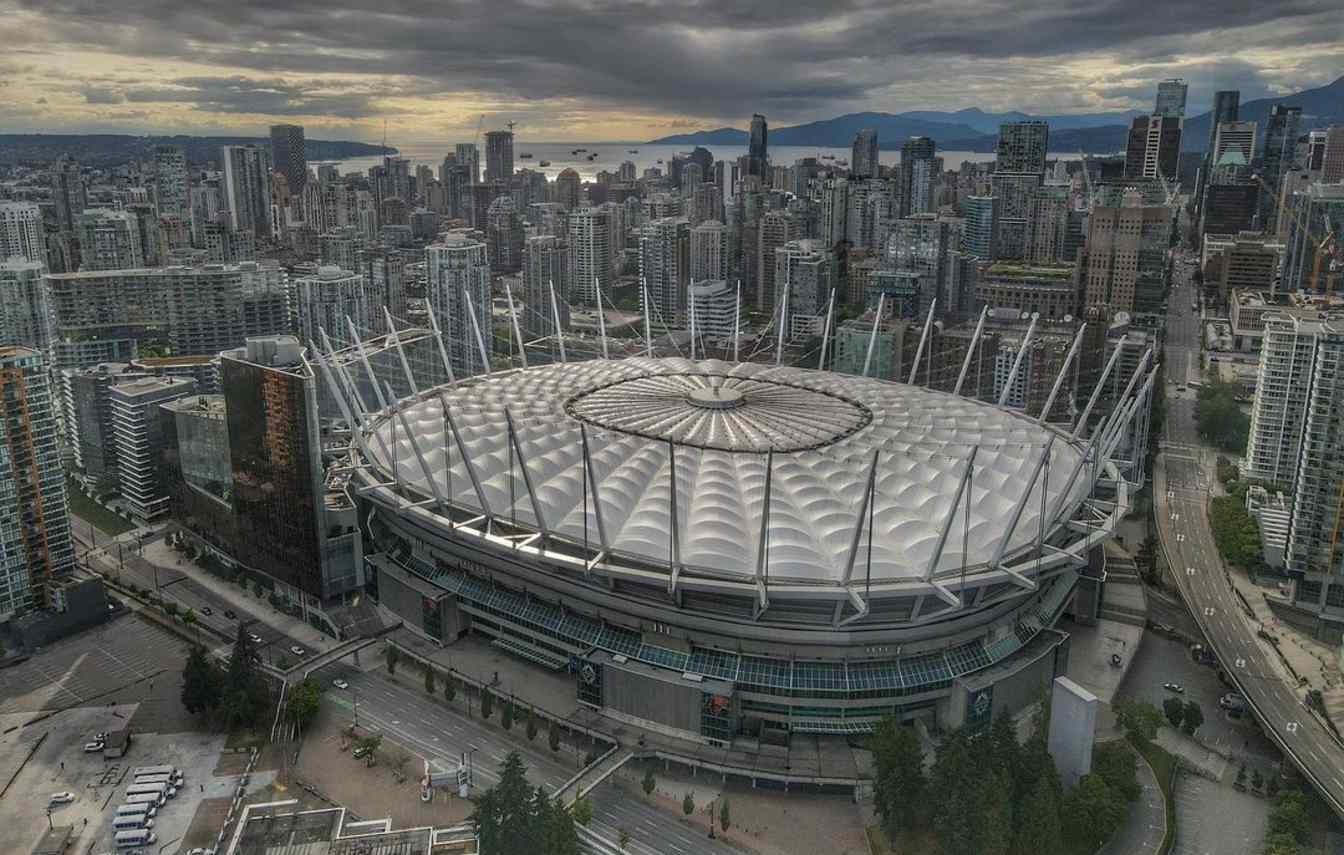
Lander’s scepticism stems not only from the price tag, but also from B.C. Place’s location. When the stadium was built, Vancouver looked very different – the city was not as densely developed, and the area around the venue did not resemble today’s forest of high‑rises. Now the arena is wedged between residential towers, office buildings and another major sports venue, Rogers Arena. In this situation, Lander argues, the stadium has become a structure that is hard to get rid of and just as hard to ignore given its rising upkeep costs.
The tournament is expected to bring tens of thousands of fans to the city next summer, which in a busy downtown core creates a real risk of traffic chaos. Lander warns that in an area already prone to congestion, especially at rush hour, the World Cup may only amplify the daily problems faced by residents and drivers. He notes that generally speaking, that area is a nightmare, especially at rush hour,
and that we are talking about trapped population on a regular Monday to Friday.
On the other hand, B.C. Place’s location does have its advantages. The stadium sits just a short walk from a SkyTrain station, bus lines and bike routes, giving thousands of fans the option to reach the city centre without a car. Instead of surrounding the venue with vast parking lots, the city relies on public transport and pedestrian access – a model that fits modern thinking about urban space, even if it requires complex traffic solutions during major events.
 ©
© Residents and businesses in shadow of road closures
To ensure safety around B.C. Place and False Creek, organizers are planning temporary road closures for vehicles. The aim is to protect fans and make crowd management easier, but it directly affects how local businesses operate. For entrepreneurs along Beatty Street and nearby, this is both an opportunity and a cause for concern.
Mehdi Oraei, the owner of Pane e Formaggio bakery located one block from the stadium, admits he is pleased about the prospect of large crowds but worries about how traffic restrictions will impact the logistics of his business. His biggest concern is how to get the product here for the serving
which is why he says he really hopes Pacific Boulevard is going to be open.
Without reliable access, even the biggest event can become a headache for a small business.
Despite his worries, Oraei remains very excited
about the expected increase in customers. He is counting on the World Cup to help make up for losses from a difficult year for the hospitality sector. As an example, he points to Taylor Swift’s concerts – over just three nights his bakery achieved sales comparable to almost 20 days of normal trade.
 © One95 (cc: by-sa)
Cricket under the roof at B.C. Place
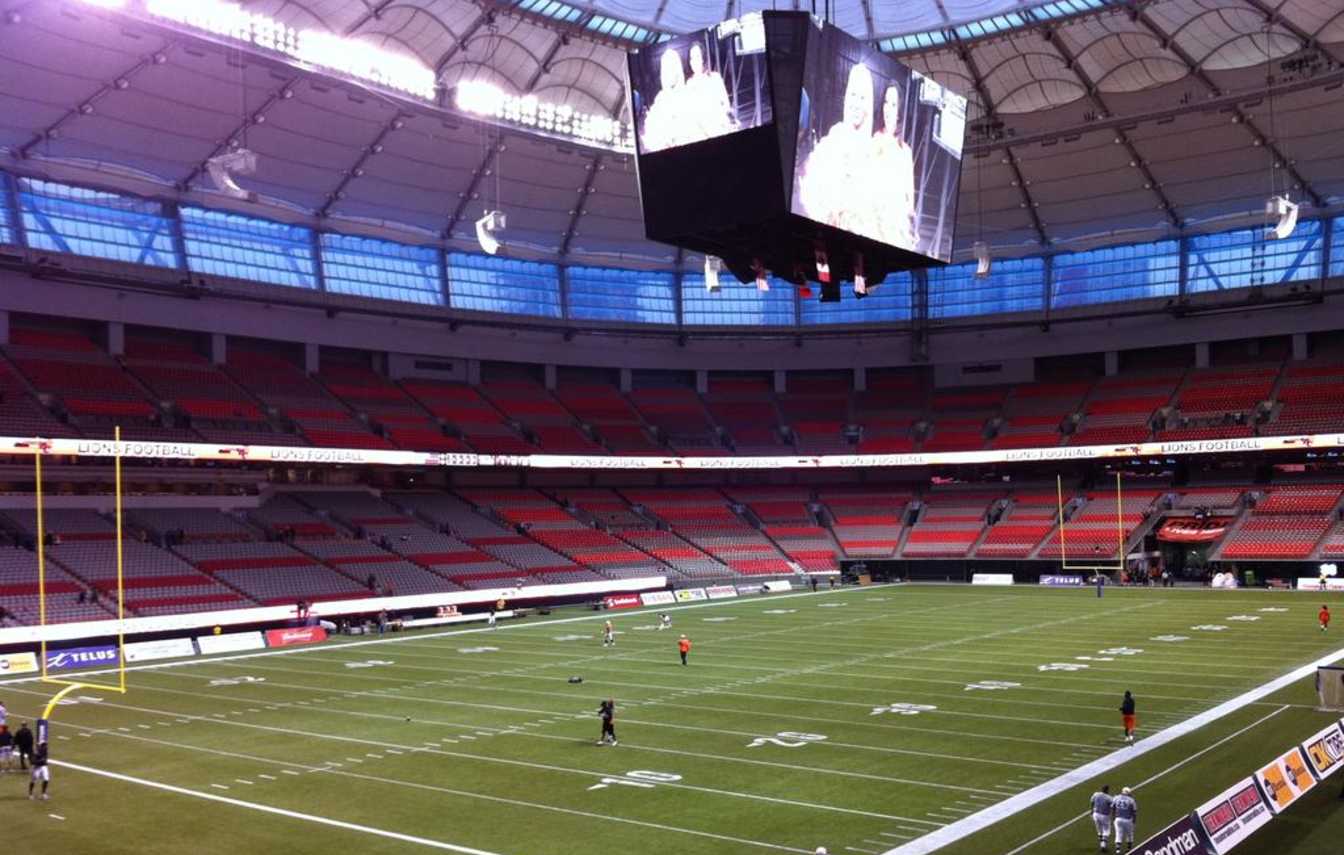
The World Cup is only one side of the stadium’s sporting identity. B.C. Place, known for hosting Taylor Swift concerts, monster truck shows and the 2010 Olympic ceremonies, is now stepping into the world of cricket. The new Canada Super 60 tournament is bringing the sport under the stadium’s retractable roof, turning the 42‑year‑old venue into an unusual indoor arena for one of Canada’s fastest‑growing disciplines.
The tournament will run until October 13 and will feature six men’s teams and two women’s teams made up of a mix of international and domestic talent. A key factor is the stadium itself. The retractable roof at B.C. Place means the tournament becomes one of the first high‑level cricket events to be played entirely under cover. This matters because in cricket, rain has often interrupted even the most important matches.
Tournament organizer Mike Burrow stresses that all pitches meet Cricket Canada standards, and in the first year only the lower bowl of the stadium will be open. Affordable ticket prices – 41 $ for a full‑day general‑admission pass and free entry for children under 15 accompanied by an adult – are meant to attract families and new fans.
Advertisement